Our Planet Climate and Geopolitics
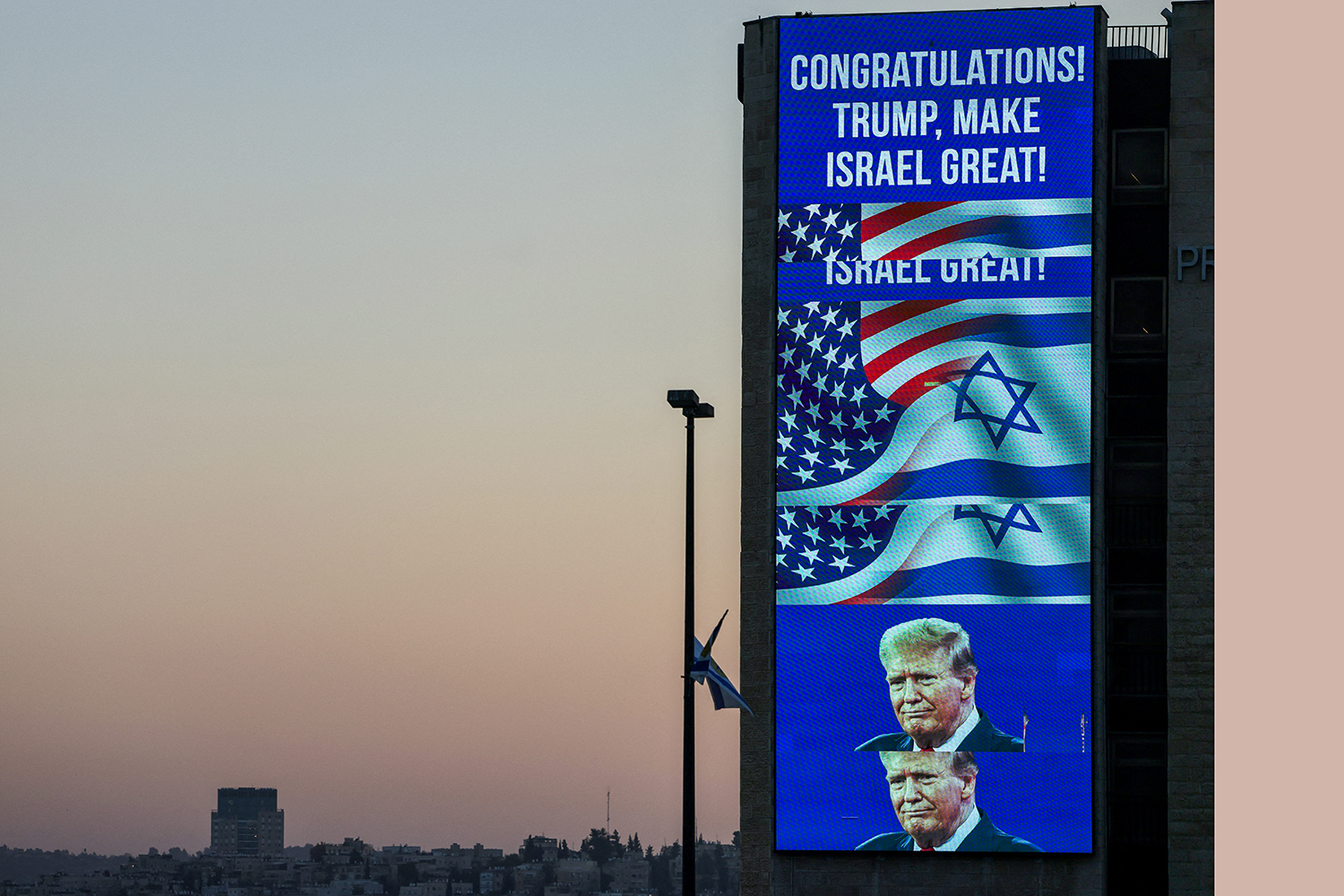
Sixty five per cent of Israelis wanted Donald Trump to win the US election. As his incoming administration starts shaping up, it’s not hard to see why. As US ambassador to Israel, Trump has nominated Mike Huckabee, a former governor of Arkansas and a devout evangelical Christian. As ambassador to the UN, he has chosen Elise Stefanik, House Republican Chair and a Trump loyalist. And as Middle East envoy, he’s picked Steve Witkoff, a real estate investor. All have next to no regional, diplomatic or foreign policy experience – but unwavering and unconditional support for Israel. “These appointments are all Palestinians should need to understand what is coming their way,” says Nour Odeh, a Palestinian political analyst.
Stefanik made her name last year with her vocal support for Israel in Congress, and for leading congressional hearings about pro-Palestine protests on university campuses. A staunch critic of the UN, she has called for a “complete reassessment” of US funding for the body, which she accuses of antisemitism and anti-Israel bias. She has described UNRWA, the UN agency for Palestinian refugees, as a “terrorist front” and “Hamas infiltrated”. Speaking to Israeli members of parliament in May, she stressed her belief in “supplying the State of Israel with what it needs, when it needs it, without conditions”. Her support for Trump became clear during his first impeachment trial, and has held strong ever since.
Witkoff is a close personal friend of the incoming president and was golfing with him in Florida when he faced an assassination attempt in September. A megadonor to Trump’s election campaign, Witkoff said he secured “six-figure and seven-figure donations” from Jewish donors looking to back Trump after Biden paused shipments of certain weapons to Israel following its invasion of Rafah in southern Gaza in May. He has a strong record of negotiating deals – but usually for office buildings and Las Vegas resorts.
“The fact that Witkoff hails from the real estate sector – much like Jared Kushner, Trump’s previous envoy to the region – says much about the prism through which Trump sees Middle East policy: as business deals rather than serious political and social issues affecting the lives of millions of people”, says Amjad Iraqi, associate fellow with Chatham House's MENA Programme.
Mike Huckabee has visited Israel more than 100 times, leading Christian evangelical tours there since 1981. He’s run for president twice, and during his first campaign was quoted as saying “there’s no such thing as a Palestinian”. He doubled down in 2015, saying the label was nothing more than a political invention used to try and take Israel’s land. An avid supporter of settlement expansion, he’s claimed there are “no such thing as settlements – they’re communities, they’re neighbourhoods, they’re cities [and] no such thing as an occupation”. He has strong ties with Israeli settlers, typically refers to the West Bank by the Hebrew biblical name Judea and Samaria, and considered buying a holiday home in an Israeli settlement in 2018. In his first interview since being nominated as ambassador, he made clear that annexation of the West Bank was “of course” a possibility.
The nomination of these figures is cause for celebration among Israel’s far-right ministers and their settler base, who are hoping for annexation of both the West Bank and Gaza. Finance minister Bezalel Smotrich this week ordered his department to make preparations to annex the West Bank, declaring on the heels of Trump’s victory that “2025 will be, with God’s help, the year of sovereignty in Judea and Samaria”.
Benjamin Netanyahu’s newly announced choice for Israeli ambassador to the US points to the same strategy: Yechiel Leiter, a settler who has spent most of his career working towards annexation.
Netanyahu has also appointed Orit Strook, minister of settlements, to Israel’s security cabinet. Earlier this month, a senior Israeli army general told journalists there was “no intention of allowing the [Palestinian] residents of the northern Gaza Strip to return to their homes”. The military said his comments had been taken out of context and did not reflect official policy. Hagit Ofran, of the left-wing Israeli NGO Peace Now, believes that Israeli settlements could be established in northern Gaza within the next few weeks.
While Trump and Netanyahu haven’t always seen eye to eye, the president-elect’s choice of appointees suggests that he’ll begin his second term in lockstep with the Israeli prime minister. Lara Friedman, president of the Foundation for Middle East Peace (FMEP), said: “the forces inside [Trump’s] team… see this as ‘Israel’s policy is our policy and there shall be no distinction’”.