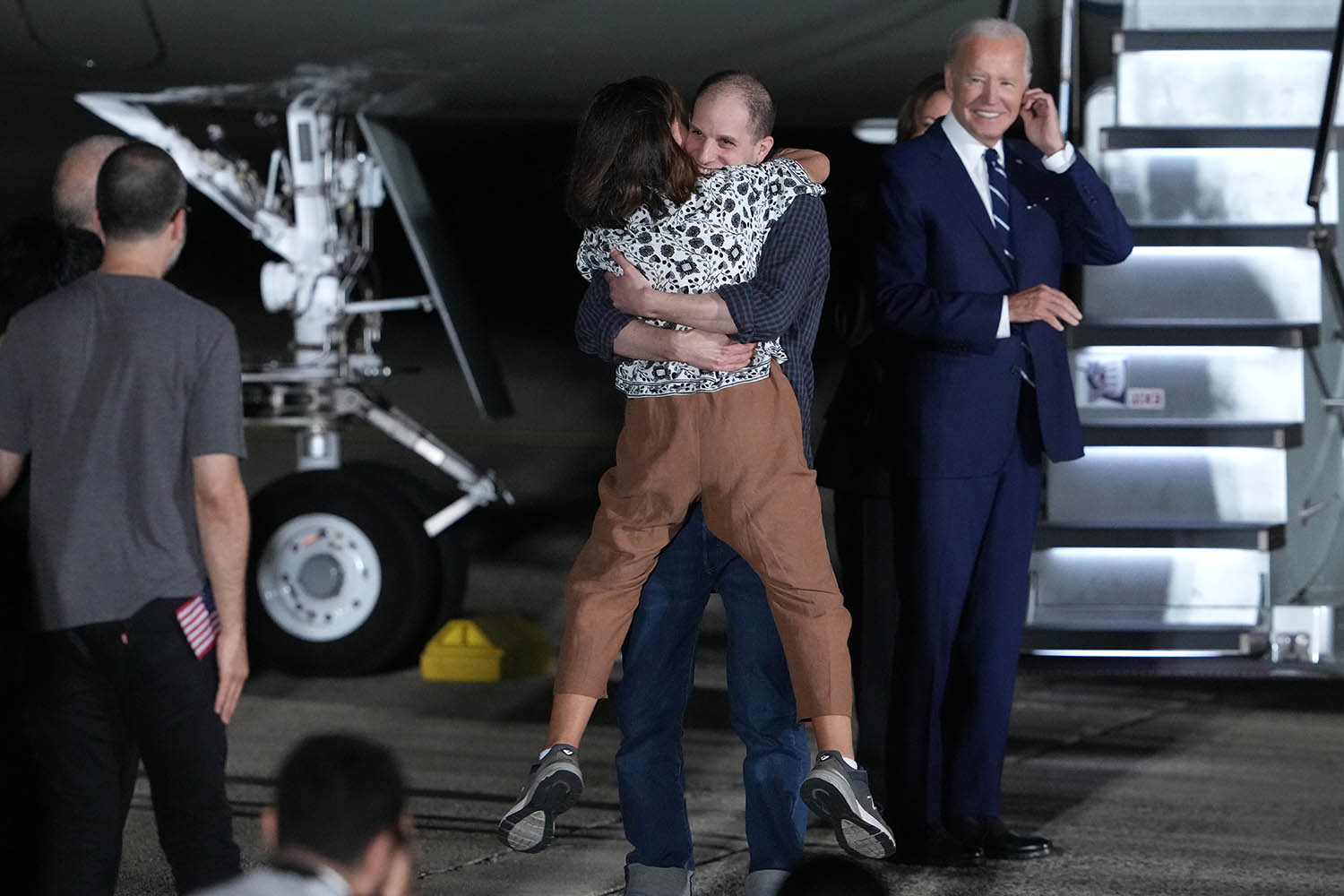
Russia and the West on Thursday held the largest prisoner swap since the end of the Cold War, which saw the release of a Wall Street Journal reporter as well as a convicted FSB killer and Russian hackers.
So what? The prisoner exchange marks the first time since the 2022 Russian invasion of Ukraine when the Kremlin showed willingness for a broad deal with the West, setting free its staunchest opponents as well as the Americans it has effectively held hostage.
- In exchange for Russian hackers and deep-cover spies jailed in the US and Europe, the Kremlin released three American citizens and
- a dozen high-profile political prisoners including Vladimir Kara-Murza, a dual Russian-British citizen.
- The deal involved a total of 24 prisoners and at least six countries. Joe Biden described it as a “feat of diplomacy”.
The motive. The Kremlin is seeking to show its ability to do deals as a trusted partner, more than two years after it broke all ties with the West by invading Ukraine.
As it managed to cement its gains in Ukraine, Russia has in recent months started floating the idea of peace talks with Kyiv – to essentially legitimise its aggression. The massive prisoner swap could be intended to highlight Ukraine’s supposed intransigence as Moscow calls for a ceasefire.
The prisoners. Russia has swapped several prisoners with the United States in recent years – but nothing on this scale. Some form of a prisoner exchange was rumoured for months, but the Kremlin appeared unwilling to release the high-profile Russian political prisoners whom it sought to portray as traitors.
- Evan Gershkovich, a reporter for the Wall Street Journal, was arrested by the Russian intelligence on a reporting trip in Russia last March and charged with spying. He became the first American journalist to have been arrested in Russia since before Mikhail Gorbachev’s perestroika in the late 1980s. Last month, he was sentenced to 16 years in a trial that lasted four days.
- Paul Whelan, a former US marine, has been languishing in captivity in Russia since Christmas 2018. Whelan, who also holds British, Irish and Canadian passports, was arrested in an apparent sting operation in Moscow when a Russian acquaintance gave him a flash drive with documents containing state secrets. Whelan has been serving a 16-year prison sentence since the verdict in 2020.
- Vladimir Kara-Murza is arguably the most prominent voice of the Russian opposition since the death of Alexei Navalny. Kara-Murza survived two near-fatal poisonings but carried on campaigning against Vladimir Putin.
In court proceedings that drew comparisons to the Stalin-era’s show trials, Kara-Murza, a father of three, was sentenced to 25 years for treason and spreading “false” information about the war in Ukraine over his criticism of the Russian invasion. His family have raised alarm in recent months about his health.
In exchange…
- Vladimir Krasikov is the biggest prize for Russia. The 58 year-old FSB colonel shot Chechen dissident Zelimkhan Khangoshvili in Berlin’s Tiergarten park in broad daylight in 2019. A Berlin court sentenced him to life as it described the killing as a “state-ordered murder”. President Vladimir Putin in a recent interview alluded to Krasikov as a “patriot” serving time for killing a “bandit”.
- Anna Dultseva and Artem Dultsev, who are believed to be “illegals”, or deep-cover spies, spent years in Slovenia posing as an Argentinian couple before they were arrested last year. They were sent back to Russia together with their two young children, who apparently knew nothing about their real identity.
- Roman Seleznev, a son of Russian lawmaker Valery Seleznev, was arrested in the Maldives in 2014 and extradited to the United States where he was sentenced to 14 and 27 years in prison for cyber crimes.
In a rare display, Putin on Thursday night personally turned up at the airport to meet those released, with a rolled out carpet and an honorary guard ready. Russian state TV did not dwell on the identities of the Russians, calling them “compatriots who were released from custody in Nato countries”.
What’s next? The Kremlin has in one sweep emptied its prisons of a high-profile American journalist, influential political leaders and opposition activists whose plight sparked global campaigns.
But Russia tends to find new hostages to take: just six months after Russia traded American WNBA star Brittney Griner for a convicted Russian arms trader, Gershkovich was arrested on a routine reporting trip. Russian human rights groups say more than 1,000 people are political prisoners in Russia.
What’s more. It’s a diplomatic coup for Joe Biden in the final months of his presidency. Biden called the Slovenian prime minister about the prisoner swap on July 21 – about an hour before he dropped his re-election bid.