Sensemaker Daily


The death of seven aid workers in an airstrike strike on Gaza is turning Israel’s closest allies against it.
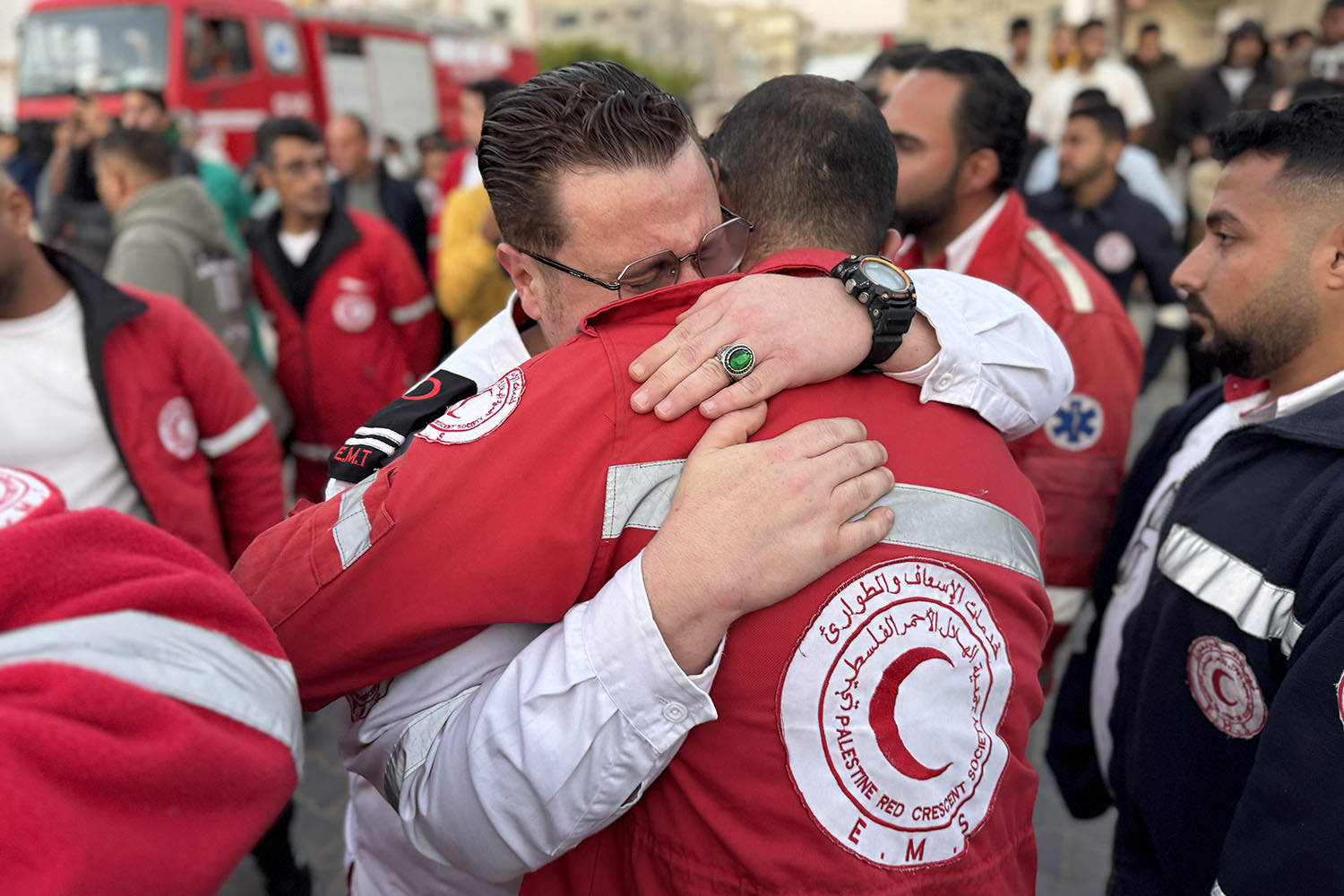
A charity that lost seven workers to an Israeli airstrike on Monday had been delivering hundreds of tonnes of desperately needed food and aid to Gaza.
So what? It isn’t any more. The World Central Kitchen (WCK) has suspended operations in the region. A separate airstrike on Iran’s embassy in Syria has raised the risk of a wider war, but the humanitarian disaster already unfolding in Gaza is more urgent:
- It’s the worst in the region’s history.
- It’s underreported because no international media have been allowed into Gaza.
- By recruiting Palestinians to Hamas it’s likely to make a long-term solution to the Israel-Palestine crisis more, not less remote.
What happened? Aid workers including Palestinians, three Britons and citizens of Poland, Australia and the US were killed when their two armoured cars were hit travelling south on Gaza’s coast road towards Rafah late on Monday. The WCK said their vehicles were clearly marked with the charity’s logo and their movements cleared in advance with Israeli forces.
- The WCK called the attack unforgivable.
- Benjamin Netanyahu, Israel’s prime minister, called it tragic and unintentional, but said “this happens in war”.
Gazans will pay the price.
Anatomy of a famine. The Integrated Food Security Phase Classification – a group that includes the World Food Programme and the World Health Organization – predicts that around half Gaza’s population of 2.2 million faces imminent famine.
Israel controls all access to the strip, which is entirely dependent on aid to survive. Every possible means of delivery has been tried.
Land. As reports emerge of children starving to death in Gaza’s hospitals, a few kilometres away hundreds of trucks loaded with food sit unable to cross into the strip.
- Israeli officials say they are letting in aid but they need to make sure dual use items do not get to Hamas.
- Aid agencies accuse Israeli officials of imposing an opaque and unreasonable process holding up aid.
This policy is popular with the Israeli public – a recent poll shows 30 per cent of people in favour of the transfer of aid and 68 per cent against, believing that it would amount to arming an enemy still holding around 100 Israelis hostage.
Air. Dropping food aid by parachute has proved expensive, inefficient and sometimes lethal.
- Some parcels have contained microwaveable items for people living in tents with no power; others, military “meals ready to eat” with roughly half the calories of the Humanitarian Daily Rations usually distributed to combat malnutrition.
- The airdrops are reported to have killed five people when an aid pallet landed on them, and 12 more drowned last week trying to retrieve parcels that fell into the sea.
Sea. Plans to bypass the Israeli blockade with a temporary pier built by the US military on Gaza’s beach are still at least two months from being operational.
The US admits it has not yet worked out how to prevent potential Hamas attacks on the pier and its own troops, who it insists will not set foot in Gaza.
Inland. Distribution from the pier will be a problem. UNRWA, the UN agency that has been administering aid in Gaza for decades, is blocked from delivering aid to northern Gaza after Israel accused 12 of the agency’s 13,000 staff of taking part in the October 7th attacks.
The WCK was proving successful in getting food aid into Gaza on trucks and ships loaded in Cyprus. But following the killing of its workers the group has paused its activities and may never return.
By the numbers
32,916 – latest estimate by Gaza’s Hamas-run health ministry of Palestinians killed since 7 October
1,139 – death toll from October 7th attack, according to Israeli social security data
1.9 million – Gazans forced from their homes since 7 October, approximately
What’s more. Israeli troops have withdrawn from Gaza City’s Al-Shifa hospital leaving a burned-out shell. Of Gaza’s 36 hospitals, only 10 remain and those are only partially functional.
What’s next. Israel is still preparing for a ground assault on Rafah on Gaza’s southern border. The city used to have a population of 170,000 but now shelters almost 1.4 million refugees who may be told to move again so the IDF can complete its operation against Hamas. But there’s nowhere for them to go. Egypt doesn’t want them, and even if it did many Palestinians would refuse to leave Gaza for fear of never being allowed to return.
In tomorrow’s Sensemaker: what is Israel thinking?
More than 70 countries are holding elections this year, but much of the voting will be neither free nor fair. To track Tortoise’s election coverage, go to the Democracy 2024 page on the Tortoise website.