Ukraine’s assassination of a senior Russian general is the face of an increasingly asymmetric war
Ukraine claimed responsibility for the assassination of a senior Russian general yesterday in Moscow.
So what? Russia can take the hit. This is the face of an increasingly asymmetric war in which
- Ukraine’s defenders are outgunned on their own territory;
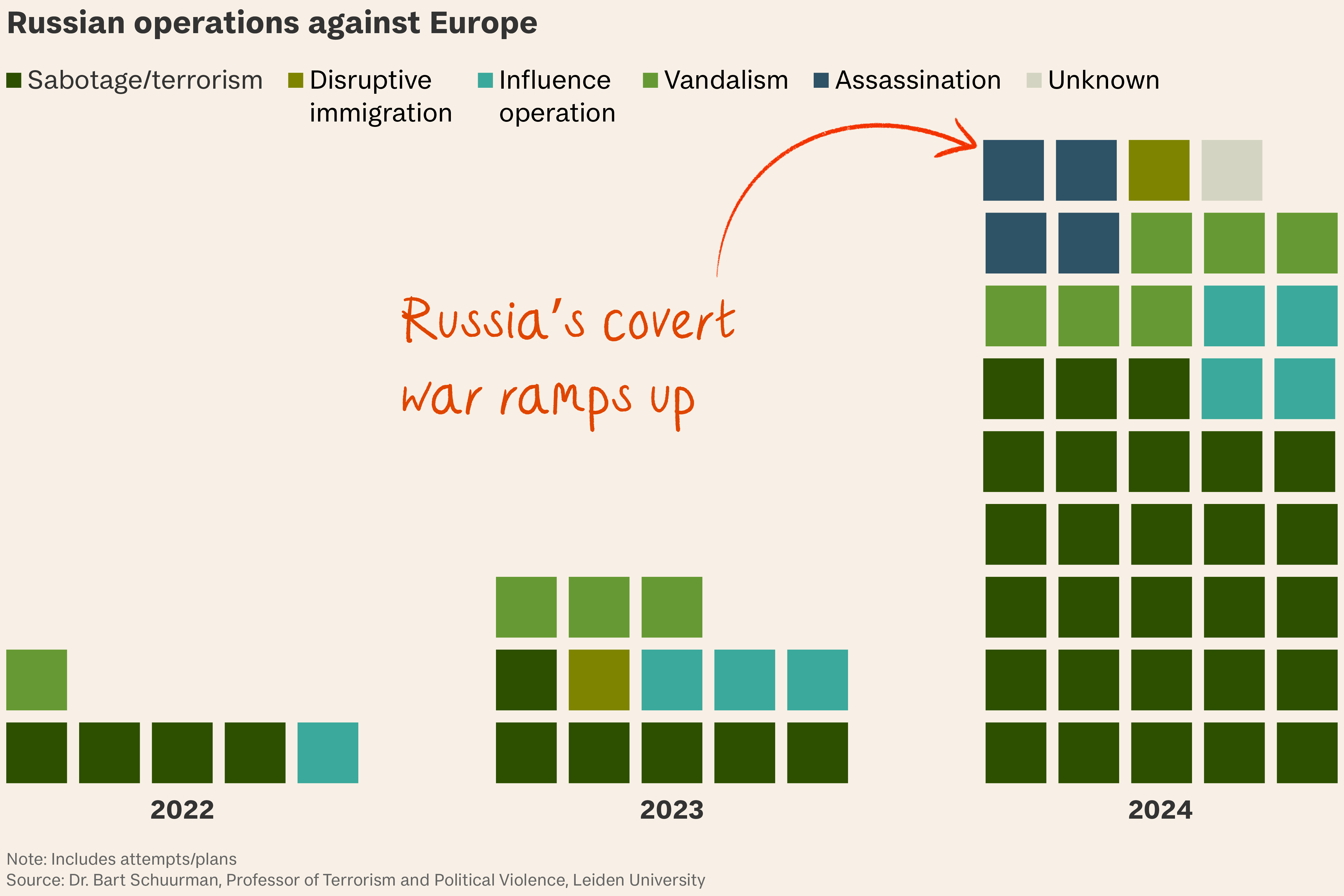
- Ukrainian special forces seek targets of opportunity on Russia’s territory; and
- Vladimir Putin’s roaring economy shrugs off western sanctions by turning east and south.
The target. General Igor Kirillov served as a mouthpiece for Russian propaganda and as head of Russia’s nuclear, chemical and biological defence forces was accused of using chemical weapons against Ukrainian soldiers. Britain imposed sanctions on Kirillov in October.
Downing Street said he won’t be mourned; Russia can manage without him too.
Total war. Nearly three years after its full-scale invasion of Ukraine, Russia’s war economy is running hot but shows little sign of blowing up. Record defence spending at 6 per cent of GDP (or a third of all government spending) is driving up wages and enriching elites.
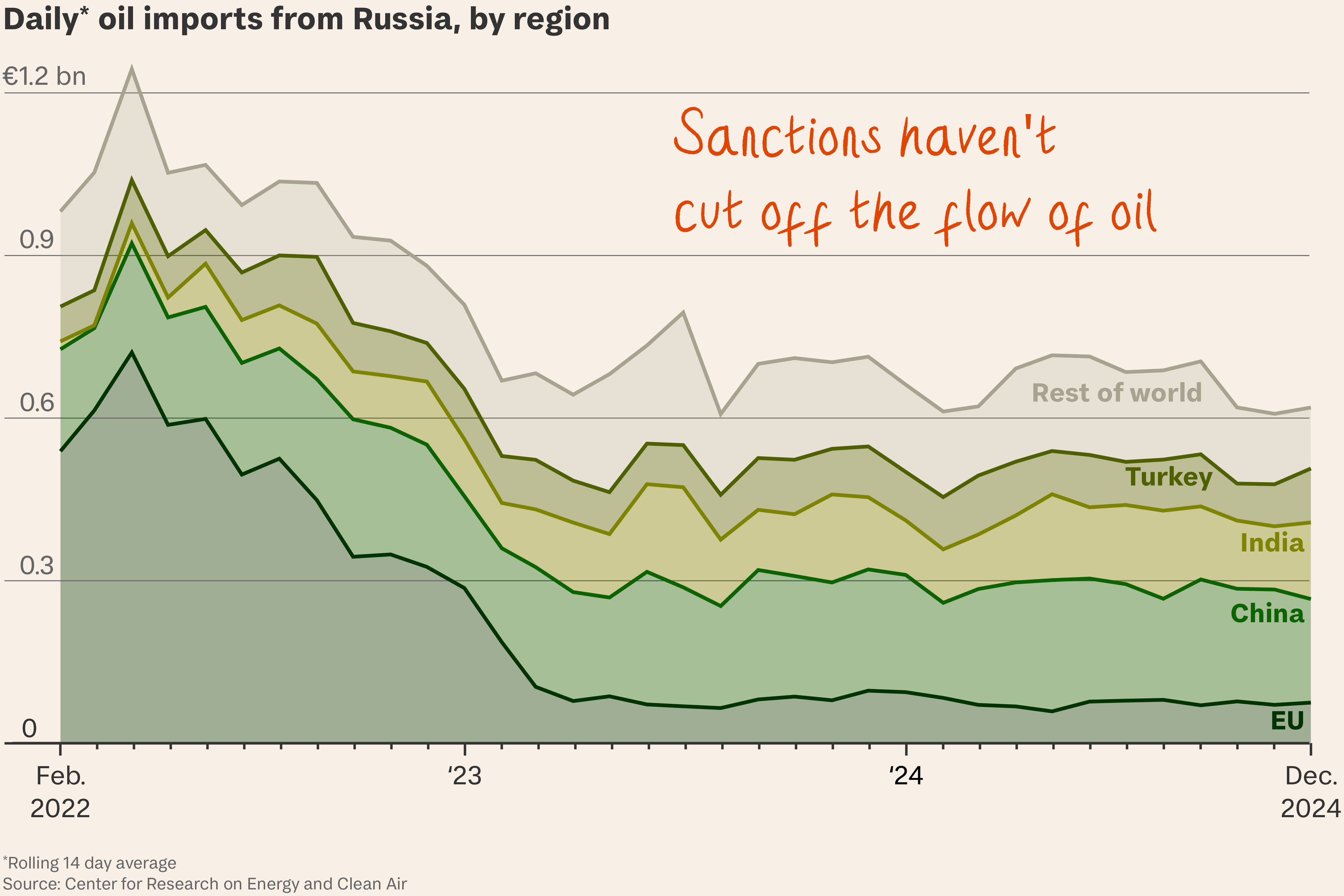
Sanctions were meant to cut off Russia’s oil and gas revenues too. Instead…
- Russian oil is fetching on average $70 a barrel – five times its average production cost – despite an ineffectual $60 EU price cap.
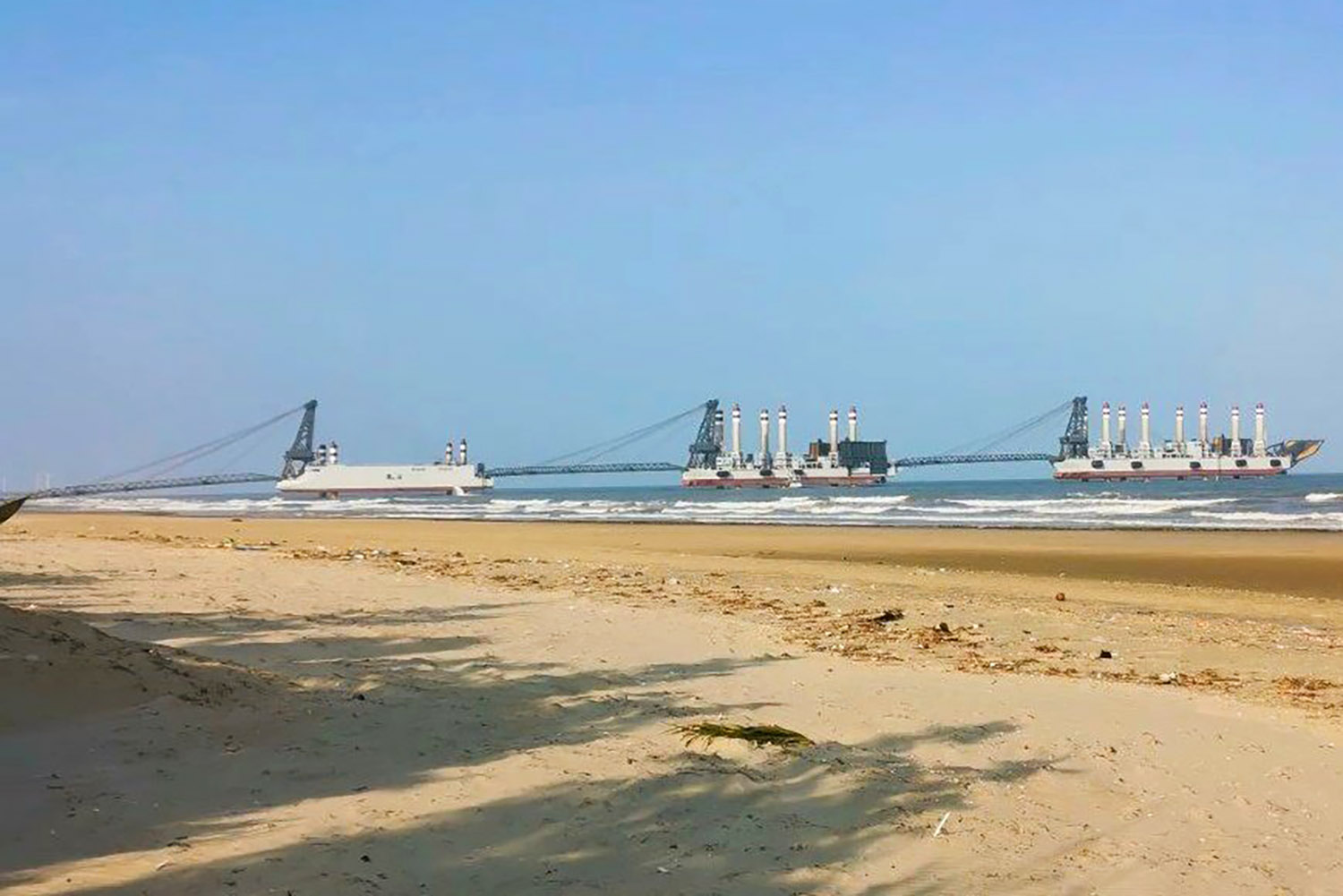
- An illegal ‘shadow’ tanker fleet ships 90 per cent of Russia’s seaborne oil in defiance of the cap, mainly to India, China and elsewhere in Asia.
- At $240 billion, fossil fuel revenues for 2024 will nearly match record levels set in 2022.
- The EU still buys half Russia’s LNG exports and 40 per cent of Russia’s pipeline gas despite being signed up in principle to sanctions and the cap.
Guns galore. Russia doesn’t publish its arms output but its “Other Metal Goods” production has almost tripled since 2021. Munitions factories, running 24 hours a day, added 520,000 new workers in 2023 and aimed to recruit another 160,000 in 2024.
In addition
- Putin claims a tenfold increase in Russian drone production since last year (although some may be being made in China); and
- his projected record military spending of $126 billion next year would have purchasing power equivalent to €350 billion in Germany.
Workers, not so much. What Russia lacks is labour. Unemployment is at 2.5 per cent and 80 per cent of companies have staff shortages. Central Asian migrant workers aren’t backfilling as usual: after the Crocus City Hall terrorist attack in March, reportedly carried out by Tajik nationals, they face increased checks and widespread xenophobia.
With army signing bonuses of up to $30,000 and combat wages up to five times average pre-war earnings, the private sector can barely compete. Packers of Snickers bars are reportedly being offered $4,100 a month.
Slump due? Maybe. At 9 per cent, inflation is more than twice as high as targeted by Elvira Nabiullina, the central bank governor whom Putin has tasked with paying for his war. She has raised interest rates to 21 per cent to try to control prices and sees growth falling from 3.5-4 per cent this year to 0.5-1.5 next – a recipe for stagflation, she admits.
Enter China. Beijing is a de facto ally in the war in every sense except boots on the ground (they’re provided by North Korea). It’s Russia’s most valuable buyer of coal, crude oil and oil products; and a key supplier of cars, clothing, raw materials and other goods affected by EU sanctions.
What’s more… Every month China exports to Russia more than $300 million worth of dual-use items including 70 per cent of the machine tools and 90 per cent of the microelectronics needed on the Ukrainian front. An assassination in Moscow is symbolic by comparison.