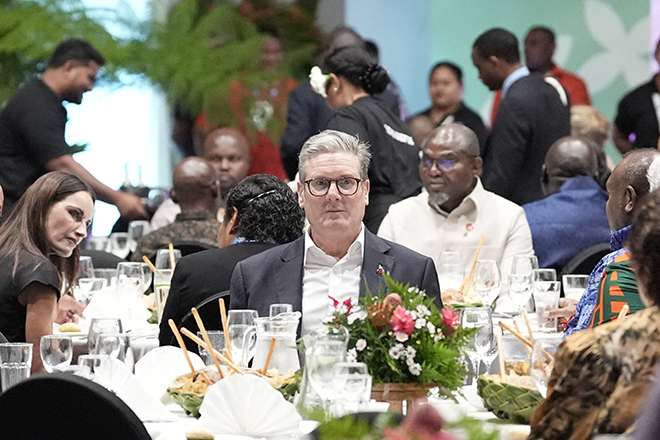
Keir Starmer arrived in Samoa for the Commonwealth heads of government meeting yesterday saying slavery reparations weren’t on the agenda.
So what? He misspoke. They were. Fifteen Caribbean Commonwealth states are determined to push Britain on reparations and an apology for slavery and so far they, not the UK, have been setting the agenda. The issues were already in the draft communiqué.
As a diplomatic ambush it wasn’t a disaster, but it was another sign that Starmer and his team are not yet used to handling the contingencies of leadership. It also
- made the Commonwealth look divided; and
- forced the UK to grapple in real time with the question of reparations as a serious proposition rather than a thought experiment.
Quick change. Sure enough, in the course of a few hours the British position shifted. By the end of the day Downing Street was saying it was open to discussion of non-financial “reparatory justice”, and King Charles had let it be known he would use his first speech as head of the Commonwealth to assure its members he was ready to air the most challenging issues before them “with openness and respect”.
The alternative – a complete refusal to budge – would have laid bare a faultline that could still split the Commonwealth, and which recalls the time the late Queen stayed away from the 2013 Commonwealth meeting in Colombo.
On that occasion she sent Charles instead to avoid being personally associated with a summit hosted by an alleged mass murderer, the then Sri Lankan president Mahinda Rajapaksa.
On this one
- all three candidates to replace Baroness Scotland as the Commonwealth’s secretary general support calls for a “meaningful conversation” about reparations; and
- Starmer may have wanted to focus on the future and issues like climate change, but he found it wasn’t up to him.
As the historian Sir Hilary Beckles notes, “the formal agenda does not determine the real agenda” at these meetings, the most important of which is a six-hour free-for-all tomorrow for heads of government without advisors.
To discuss. Non-financial forms of reparatory justice could include
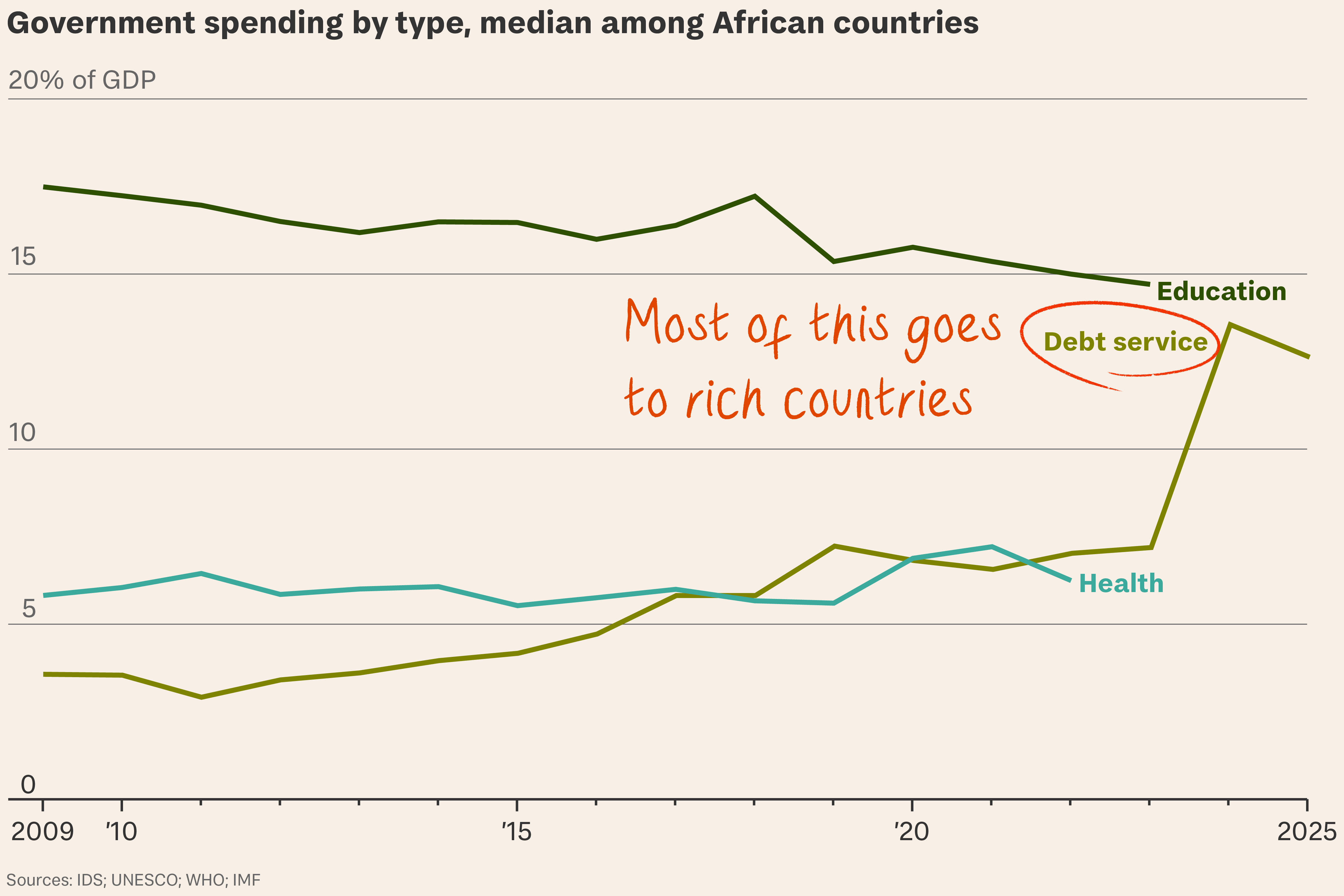
- debt relief for countries with previously enslaved populations;
- more teaching of the history of slavery;
- more honesty from institutions including the monarchy and universities that profited from slavery; and
- an official apology – although the UK continues to rule that out, and opinions vary as to whether it would cost taxpayers nothing or open the way to a flood of costly lawsuits.
Billions and trillions. Financial reparations for the trans-Atlantic slave trade were mooted in 1939 by the economist Arthur Lewis, who said it ought to be possible to estimate a monetary value for 200 years of free labour by 20 million Black men, women and children.
Last year’s Brattle Group report put that value at more than $100 trillion, of which it said $24 trillion would be owed by the UK (eight times the UK’s GDP). So far such numbers have been rejected out of hand by voters and legislators including in the US, where about 80 per cent of whites say they disapprove of forcing the living to pay for the crimes of their forebears.
Money stalks. But the idea of monetary reparations isn’t dead.
- Ta-Nehisi Coates revived it in a 16,000-word essay ten years ago in which he cited a Federal Reserve finding that typical white families’ wealth in the US dwarfed that of typical Black families by ten to one.
- Kamala Harris supported it in 2020, and still says it needs to be discussed.
- In the UK, slave owners' heirs have started seeking ways to pay compensation, having been enriched not only by the inherited fruits of slave labour but also by £20 million in 1833 money, borrowed by the British government to compensate their ancestors when slavery was abolished.
The Charles factor. Sustaining the Commonwealth as a loose confederation of 56 countries and 2.5 billion people was the Queen’s proudest achievement. Her son wants to pick up where she left off but has been heckled by indigenous protesters in Australia and seen the next Commonwealth Games atrophy to a 10-sport event to save money.
What’s more… He serves in this role at the pleasure of the other heads of government. It isn’t his by right – so he will want to do right by them.