After 14 years of Conservative rule that prioritised sound money over investment and divorce from Europe over rubbing along, the UK is poised to vote for change.
So what? Change is hard.
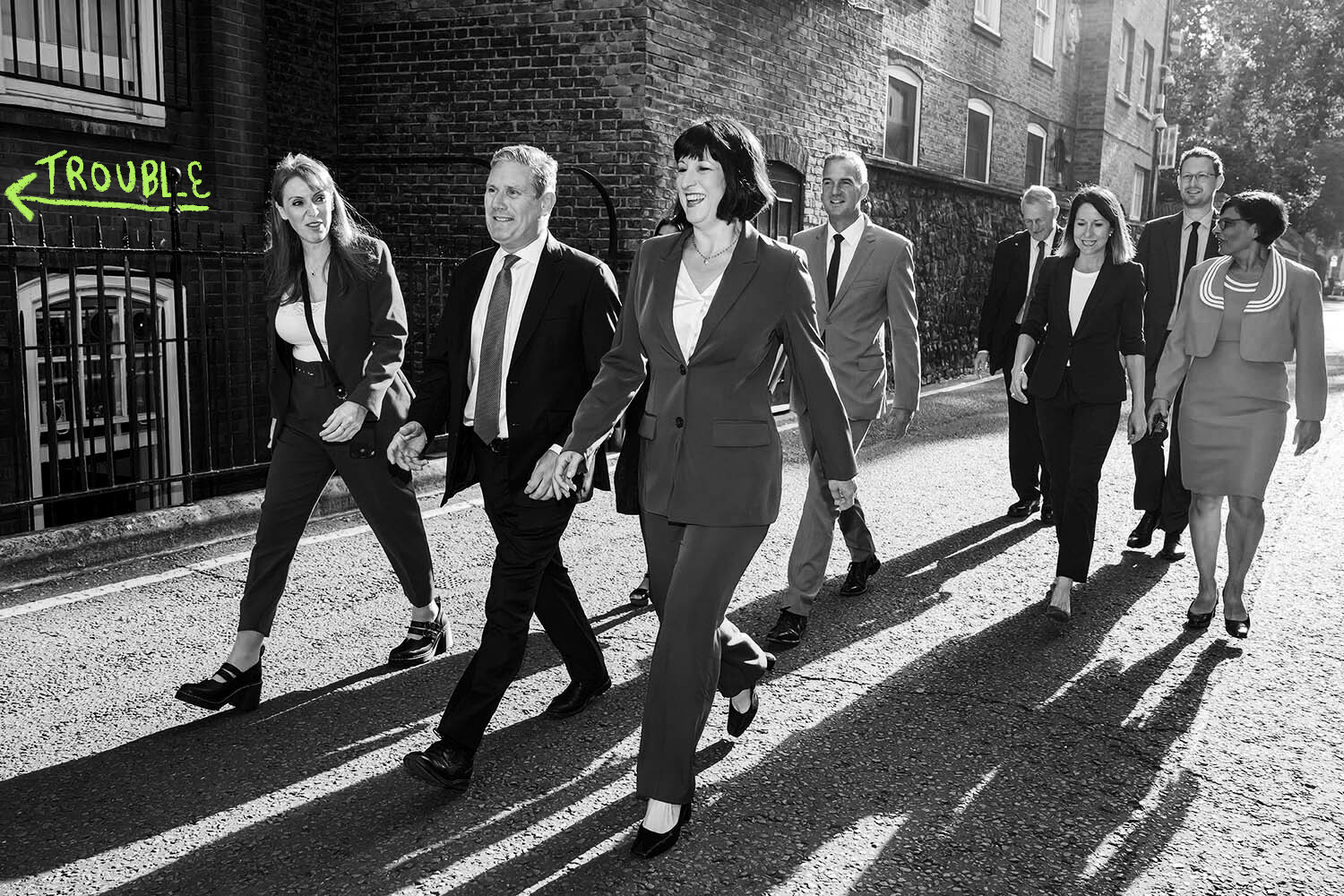
Keir Starmer, poised to bring Labour back from the political wilderness, may be hoping for a political honeymoon similar to the one enjoyed by Tony Blair in 1997. He probably won’t get one.
Many within Labour understand the need for speed.
- They’re planning a fast-turnaround King’s Speech on 17 July, less than a fortnight after taking power, to set out the party’s legislative agenda for the year ahead.
- But they may not have grasped how quickly the public mood – already underwhelmed and apathetic – could turn against a party that has spent much of the past six weeks dodging difficult questions.
Where to start? Labour strategists say that the incoming government will tell the electorate that things are much worse than expected, in order to
- manage expectations;
- buy time to deliver; and
- roll the pitch for inevitable tax rises.
The day before the election was called, the FT reported that Sue Gray, Starmer’s chief of staff, had drawn up a “shit list” of the most pressing issues in his in-tray. She’s said to keep much of it in her head, but enough has filtered out to give a sense of the scale of challenges.
The list includes:
- The potential collapse and/or nationalisation of Thames Water, currently carrying debts of £15.6 billion.
- Public sector pay negotiations: junior doctors in England are demanding a 35 per cent rise (in a deal reached with the Conservative government, nurses got five per cent).
- Full-to-bursting prisons: the latest figures showed the prison population stood at 87,360. Capacity in England and Wales is 88,818.
- Universities going bust: in May the Office for Students forecast that 40 per cent of England’s universities would end this year in the red.
- Local councils on the brink: in the past three years, six have declared themselves bankrupt and a further 26 are said to be close to the edge.
- Underfunded national defences: a senior defence official said this week the UK’s armed forces were unprepared for “conflict of any scale”.
Added to this is the cost of compensation for the victims of the contaminated blood scandal (estimated at £10-20 billion) and the subpostmasters still seeking redress over the Horizon-Post Office injustices.
There’s more. Labour is also being urged to prevent Tata Steel shutting its plant in Port Talbot. The Indian owner of the vast steelworks has announced plans to cease operations at two blast furnaces on the site by 7 July, three days after the election. Around 2,800 jobs are on the line.
Triage time. Labour will have to address at least some of these issues before acting on any of its manifesto pledges. New MPs will be sworn in early next week and Starmer is planning to delay parliamentary recess, even though that means facing Prime Minister’s Questions while still finding his feet.
About that manifesto. There are still questions over policies that Labour kept deliberately vague during the campaign:
- Immigration. Thanks to the warm weather, small boat crossings have surged. Starmer has promised to repeal the Tories’ Rwanda deportation plan, but it’s unclear what he will replace it with.
- Social care. During the campaign Starmer said a thorough overhaul of social care would take at least five years, but millions whose life savings are being drained can’t wait that long and the care sector workers are chronically underpaid.
- Taxes. Labour promised not to raise income tax, National Insurance or VAT, but hasn’t ruled out wealth or capital gains tax increases. Rachel Reeves is not expected to rush out a mini-budget because the Office for Budget Responsibility needs 10 weeks to prepare. But she’ll want to move fast to stamp her authority on the Treasury. September could be the month for her first fiscal event.
- Brexit: Starmer will attend the next summit of Emmanuel Macron’s European Political Community (EPC) at Blenheim Palace this month. Insiders don’t expect a handbrake turn on Labour’s red lines (accepting freedom of movement, rejoining the customs union or Single Market), but it will be a reset moment for the UK and EU.
Rabbit, rabbit. Inevitably, governments get judged on their first 100 days. New Labour seized control of that narrative in 1997 by making the Bank of England independent. It was a legacy-defining moment, and totally unexpected. Starmer and Reeves may not be Blair or Brown, but they’ll want to set the agenda rather than being led by events. A comparable surprise might be on the cards.