
This week, Eton College announced that it will ban new pupils from bringing smartphones to school from September. Instead, pupils will be given a school-issued basic handset.
So what? Welcome to the party.
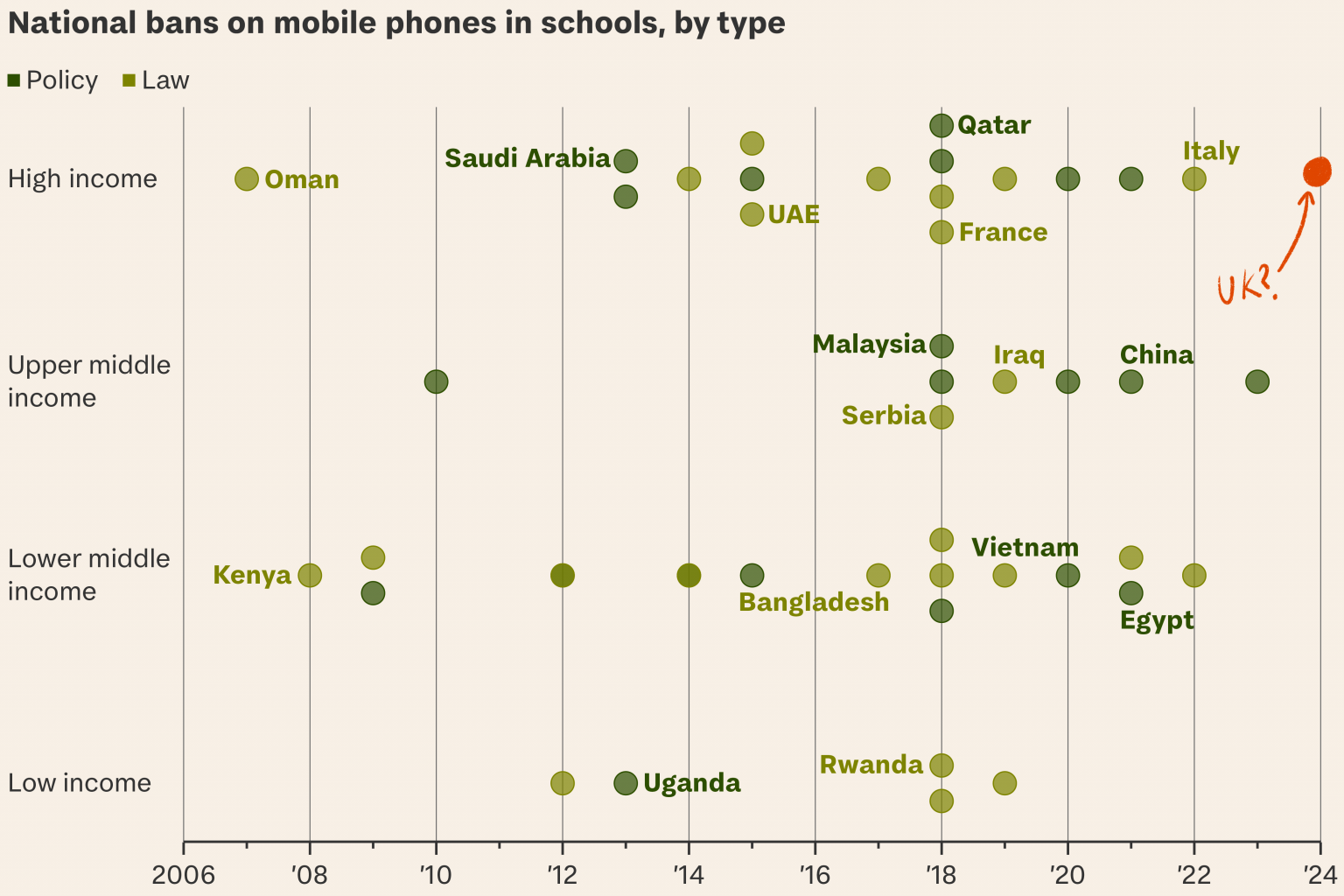
In 2007, former cabinet minister Michael Gove first urged schools to ban mobile phones. Most state schools have already done so – but of the top ten most expensive private schools in the country only three will have bans in place by September.
Does it matter? A smartphone ban in schools makes sense as a precaution. A quarter of five to seven year-olds now own a smartphone, according to Ofcom, rising to 97 per cent of children aged 12. That has raised fears over the impact of screen time, the potential damage to children’s mental health and the increased potential for online bullying.
“It’s a concern when young people are scrolling through reels of mindless entertainment on their smartphones,” says Mary Curnock Cook CBE, education expert and a former CEO of UCAS.
But the science remains inconclusive.
- Rising levels of anxiety and depression in young people correlates with the spread of smartphones. But correlation is not causation.
- There is also not enough evidence on how smartphones affect students’ performance. Four studies from a recent review found a slight improvement – but two of those found it only applied to the most disadvantaged pupils. Others found no difference in academic achievement before or after a phone ban.
Show don’t tell. Andrew O’Neill, headmaster at London’s All Saints Catholic College, a state school, ran a two-month phone ban as part of a 12-hour school day experiment for pupils in year seven and eight. The biggest lesson? “You have to have other things for kids to do,” he said.
“The Tory government destroyed youth services and private providers filled the gap, but only middle-class families can pay £20 for an after-school football club.” The school provided one hour of tutoring and one hour of sports and activities, followed by a meal.
A Spanish study from the Gasol Foundation found disadvantaged children spent 16 more days a year in front of screens and did six fewer days of physical activity compared with kids from wealthier backgrounds. The unglamorous solution to help young people, particularly those from poorer backgrounds, is more government spending on mental health provision and alleviating poverty.
Talk don’t text. Chinese researchers found anxiety predicted problem smartphone use, but wasn’t caused by it. But less screen time, increased socialising and more school sports improved pupils’ mood.
John Wallis Church of England Academy in Ashford, Kent started locking phones away in December and has seen a 40 per cent drop in detentions and a 25 per cent reduction in truancy. In a Hollywood storyline, staff reported seeing pupils playing tag for the first time. O’Neill also removed phones from new pupils to create a sense of belonging while at school, connecting kids to teachers and fellow pupils rather than social media.
Teach don’t ban. A recent London School of Economics study found that only a minority of young people were producing their own content on their phones. The Welsh Millenium Centre Platform programme offers free workshops and courses in digital skills including using phone apps like TikTok in music, video and radio production, using smartphones to teach digital skills leading to technical apprenticeships.
What’s more. O’Neill said public speaking training had the biggest effect on his students’ confidence and social interactions. That’s where Eton has the real advantage.