The 100-Year Life Health Education and Government
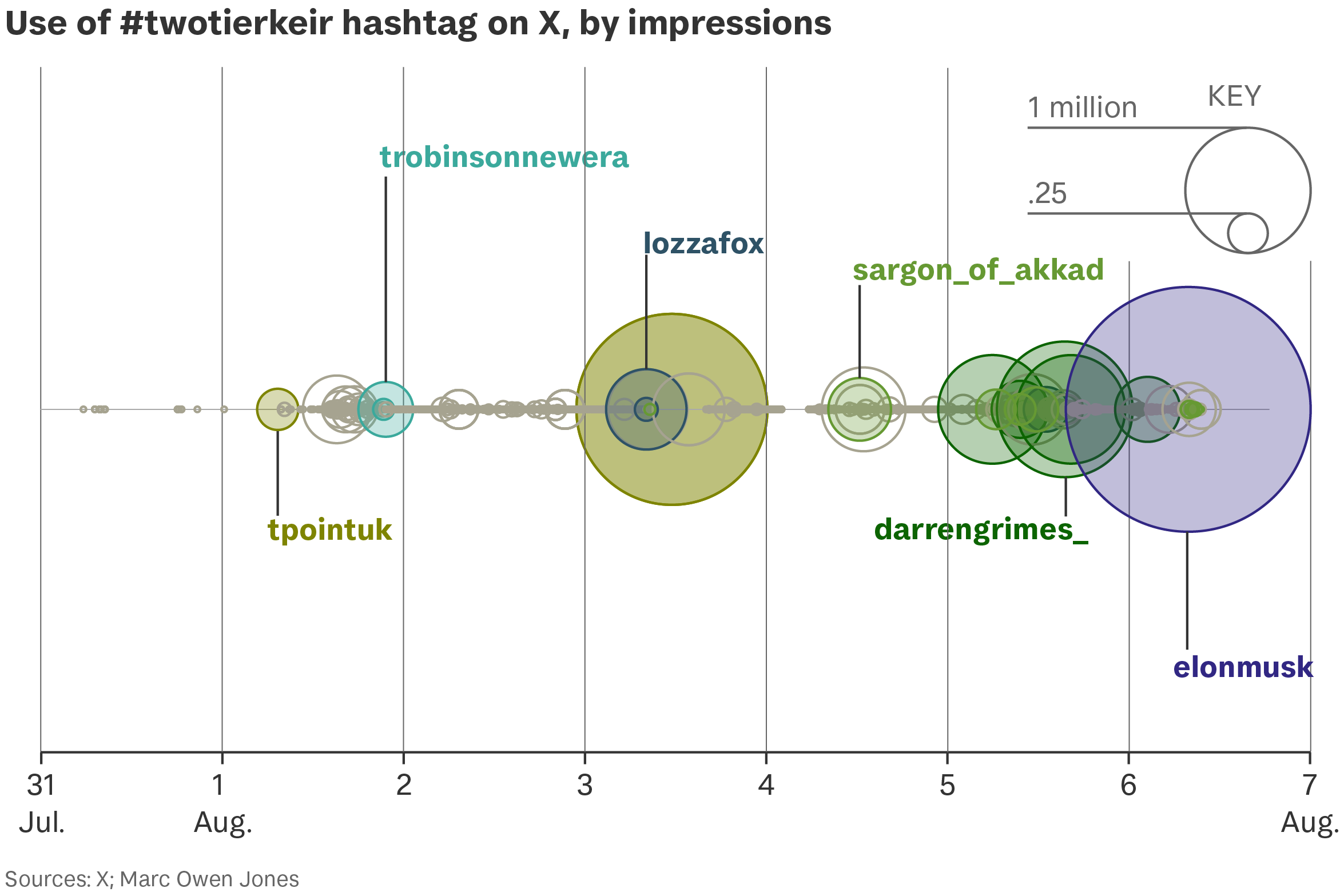
#TwoTierKeir started life about a week ago as a parochial hashtag promoted by X accounts with tiny audiences. It was picked up by far-right activist Tommy Robinson, Reclaim Party leader Lawrence Fox and GB News broadcaster Darren Grimes. And then came the tipping point: Elon Musk, the owner of X, tweeted it out to his 193 million followers. The hashtag associates Keir Starmer with the unfounded accusation that British police treat white people more harshly than people of colour, so-called “two-tier policing”. The term is a strand in the DNA of the modern far-right. It was used back in 2012 by Kevin Carroll, who founded the English Defence League with his second cousin Robinson, when Carroll unsuccessfully ran to be police commissioner in Bedfordshire. At the time, Luton – the town where Robinson was born – was dealing with tensions between the far-right and Muslims. Years later, the term was given a second wind by people angry about lockdown measures, Black Lives Matter and Gaza protests. It was washed by a series of mainstream figures, media outlets, and even MPs. Then, during the riots of the past week, it burst into the public consciousness. Mark Rowley, the Met Police Commissioner, said accusations of two-tier policing were “complete nonsense” and put officers at risk.
Two-tier policing is not an idea that’s reserved for the far-right. Back in 2014 the media platform openDemocracy used it to describe the way in which it saw migrant communities being policed more severely than non-migrant communities.
Some X users have also pointed towards government figures that show that there are 24.5 stop and searches for every 1,000 black people in England and Wales, but just 5.9 per 1,000 white people. Two-tier policing, perhaps, but not in the way that Robinson and others think.
One figure behind its resurgence in right-wing discourse is GB News presenter and former Brexit Party MEP Martin Daubney, who used the term at least four times on X during the Covid pandemic in posts liked tens of thousands of times.
On each occasion he bemoaned what he thought was anti-lockdown protesters being treated more harshly than others, for instance those taking part in Black Lives Matter demonstrations.
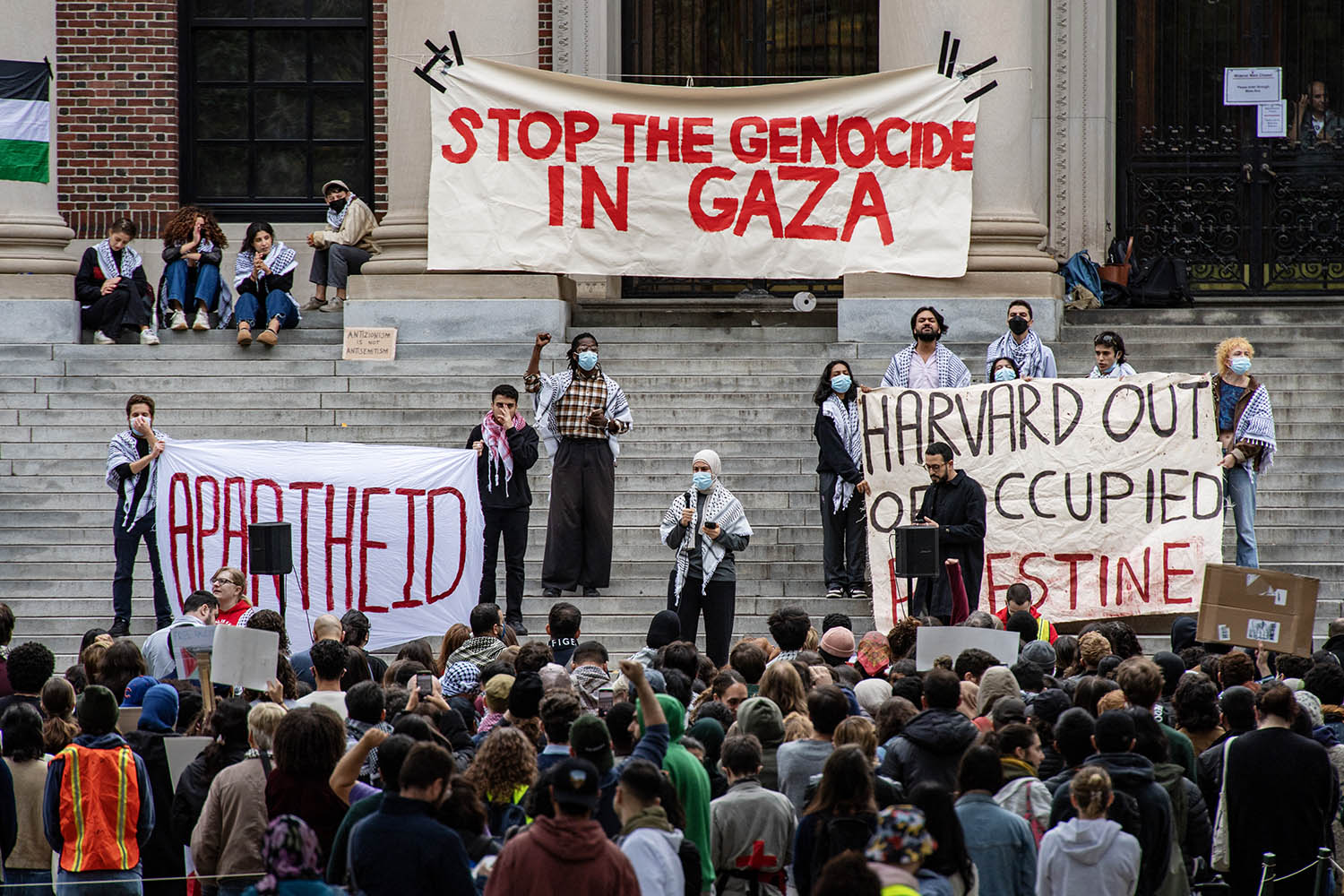
Some three years later, as pro-Palestine marches became a weekly fixture in central London, former Home Secretary Suella Braverman claimed in an article for the Times that the police exhibited “double standards” over its policing of protests.
Braverman didn’t use the term “two-tier policing” then – although Tommy Robinson did that day, 48 hours after his X account was restored by Musk – but she did in April in a Telegraph piece calling for Mark Rowley to resign as Met Police commissioner. On Monday Rowley threw a Sky News journalist’s microphone to the ground when he was asked about the term.
This week “two-tier policing” has fully entered public discourse, referenced by major figures including Reform MP Nigel Farage and Tory leadership hopeful Robert Jenrick (who also mentioned it in March), and realised in rhyming form with the hashtag #TwoTierKeir.
Data analysis shared with Tortoise by the researcher Marc Owen Jones shows how this hashtag rumbled along at a low level before being boosted by major accounts. Users tweeted the hashtag at Musk for several days. Musk used it. Then, said Jones, “it exploded”.
By Tuesday afternoon, when Jones collected his data, Musk’s post had been seen 3.7 million times – 6.3 million as of last night – and the hashtag almost 30 million times.“
It looks like a lot of British accounts,” said Jones, “and then Musk gets involved. He’s taken this discourse transatlantic and fed it into a broader anti-woke agenda that he wants to instrumentalise.”
There is no evidence that far-right rioters are victims of two-tier policing. Starmer has called it a “non-issue”, saying that policing is carried out in the UK “without fear or favour”.
But in some ways the job is done.
Twelve years ago, a term was used by the British far-right in a failed attempt to secure some local political power. Now it has a global audience and is part of mainstream discourse.