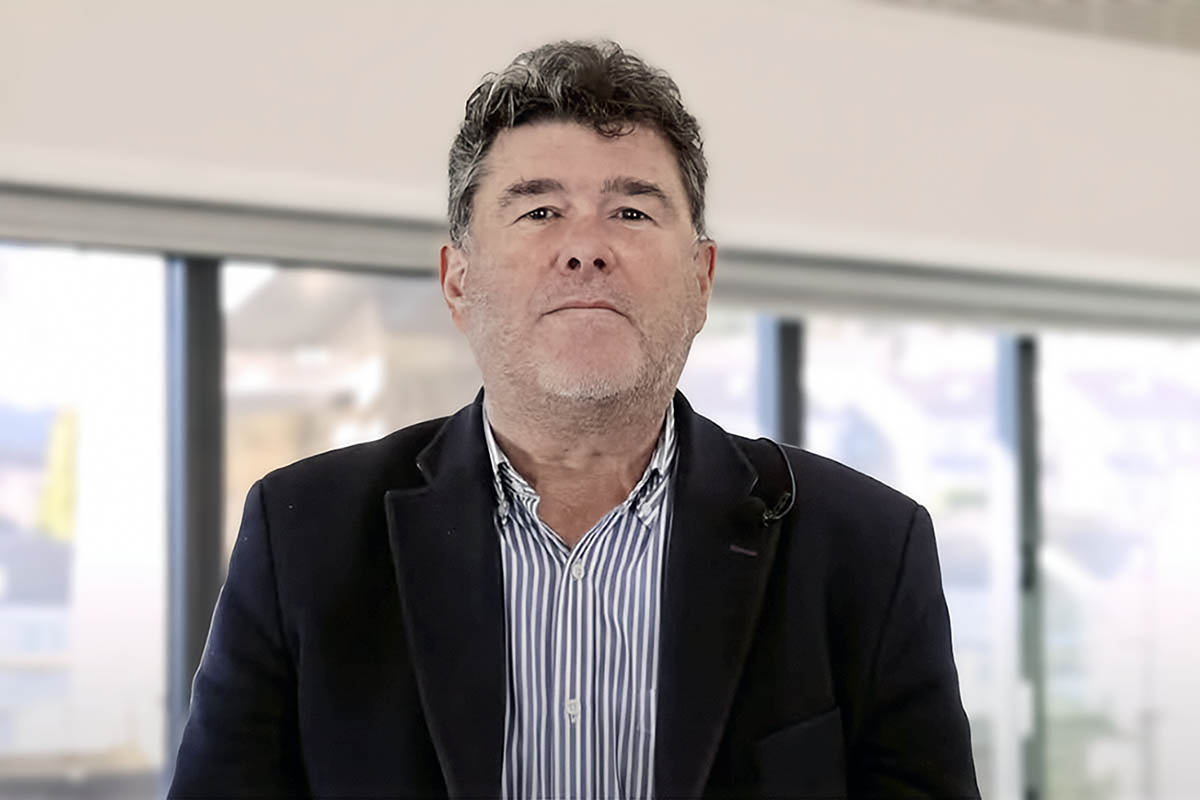
Paul Johnson of the Institute for Fiscal Studies says Britain needs to “pull the growth lever” by means of a closer relationship with the European single market, five-year budget plans for key government departments and a 5p increase in the basic rate of tax.
So what? Johnson is the most authoritative independent commentator on taxation and spending in the UK. In an interview with Tortoise this week he sets out the essential elements of the budget Britain needs but, for short-term political reasons, won’t get. It gives an idea of
- how much more tax revenue is needed to invest adequately in public services, public infrastructure and the public finances;
- how wary politicians in both main parties are of saying what is really needed to return to robust growth; and
- how tight budgets are going to be until a government of either party grasps the tax nettle in earnest.
Dead cat, not even. Jeremy Hunt’s recent budget cut National Insurance contributions by 2 per cent but changed nothing substantively on debt, borrowing or the overall tax burden. Nor did it move the dial politically: nine opinion polls in the nine days since 6 March show Conservative support stuck at 24 per cent, exactly where it was on the morning of budget day.
Johnson’s alternative is partly a response to this political failure: if unaffordable tax cuts don’t inspire voters, it might be time for tougher medicine. It’s also a response to need – non-existent growth, long waiting lists, bankrupt local authorities and “the worst 15 to 20 years of earnings growth since the Napoleonic Wars”.
A summary:
Tax. The non-political Johnson budget would announce wholesale reform of the tax system, to include
- aligning capital gains and income tax rates;
- scrapping stamp duty (which reduces housing supply for buyers and renters);
- raising council tax on expensive houses (to compensate);
- closing loopholes in corporation and inheritance tax; and
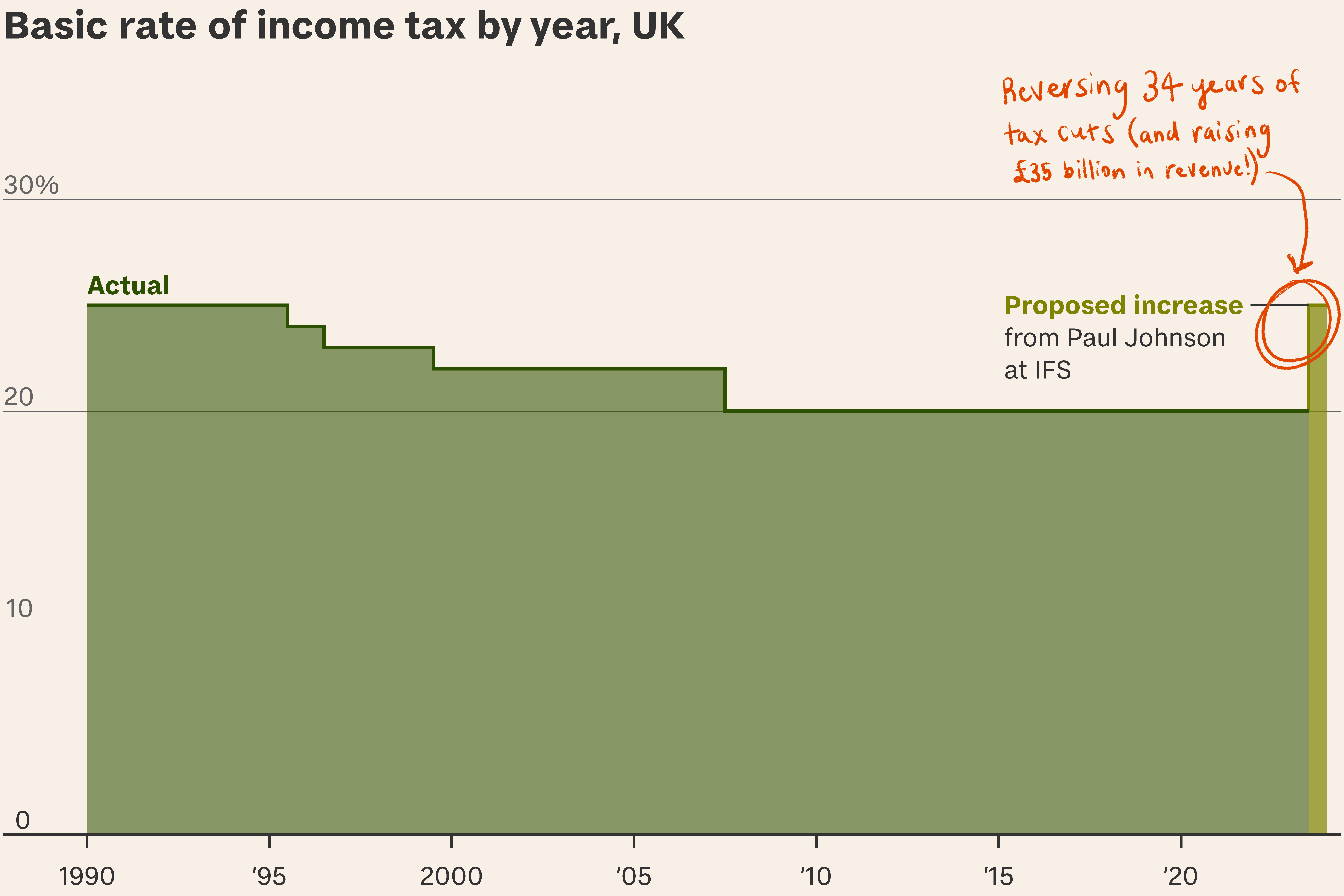
- a 5p increase in the basic rate of income tax, raising the overall tax burden by 1.5 per cent but also raising an extra £35 billion a year.
The new money would have to be spent mainly on “keeping the show on the road,” Johnson says – on avoiding cuts in “unprotected” areas such as justice, transport, policing and local government. But some would be kept back to boost growth by investing it in…
Housing – along with much-needed planning reform to allow more building in the southeast;
Infrastructure – including a long-term infrastructure investment budget; and
Further education – to help match skills to employers’ needs in a tight labour market.
Europe. “I would announce that I was going to do as much as I could to get us as close as we can to the European single market,” Johnson says. That’s not Labour policy, let alone Conservative, but elsewhere he has argued that the closest possible relationship to the single market is vital for investment, and echoed fellow economists who say the UK economy is 4 per cent smaller than it would have been without Brexit.
Within that constraint, annual interest payments on £2.6 trillion of debt amassed partly during Covid and the 2008 crash amount to more than £100 billion a year – leaving real chancellors even less room for manoeuvre.
What’s more. They then constrain themselves further by failing to level with voters on the cost of Brexit and the need to raise taxes boldly. Johnson says he smiled recently on hearing Sir Keir Starmer say Labour policy was to pull the growth lever. “I thought, yeah, well, good luck with finding that, mate.”
Paul Johnson was talking to Rachel Wolf and Sir John Curtice for this week's episode of Trendy, the Tortoise podcast on trends and forces shaping political opinion.