Sensemaker Daily
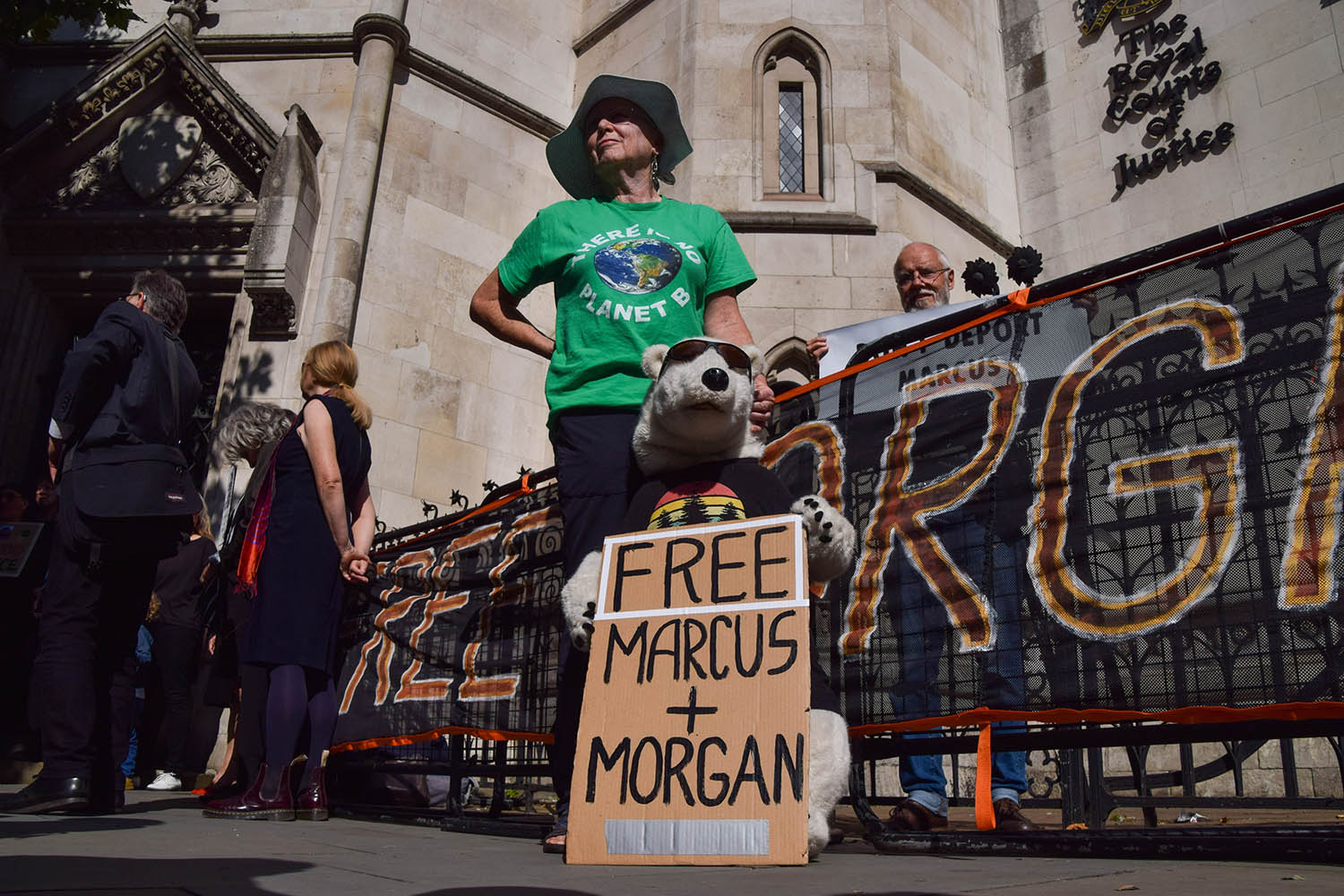
Britain now ranks alongside Bolivia and South Africa in terms of freedom to protest, and Just Stop Oil activists are paying the price
- 104 UK schools were told to close buildings before term starts because of concrete prone to sudden collapse.
- Paris ended a five-year trial of rented electric scooters and took them off the streets.
- Photographers admired a rare blue supermoon, 30,000 miles closer to Earth than usual.
Five weeks ago, Morgan Trowland and Marcus Decker appealed their sentences for protesting against fossil fuels on a bridge over the River Thames. They appeared in the UK’s Court of Appeals by videolink from prison.
So what? They’re still there. Trowland and Decker got three years and two years and seven months respectively, and on 31 July their appeals were rejected. Their sentences are
- the longest ever handed down for peaceful protest in Britain;
- the first high-profile demonstration of the force of a new statutory public nuisance offence, which carries a maximum sentence of ten years; and
- a reflection – the court said – of the will of Parliament.
Jam all day. The pair spent a day and a half high in the cables of the Dartford Bridge last October, stopping traffic below as part of a Just Stop Oil appeal against North Sea oil and gas extraction.
- Police said a heavily pregnant woman needed urgent medical help because she couldn’t get to hospital, and a man missed his best friend’s funeral.
- The government says the new offence allows punishments “that reflect the harm caused by the selfish, criminal minority”.
- The courts have emphasised their responsibility to protect the public from the impact of disruptive protest.
Yes, but. A series of legislative changes is making legal protest increasingly difficult in the UK. The changes have seen the UK downgraded on a global civic freedoms index to “obstructed”, joining Ukraine, Bolivia and South Africa. Britain now ranks below the US, France and Italy on the index.
Step back, and the picture is no less bleak for environmentalists elsewhere. In Colorado, Mylene Vialard faces up to five years in jail for trying to stop the building of an oil pipeline from Alberta. In British Columbia more than 1,000 protesters have been arrested for blocking construction of a gas pipeline through Indigenous land. In both cases property rights are being used to harpoon protest rights in rich countries that can easily afford both.
More than minor. Thanks to the Police, Crime, Sentencing and Courts Act 2022, UK police now have the power to restrict any protest that causes “more than minor” disruption. This threshold was lowered from “serious disruption” by Suella Braverman, the home secretary, in the first ever use of secondary legislation to push through a bill already struck down by parliament. The House of Lords had previously voted the bill down as “draconian and antidemocratic”. Adam Wagner, a human rights barrister, says in practice the new threshold means police can impose conditions on almost any protest which effectively “stop the protest happening at all”.
Fightback? Not much sign yet, and certainly not in Westminster.
- Liberty is challenging some of the changes in court.
- Human Rights Watch has said they raise ‘grave human rights concerns’.
But Wagner says they’ll “likely have a chilling effect on protest generally” and Keir Starmer, the Labour leader, has refused to commit to repealing the act. He says it needs time to “settle in”.
One refugee rights activist facing a sentence of up to six months for obstruction of the highway says “people are scared”, and no wonder.
Civil injunctions are increasingly being taken out against “persons unknown” rather than named defendants, effectively stopping anyone from taking part in the prohibited activity.
These injunctions have been taken out along the entire proposed HS2 route and cover 4,300 miles of strategic road network, meaning anyone protesting there can be held in contempt of court. Some protestors have even been charged costs incurred by companies taking out these injunctions.
The argument from climate activists is that the government is acting against the public interest by failing to make adequate progress towards net zero and licensing new oil and gas fields.
Showdown season. Dates on which police and protesters are likely to clash include
- 10-13 September – XR protest, Marble Arch, London
- 16 September – XR march, London
- 1-4 October – Conservative party conference, Manchester
- 8-11 October – Labour party conference, Liverpool
- 29 October – Just Stop Oil week-long march, East of England and Midlands
- 5 November – Just Stop Oil week-long march, South West, South East, the North
- 7 November – Republic State Opening of Parliament protest, London
- 12 November – Just Stop Oil week-long march, London


