
- Doctors reported the UK’s first successful womb transplant.
- Pakistani commandos rescued all eight passengers in a stranded cable car.
- The body of a skier lost in 2001 was revealed by Austria’s melting Schlatenkees glacier.
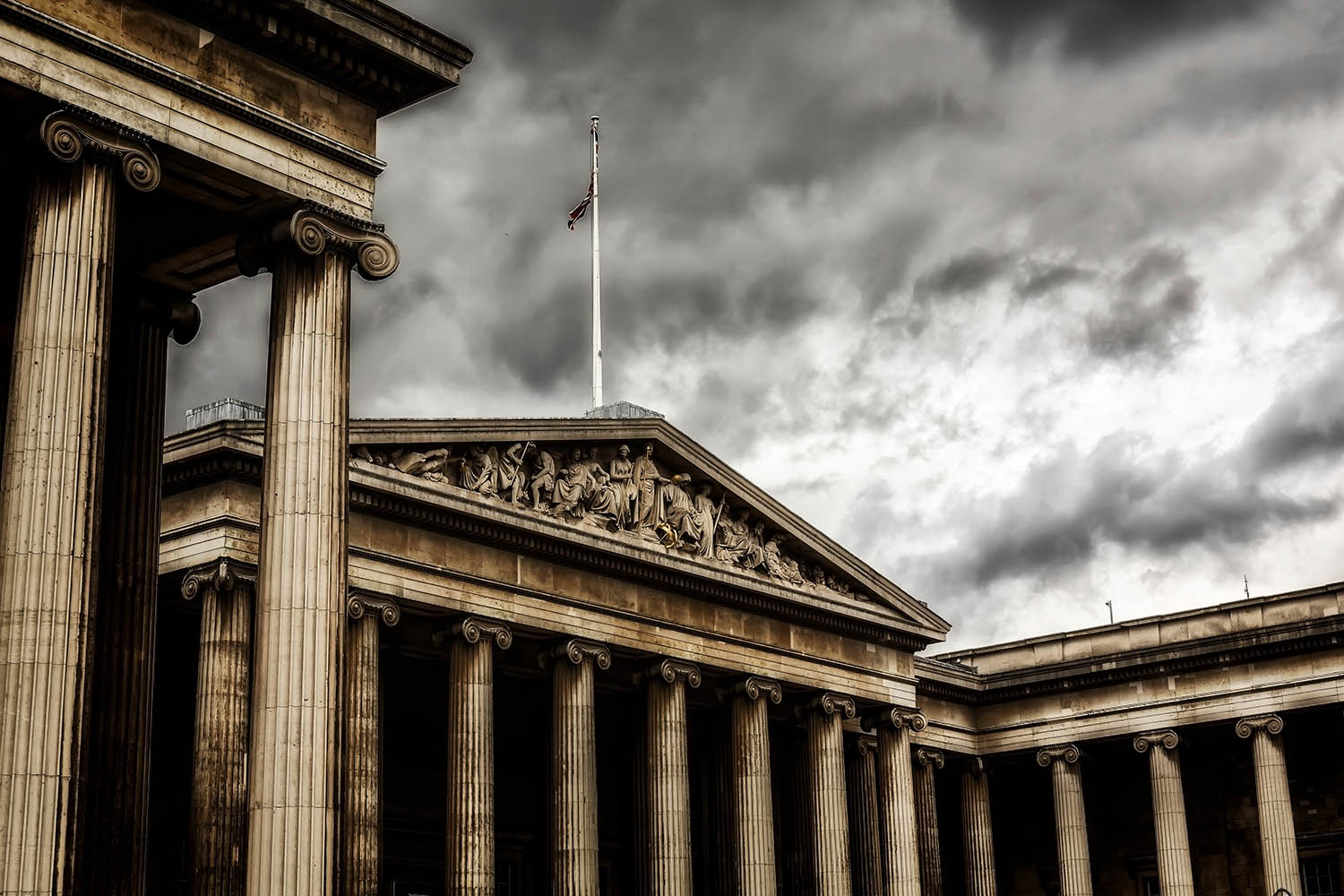
Last week the British Museum admitted an unspecified number of ancient pieces of jewellery had been stolen from its collection. Yesterday that number was put at up to 2,000.
So what? For a museum to lose anything is unfortunate. For a museum that lectures the world on its superior curation and security to lose thousands of pieces – while governments from Greece to Rapa Nui demand the return of artefacts they consider looted as colonial trophies – is worse than unfortunate. Much worse.
- It weakens the already threadbare argument that the museum is somehow a superior home for the Parthenon Sculptures than the world-class Acropolis Museum next to the temple in Athens from which Lord Elgin removed them in 1801.
- It blows to the four winds what remains of the argument that artefacts in the BM collection never seen by the public – including the missing jewels but also eleven Ethiopian tabots seized at Maqdala in 1868 – are still worth keeping for their own security.
- It raises the question whether the thefts and the recently announced departure of the BM’s director, Hartwig Fischer, are linked – and who else should be held responsible.
So far any connection between the thefts and Fischer’s move is strenuously denied, but he faces serious questions anyway. Some derive from emails seen by the NYT and the BBC between the museum and an art dealer who warned two years ago that articles were going missing from the antiquities department. The questions include:
- When did the museum first know ancient jewellery was being stolen? George Osborne, the former chancellor and chair of its trustees, said last week it only learned of the losses “earlier this year”, but the emails from the dealer, Ittai Gradel, are dated 2021.
- Why didn’t the museum act sooner, instead of telling Gradel after a brief investigation that all the objects concerned were accounted for and there was no suggestion of wrongdoing by museum staff?
- Why have no arrests been made even though Peter Higgs, a veteran antiquities curator linked via his Paypal account to museum items offered for sale on Ebay, has now been fired?
- Why is Fischer leaving?
And there’s a broader question, posed by Lewis McNaught, editor of Returning Heritage, an online magazine about art restitution: “What on earth is going on at the British Museum? Its reputation for careful governance is being shattered.” He lists the overlapping mysteries of the tabots, the marbles, the Higgs sacking and the Fischer succession and concludes with quiet understatement: “It seems chaotic.”
Unsafe. The Telegraph has reported that the BM has no full catalogue of its collection of more than 8 million items, fewer than 1 per cent of which are on display. McNaught says every item is in fact catalogued and trackable if stolen, but that when he worked in the Egyptian antiquities department some years ago “frankly there was no security”.
Unforgivable. Oxford’s Professor Martin Henig, an expert on Roman art, has called the losses unforgivable and horrifying. Greece’s culture minister, Lina Mendoni, said they were “extremely sad and serious”.
Touché. Osborne has called in the Met police and announced a full internal review. It will have to cover the Gradel warnings, which included a tip-off sent to Fischer’s deputy, Jonathan Williams, after Gradel saw a museum item worth perhaps £50,000 on sale on Ebay for £40.
Despina Koutsoumba, head of the Greek union of archaeologists, told the BBC today: “They cannot any more say that Greek cultural heritage is any more protected in the British Museum.” In truth no one has been able to say this for nearly a century. In 1937 Lord Joseph Duveen, a BM benefactor, ordered the Elgin Marbles to be cleaned of the last remaining traces of their vivid original colours using metal scrapers. He preferred nude tones.
Photograph Getty Images


