Contrary to what its critics say, the festival isn’t pandering to political correctness – it was always meant to be inclusive.
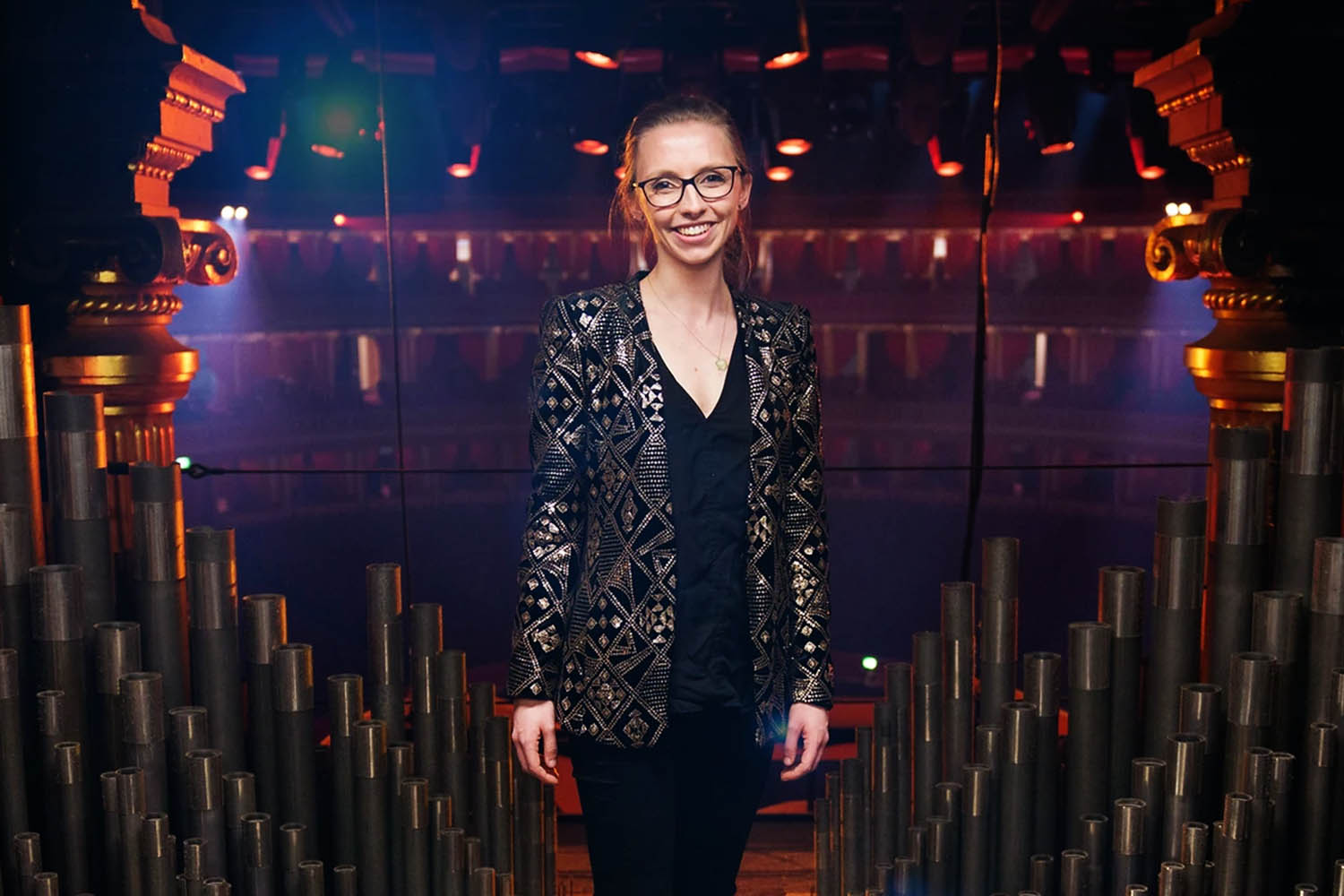
Anna Lapwood’s BBC Proms debut on 25 July is – at first glance – an unusual evening for the 130 year-old Festival. The 29-year-old organist’s Moon and Stars solo show starts at 10.15pm. The 9,999 pipes of the Royal Albert Hall’s organ will be put through their paces with work by Philip Glass, Claude Debussy and Hans Zimmer, with millions of TikTok users amongst her huge fan base.
Lapwood has built a following on the platform for her all-night rehearsal sessions – she’s organist in residence and the Hall is only free between midnight and 6am. She plays requests and Benedict Cumberbatch has been known to drop in around 2am.
On this year’s Proms programme – which kicks off this weekend – are a Northern Soul Prom, Rufus Wainwright, an orchestral version of Stevie Wonder’s Innervisions and 15 new commissions, 10 of which are composed by women. The opening and closing nights have female conductors, Dalia Stasevska and Marin Alsop respectively. Beethoven’s Fourth Symphony is to be performed by the UK’s Chineke! Orchestra, Europe’s first majority Black and ethnically diverse orchestra. Musicians include severely burned violinist Augustin Hadelich, blind pianist Nobuyuki Tsujii and Felix Klieser, the French horn player who was born without arms.
So what? Classical music journalists have been known to grumble about the so-called “woke BBC”, so it’s tempting to assume this is liberal pandering to political correctness selling out the true vision of this great festival. But it isn’t. The Proms has innovation in its DNA. Co-founder Henry Wood’s mentor Robert Newman envisaged an informal atmosphere with eating, drinking and smoking. He wanted to create “a public for classical and modern music.”
Modern music? Soft Machine introduced rock Proms in 1970. There have been Aretha Franklin Proms, reggae Proms, Ibiza club tunes Proms and Benedict Mason’s 1995 Clarinet Concerto, where only the soloist remained on stage while the London Sinfonietta walked the corridors of the Royal Albert Hall for more than half an hour armed with click tracks and music.
The Proms vs classical music. According to the 2022 Donne Report, of the 20,400 pieces played by 111 global orchestras last year, 7.7 per cent were written by women, 92.3 per cent by men of which 87.7 per cent were white and 76.4 per cent were dead. 2021 research from the Arts Council found that women were the majority of trainee musicians, but men were the majority of working musicians. Trainee musicians are ethnically diverse. Working musicians are white. The Arts Council could not find any data on the disability status of working musicians.
Follow the money. This year’s sold-out shows include Bollywood, Simon Rattle, Elim Chan conducting Elgar’s Enigma, Augustin Hadelich with the Tonhalle-Orchester, Stevie Wonder, Dalia Stasevska’s first night and a Horrible Histories opera. Popular classical and modern music as originally planned. What isn’t selling is the hardcore elitist performances. Last year’s performance of Bruckner’s Sixth Symphony – a dynamic, monumental piece – was the worst attended Prom in a century. Newman’s public has chosen the classical and modern music it likes. Orchestras take note.
Photograph Andy Paradise courtesy Anna Lapwood.co.uk


