What just happened
- Yevgeny Prigozhin said he would pull Wagner troops out of Bakhmut.
- Britain’s Conservatives lost hundreds of council seats in local elections (more below).
- A US jury cleared Ed Sheeran of plagiarising Marvin Gaye.
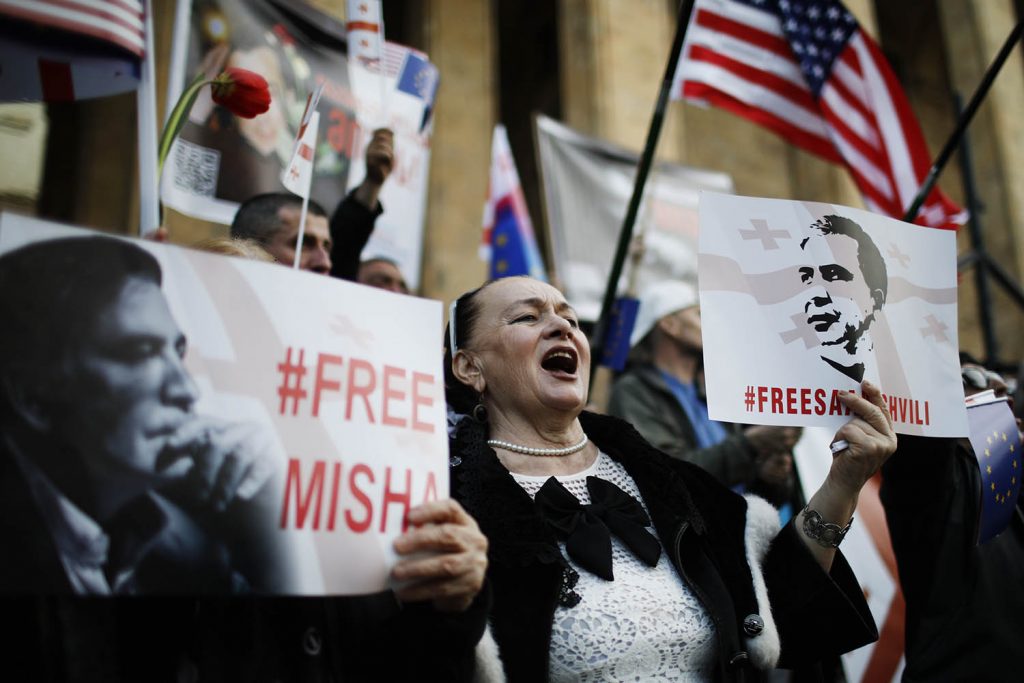
A giant of post-Soviet democracy lies dying in hospital in the country he tried to free. His name is Mikheil Saakashvili – ex-president of Georgia, diva, serial philanderer and for many years Putin’s public enemy number one. He claims to have been poisoned with heavy metals by Georgia’s current pro-Russian regime. Those who have seen him say he has lost nearly half his weight. His lawyers say he has only days to live.
So what? Saakashvili’s condition reflects that of Georgian democracy. It is barely on life support. Two years ago this would have been unimaginable, says a leading voice from Tbilisi’s embattled independent media. Georgia was still the proudly pro-western country of the Rose Revolution, manoeuvring for membership of Nato and the EU.
Now: “Putin has really won.”
Long game. This is a victory 15 years in the making. In 2008 Russia invaded Georgia, occupying South Ossetia in the high Caucasus. The tanks never left and now they are an hour from the capital. They could cross the country’s main highway and cut it in two but Russia doesn’t need them to. “They have what they want,” says Natalia Antelava, editor-in-chief of Coda Story, who has known Saakashvili throughout his career.
What Russia has in Georgia includes a pliant leadership dominated by the pro-Kremlin billionaire Bidzina Ivanishvili, and a state denied control of its own borders in Abkhazia as well as South Ossetia. Its security forces are thoroughly penetrated by Russian agents and its state-backed media peddles relentless anti-Saakashvili propaganda.
Georgia’s relapse into the hard embrace of Putinism is a cautionary tale that
- defies the wishes of the vast majority of Georgians who have made their enthusiasm for EU membership and alignment with the US clear since the 1990s;
- exposes the complacency of Western governments that have allowed it to unfold in plain sight; and
- provides Putin with a template for Ukraine, and ample reason to believe that if he digs in he will prevail there too.
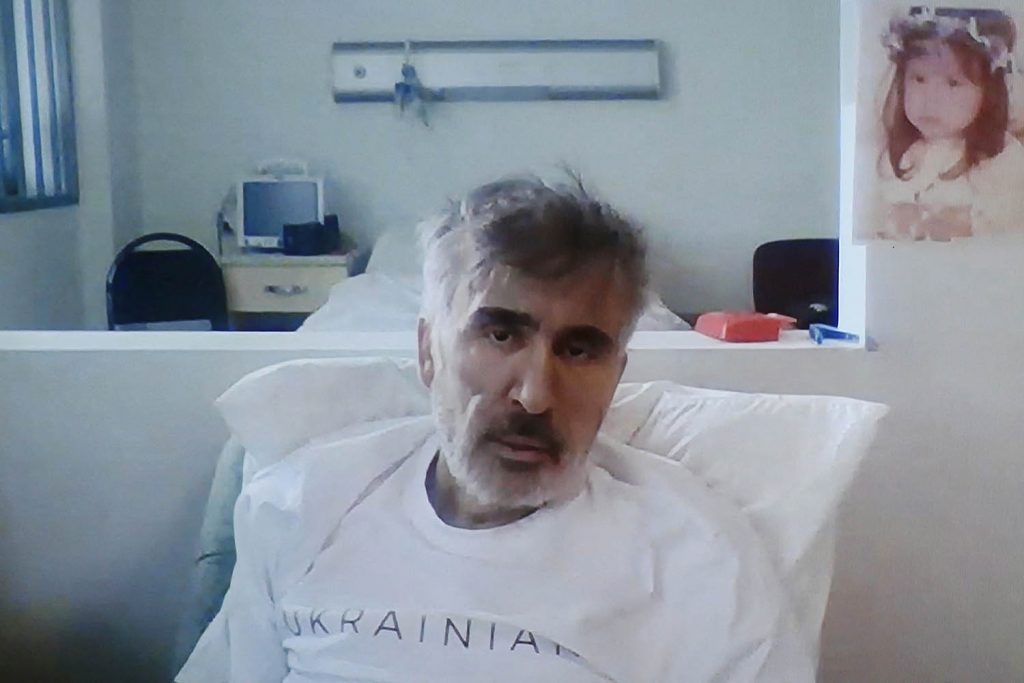
Saakashvili’s fate will be bound up with Georgia’s. After two terms as president (2004-07 and 2008-13) he left to teach in the US and serve as governor of Odesa in Ukraine, where he was granted citizenship. Convicted in absentia of abuse of power – on charges he rejects as political – he was arrested on his return in 2021 and is being held in hospital against his will.
The ask. Georgi Chaladzi, a friend who has been allowed to visit him, says he wants Saakashvili to be allowed to leave for treatment in the West for heavy metal poisoning, osteoporosis and other conditions: “We are ready to send anywhere. Germany, France, the UK, the United States… Of course, not Russia or North Korea.”
The risk for Georgia, Chaladzi claims, is that if Saakashvili is allowed to die in Tbilisi any hope of EU accession would be closed off.
The reality is that his supporters have failed to protest en masse on his behalf and Georgia’s destiny depends more on the outcome of the war in Ukraine. “Georgia is now effectively a Russian protectorate,” Antelava says, its government aligned with Moscow while pretending to heed voters’ Europhile instincts. It’s likely to become “a Lebanon of the Caucasus” – a playground for richer neighbours but a graveyard of the dreams of the 2003 revolution that swept Saakashvili to power.
Like Georgia, he has changed beyond recognition – but a successful spring offensive on the far side of the Black Sea could transform them both again.
Exclusive: Women in Afghanistan
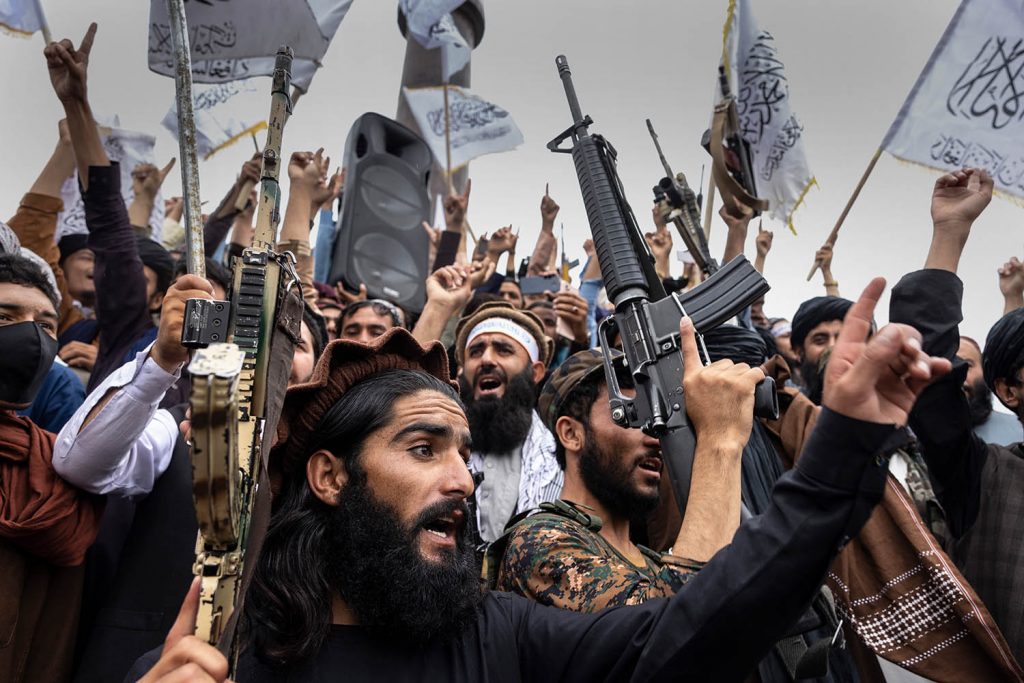
Two United Nations organisations in Afghanistan have bowed to Taliban pressure for male-only offices, Tortoise has learnt. Unesco and Unicef have outraged fellow aid workers in Kabul who fear the organisations are normalising the gender restrictions. In early April, the Taliban banned Afghan women from working for the UN. Initially, the aid organisations presented a united front – everyone sent all their male and female Afghan staff home while they weighed their options. But now it seems the UN culture and education body, and the fund for children, have bowed to the fanatics’ demands. What will that mean for the millions of Afghan women, who desperately need help? It will be even harder to get them aid.
Coronation inflation
In 1953, it was coronation chicken. In 2023, it’s coronation quiche. But tomorrow’s signature dish hasn’t gone down well. Even the ardent royalist Jacob Rees-Mogg MP finds its broad beans “loathsome”, and Charles should know they’re out of season anyway. Worse, the rest of the ingredients list includes some of the everyday items most affected by food price inflation. According to the new shopping prices comparison tool from the Office for National Statistics, the price of making the quiche has increased by 26 per cent in the past year, up from £2.01 to £2.53. The main culprits are eggs (up 32 per cent), milk (38) and cheese (42). Coronations don’t come cheap. NB: the lard, spinach and broad beans aren’t included in the ONS calculator.
TikTok ads
The world’s fastest-growing social media platform is going to offer publishers the chance to sell ads against their content and keep half the proceeds. Hitherto only a chosen elite has been able to do this. Its members included Condé Nast, NBC and Buzzfeed. The WSJ says a new product called Pulse Premiere will now be available to anyone who pays for it, and in principle it will give them a slice of the giant loaf of money heading TikTok’s way despite threats to ban the platform in the US. By one estimate TikTok’s US ad revenue will increase by 36 per cent this year to $6.83 billion, with room to grow – it will still only have 2.5 per cent of the total US digital ad market. A cautionary note for potential Pulse Premiere buyers: TikTok ad money didn’t do much for Buzzfeed, which last week said it was closing its news division… for want of ads.