
What just happened
- More than 80 people were killed in a stampede for financial aid in Yemen.
- Public confidence in the importance of childhood vaccines fell worldwide during the Covid pandemic, says Unicef.
- The first American-made Patriot missile defence systems arrived in Ukraine.
Rishi Sunak is in trouble again over his billionaire wife’s business interests. He is under investigation by the parliamentary standards commissioner for having failed to declare an interest.
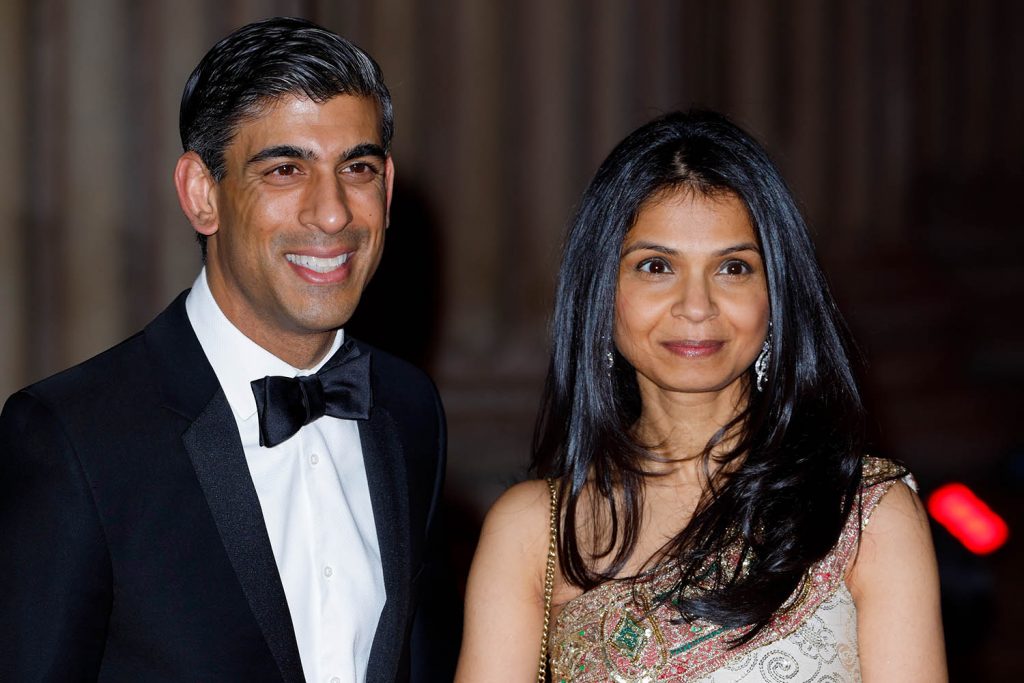
So what? Sunak is the UK’s prime minister; maker of its laws, leader by example. By virtue of his marriage to Akshata Murty he’s also the richest ever occupant of Number Ten. But he seems wilfully blind to the many ways this affects his view of the world and voters’ view of him. It’s turned into something of a pattern.
He did not foresee
- the outrage his wife’s non-dom status prompted, when it emerged during his time as chancellor – as he was raising UK taxes that she was able to avoid;
- the row that blew up later when it emerged that Infosys – the company his father-in-law owns and the source of his wife’s wealth – was still operating in Russia; or
- that his wife’s shareholding in a company set to benefit from changes to childcare policy announced in last month’s Budget would also be politically dangerous.
The conflict. Murty owns 20,000 shares in Koru Kids, a childcare provider positioned to profit from the Budget’s promise of 30 hours of free state-funded childcare a week for one and two year-olds. But you wouldn’t know it from official records, until yesterday:
- The holding was acquired in 2019 but there is no mention of it in the first six updates of the register of ministerial interests since then.
- It is mentioned in yesterday’s update – as a brief footnote. And only after it was revealed by journalists.
- At a parliamentary committee hearing on childcare policy last month, Sunak didn’t mention Murty’s links to Koru Kids even though it was one of six companies involved in a pilot scheme under discussion and even when asked directly if he had any interest to declare. “No,” Sunak said. “All my disclosures are declared in the normal way.”
The ministers’ register is not required to be exhaustive in terms of family members’ interests, according to the current independent advisor on ministers’ interests. But interests’ relevant to ministerial responsibilities do have to be included, including those of close family; and the code of conduct, which applies to all MPs including Sunak, requires them to be “open and frank” about their interests.
Last time. This time last year, when Sunak was chancellor, it was Murty’s undeclared non-dom tax status that tripped up her husband. When the non-dom story broke, it revealed a rare side to Sunak: angry, defensive and unwilling to budge.
This time he’s attempted a more relaxed response, but the substance is the same. In a letter to the standards committee published yesterday, Sunak said he was responding “in my capacity as prime minister” – code for journalists to back off from probing into his family’s affairs even though that is an integral part of their jobs.
It was exactly the kind of response his Conservative critics feared and Labour hoped for.
Disintegrating integrity. Sunak’s reputation, like that of Labour’s Keir Starmer, is largely staked on his claim to integrity. Number Ten hoped this would stand in useful contrast to Boris Johnson’s reputation for mendacity as local elections approached. Instead Sunak looks at best politically tone-deaf.
Standard fair. As Sunak is being investigated by the standards commissioner, Johnson is being investigated by the privileges committee. A string of other Conservative MPs including Matt Hancock, Christopher Pincher, Scott Benton and Steve Brine are also being probed.
As the Westminster Accounts show, even MPs’ fortnightly register of interests is no guarantee of transparency. Without a better grasp of the political risks of sleaze and wealth, Sunak’s blindspot could prove a fatal flaw.
BP revolt
In February BP abandoned a commitment to cut oil and gas output by 40 per cent by 2030, instead saying it would reduce its output by a quarter. The decision sent BP’s shares to multi-year highs but has not gone down well with some investors. Nest, a pension provider that claims to represent one in three workers in the UK, says it will vote against the reappointment of BP chair Helge Lund in protest, joined by four more of Britain’s biggest pension schemes, which together manage some £244 billion in assets. “We have serious concerns about BP reaching its 2050 net zero goal and the long-term success of the company if it continues on this path,” Diandra Soobiah, head of responsible investment at Nest, told the FT. Pension funds have to think long-term. BP needs to look beyond the sugar high of last year’s war-induced energy price spike and pay attention.

North Sea “fishermen”
Russia has a fleet of around 50 vessels disguised as fishing trawlers and research vessels that seem to be preparing to sabotage coastal wind farms and communication cables around the UK, North Sea and the Baltic. When Scandinavian journalists tried to approach one of the boats, the Admiral Vladimirsky, a man with a balaclava and military-grade rifle came out to see them off. An investigation found the boats were regularly turning their international trackers off near key marine infrastructure points. One Danish intelligence officer said Russia was preparing sabotage efforts to give Moscow options for a divide-and-conquer strategy in the event of full-scale war with the West.


