Sensemaker Daily
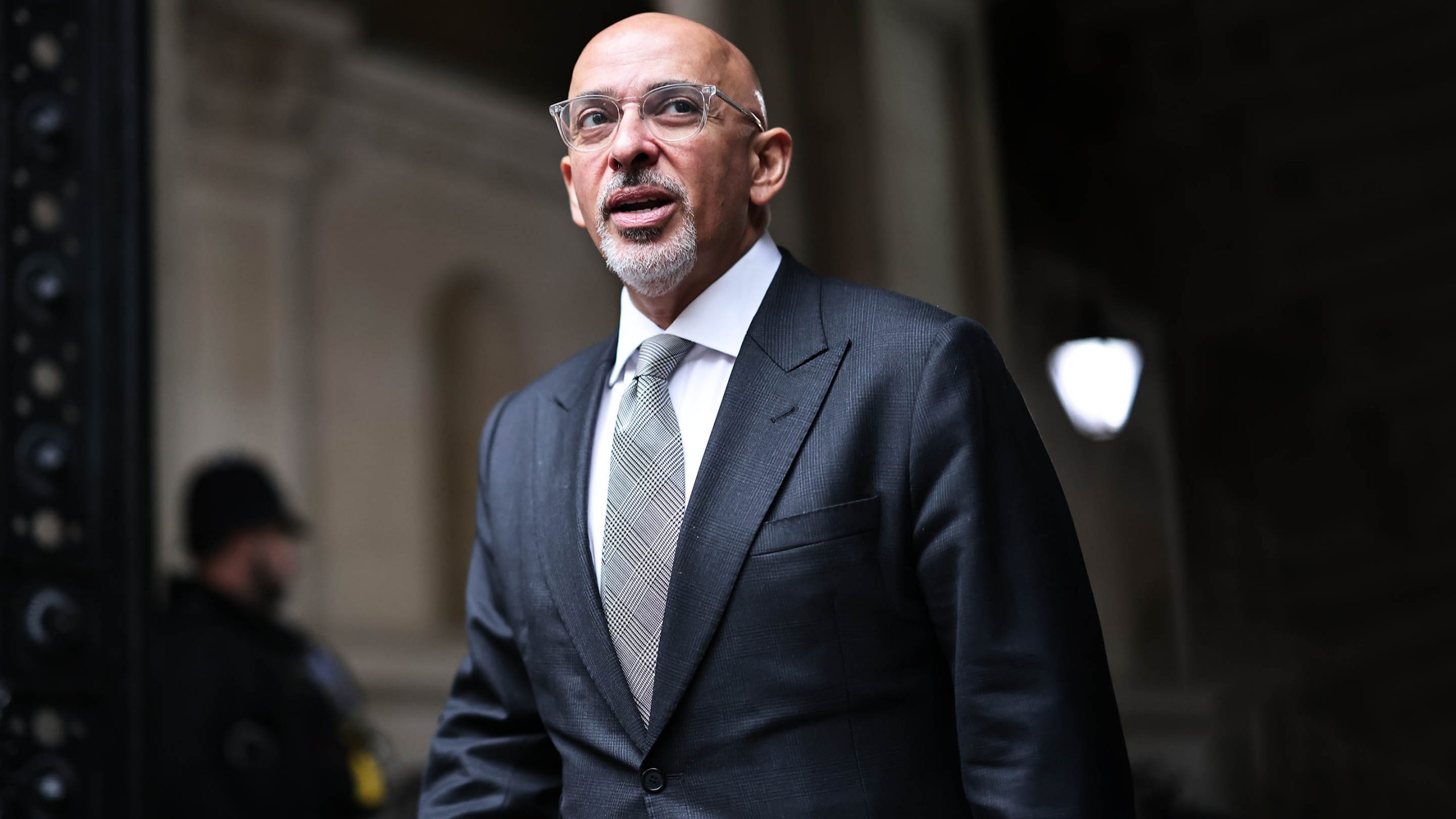
The PM should not have needed Sir Laurie Magnus’s epically scathing report to decide that his now-former party chair had to go. He lacks the instincts, guile and character of of a true political leader
At last, then, someone gets it: the four-page letter to Rishi Sunak by Sir Laurie Magnus on his inquiry into the tax affairs of Nadhim Zahawi really is one for the ages. Not only did it immediately lead early yesterday morning to the PM’s decision to sack his party chairman. It also revealed that, when it comes to standards in public life, there is a new sheriff in town. As one startled cabinet member put it to me not long after the news broke: “Jesus. This guy really is a badass.”
Lethally clear and formal in language and construction, the letter from the Independent Adviser on Ministers’ Interests nonetheless breathes the fire of unqualified ethical outrage – precisely what has been lacking from all the reports, ministerial letters and official statements that have issued from Westminster and Whitehall since Boris Johnson so carelessly hurled the body politic into the moral quicksand.
Sir Laurie, a financier who resembles a kindly public schoolmaster, is in fact that most deadly of figures: an intellectual bruiser, who, mindful of the exasperated resignations of his two predecessors – Sir Alex Allan, in November 2020, and Lord Geidt, in June – clearly means business in his new role. Smooth and efficient in manner, he proceeds nonetheless according to what Jamie, Malcolm Tucker’s lieutenant in The Thick of It, calls “Motherwell rules”.
First of all, Sir Laurie effectively calls Zahawi a fool or a knave, who had no excuse not to know and abide by the clear provisions of the ministerial code: “As a Minister of long standing, Mr Zahawi has operated within this framework over a significant period and should be familiar with its requirements.”
He is utterly unimpressed by Zahawi’s claim that he initially thought, before he received a formal letter from the Revenue on 15 July 2022, “that he and his advisers were merely being asked certain queries by HMRC concerning his tax affairs”. As he puts it: “I consider that an individual subject to the HMRC process faced by Mr Zahawi should have understood at the outset that they were under investigation by HMRC and that this was a serious matter.” In other words: do you think I was born yesterday, mate?
Worse, Zahawi did not immediately register the HMRC inquiry when he was appointed chancellor on 5 July 2022. Nor had he done so when appointed education secretary on 15 September 2021. The Magnus view: “I consider that by failing to declare HMRC’s ongoing investigation before [the Revenue’s letter on 15] July 2022 – despite the ministerial declaration of interests form including specific prompts on tax affairs and HMRC investigations and disputes – Mr Zahawi failed to meet the requirement (at paragraph 7.3 of the Ministerial Code) to declare any interests which might be thought to give rise to a conflict.”
As we have known since a Guardian report on 20 January, Zahawi paid a 30 per cent penalty in his eventual settlement with HMRC last September. But he had failed to declare this to his permanent secretary until 16 January or to keep Cabinet Office officials fully briefed – and Magnus is not impressed: “The subsequent fact that the investigation concluded with a penalty in relation to the tax affairs of a Minister also requires declaration and discussion… Taken together, I consider that these omissions constitute a serious failure to meet the standards set out in the Ministerial Code.” Ouch.
Furthermore, Zahawi did not correct the public record until forced to do so by the Guardian. Magnus delivers another left hook: “I consider that this delay in correcting an untrue public statement is inconsistent with the requirement for openness.”
But the haymaker is saved for the final paragraph of his letter to the PM: “I consider that Mr Zahawi, in holding the high privilege of being a Minister of the Crown, has shown insufficient regard for the General Principles of the Ministerial Code and the requirements in particular, under the seven Principles of Public Life, to be honest, open and an exemplary leader through his own behaviour… Mr Zahawi’s conduct as a Minister has fallen below the high standards that, as Prime Minister, you rightly expect from those who serve in your government.”
Why spell out again the detail of these withering judgments? Principally because the scale of Zahawi’s indifference to his ethical responsibilities and the code was so deplorable. Second, because he clearly thought, in this age of impunity, that he was going to get away with it – and conspicuously failed to apologise in his letter to the PM yesterday morning.
Third, because, in the midst of all this concealment and obfuscation, he was running, last July, to be Boris Johnson’s successor in Number 10. And fourth, because he was so menacing in his attempts to silence journalists who were on to him – notably the Independent which broke the story in July 2022. The press has not had, so to speak, a good press in recent years. But in this case it really did speak truth to power.
One wonders how the newly former Tory chair would have reacted if he had ended up handcuffed in the back of a police car, siren wailing, whisked to the station to have his dabs and mugshot taken: “I had no idea I was being arrested. I thought the officers just had ‘certain queries’. And, by the way, I’ll sue anyone who suggests that I was nicked.” Truly, this low-rent affair was post-truth politics at its most egregious.
Zahawi is gone – but Sunak remains in Number 10, still facing a cost-of-living crisis, an NHS in paralysis, a travel system in chaos, factional disruption by supporters of Boris Johnson and Liz Truss and (this week’s treat) a series of teachers’ strikes. The silliest, if inevitable spin on yesterday’s political drama is that it has somehow strengthened the PM, demonstrating that he is committed both to due process (he waited for the Magnus report) and to decisive action (he sacked Zahawi as soon as he received the letter).
But real politics is red in tooth and claw, and Sunak should have grasped weeks, if not months ago that his chairman was a liability, and acted with the ruthlessness of which a serious prime minister must be capable. As tremendous a read as the independent adviser’s findings are, they should have been unnecessary. It has been clear since – at the very latest – the Guardian’s disclosure ten days ago of the penalty paid by Zahawi that his position was untenable. Arguably, this was perfectly obvious much earlier: on 14 January, for example, when the Sun revealed that he had been negotiating a confidential settlement with HMRC, even as he denied everything to the press and sent legal warnings to investigative journalists.
Still contested is the question of what, exactly, the PM was told by officials when he appointed Zahawi party chairman in October. Yesterday, the Observer reported that Sunak was given “informal advice” by “senior government officials” that “there could be a reputational risk to the government from Nadhim Zahawi’s tax affairs”. Officially, Number 10 denies that the PM received any such warnings. My own soundings in Whitehall yesterday suggest otherwise – that Sunak was indeed reminded of the brewing controversy but preferred to take Zahawi’s denials at face value.
Only when cornered and left with no real alternative did he take action, calling for an inquiry by Sir Laurie seven days ago. Better than nothing, I suppose. But only just. Far from acting decisively he waited until he could no longer procrastinate – and, even then, selected the easy option of outsourcing the whole business to the Mighty Magnus.
Why did he do so? Because – no less than Theresa May, though with a larger Commons majority – he is a fundamentally weak politician who shows no true aptitude, capacity or even taste for the hardcore stuff that his job requires. The parliamentary party, fragmented into camps and caucuses, scents his vulnerability and plots accordingly. Zahawi is, or was, a fairly popular figure on the backbenches and the PM did not fancy a stand-off. That, of course, was his prerogative. But he cannot be surprised that the rest of us are drawing our own conclusions about his character and prospects.
In truth, this sorry episode has revealed the worst of Sunak: behaving not like a national or even party leader, but a corporate governance officer calling in McKinsey to conduct a moral audit. It is not just that, in common with many in public life who have yet to fully absorb the lessons of the financial crash of 2008-09 and the populist earthquake of 2016, he still thinks that politics is a branch of economics. He sees it as a branch of business.
For all his apparent shiny modernity, this prime minister is in many respects quaintly old-fashioned. He is a time traveller from the 1980s, an era when knowing about commerce and the financial sector was regarded as a kind of political superpower and ambitious ministers invariably adopted the jargon of business when tackling reform of the state. But that approach really has had its day.
The most striking thing about Sunak is that he is a Brexiteer who thinks like a Remainer – apparently persuaded that bullet points and statistics will persuade the electorate of just about anything. He likes to quote his billionaire father-in-law, N.R. Narayana Murthy: “In God we trust, but everyone else needs to bring data to the table.” And of course that’s true, in the sense that decision-making without data is a fool’s game.
But data, spreadsheets and mission statements so bland as to be meaningless – “halving inflation”, “economy growing”, “debt falling” and so on – are nothing like sufficient to keep a government strong, active and popular. Voters may say that they want a boring prime minister, especially after a year of dire political antics like the last one. But they also need inspiration, the sinew of true statesmanship and at least a hint of inner fire.
As a character in Richard Powers’s masterly novel, The Overstory says: “The best arguments in the world won’t change a person’s mind. The only thing that can do that is a good story.”
So far, Sunak’s “story” amounts to little more than the promise not to adopt certifiably insane economic policies and not to be Johnson or Truss. While this is welcome in as far as it goes, it is nothing like a binding narrative to drag the Conservatives from the pit in which they presently languish to a position where they might just pull off a miracle victory at the next general election (or at least be the largest single party).
The Zahawi affair has done nothing to suggest that the PM is capable of such leadership or, indeed, that he is much of a politician. On Thursday, he will have held the highest office in the land for 100 days. That he is talented has never been in doubt. What is becoming no less clear, however, is that he may not be in the right line of work.


