Sensemaker Daily
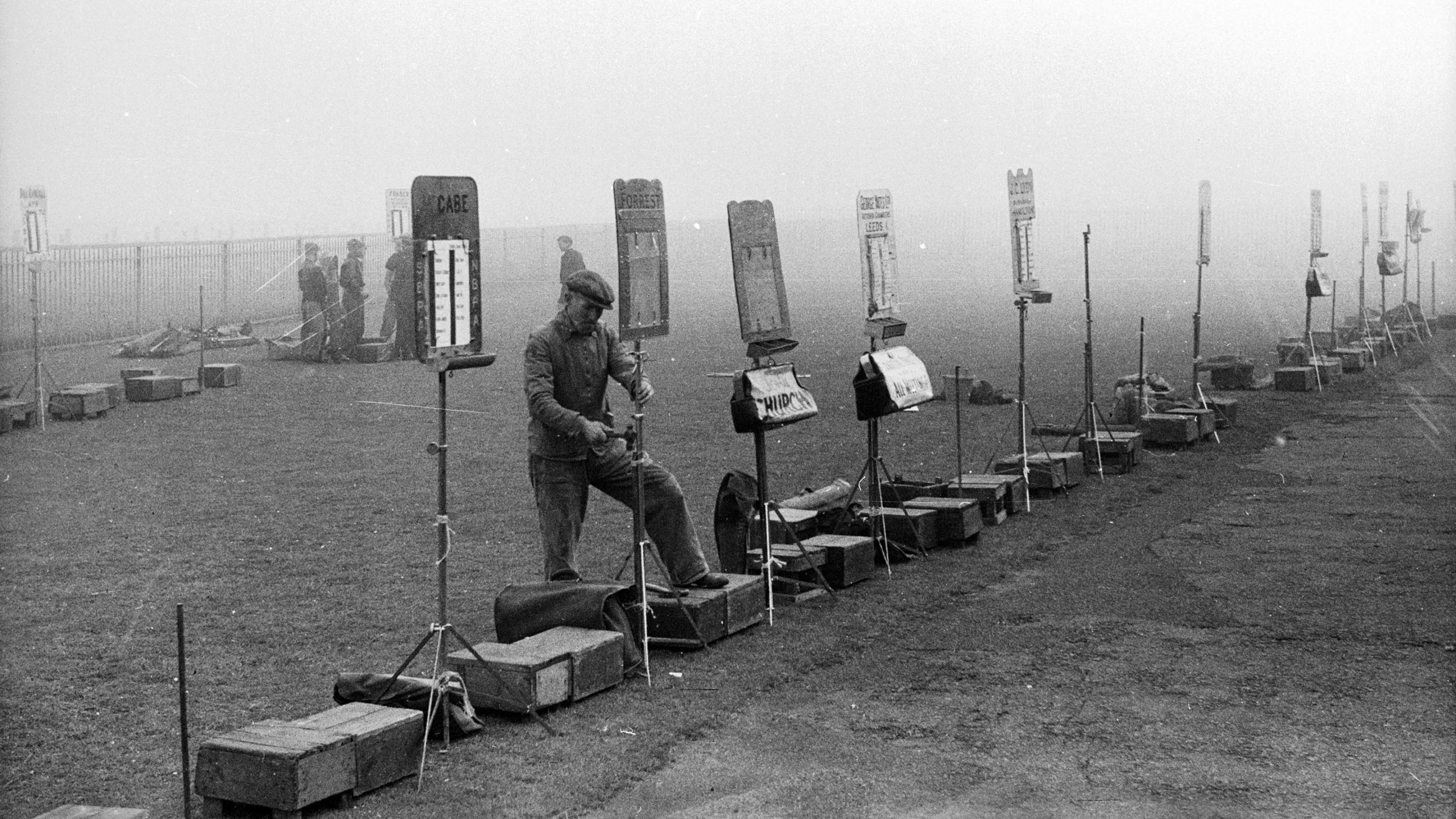
Martin Samuel on why a good bet requires courage
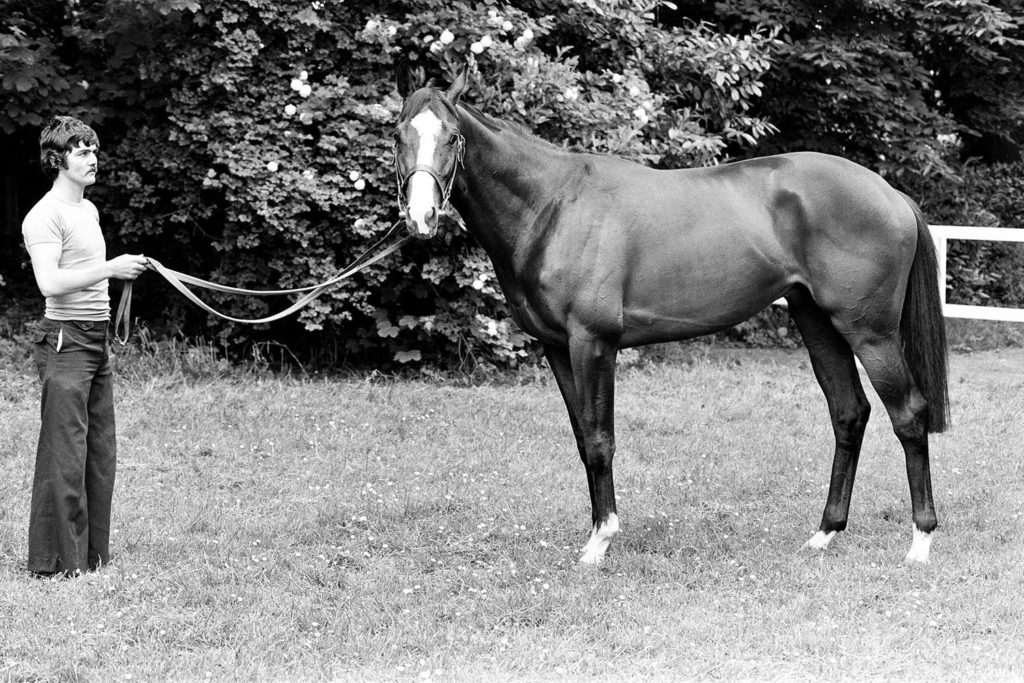
This is a story about Richard Baerlein, who fell in love with a horse called Shergar. Baerlein, the veteran racing correspondent of the Observer and the Guardian, watched as the colt won the Sandown Classic Trial by ten lengths in April 1981. He was besotted from that first vision. Baerlein was 70 by then but had been writing on the sport for 44 years and was convinced he had never seen a horse like the three-year-old bay. Baerlein made a famous prediction. “Shergar for The Derby,” he wrote, and he backed those words with his weekly wage, time and again.
Baerlein backed Shergar initially at 33-1 and at just about every price down from there, all the way to even money on the day. His final piece on the subject contained time-based and statistical support for his opinion.
He concluded that the only way Shergar could lose was if his jockey fell off. There were no fences so that wasn’t going to happen and when Walter Swinburn steered the stallion home, ten lengths clear and easing up – he could have won by 15 flat out, most experts concede – Baerlein made enough from his winnings to buy a house in Sussex, with his wife Laurette. He named it after the magnificent athlete responsible for the purchase: Shergar, not Swinburn.
Baerlein wrote a number of fine pieces, but one line in particular has endured. Noting that Shergar was still 8-1 for the big race, he once again implored his readers to share in what he firmly believed would be great fortune for them all. He issued a rather dangerous command. “Now is the time to bet like men,” Baerlein told them.
My grandfather enjoyed a man-sized bet, too. In 1946, a horse called Radiotherapy won the Sussex Stakes at Goodwood. Arthur Samuel liked Radiotherapy and its jockey, Gordon Richards, a lot. The following year it was running in an unremarkable five-furlong sprint, hence its starting price: 100-6 on. Radiotherapy was such a sure thing that gamblers would have to bet £100 to return winnings of £6. Basically, the bookmakers didn’t want to take any bets. So they gave it odds that might only tempt a lunatic. Enter one lunatic.
Arthur Samuel had a plan to win £20 on Radiotherapy. At the time this was about three weeks’ wages for the average man, so a decent return. But to do it he would have to stake £335, or around 50 weeks’ wages. So, a year’s money to win three weeks’; or as it would be now, approximately £25,000 to win £1,400. This is not the most sensible bet, but it is undeniably intrepid. My father returned home from school to a row that could be heard up the street. Arthur’s bookmaker, Alexander’s of Leytonstone, wouldn’t take the bet. Not because he didn’t have £20 to cover the winnings, but because he thought it was madness. He regarded my grandfather as a good customer. He thought he’d lost his mind. A one-sided telephone conversation ensued, all curses, threats and hot, frustrated fury.
And then they’re off. In those days, a bar was raised at some courses to begin racing and, on this day, Radiotherapy was a little too keen. It broke early and the pole caught its jaw and nose, knocking it off-kilter. A five-furlong race affords scant room for error and not even the greatest jockey in history could get Radiotherapy over the line first. The bet would have lost, had it been taken. Arthur was saved a small fortune.
Not long after, there was a knock at the door. A smartly dressed older gentleman stood there, three-piece suit, trilby hat. He introduced himself as Mr Alexander and asked to speak to my grandfather. A voice from down the passageway told him to fuck off. Mr Alexander boldly stepped across the threshold. “Arthur, I was right,” he pleaded. “The horse lost. You would have lost. I was right, Arthur, please Arthur …” At which point Mr Alexander was told once again what he could do and that he should cancel the account, and wouldn’t be receiving any further custom. Except not as politely as that. The lesson being that if Arthur Samuel wants a bet he has a fucking bet and it’s not up to Alexander’s of Leytonstone or anyone else to decide what is sensible. So fuck off. And, no, it’s not rational or reasonable or polite, but there is a certain principle involved. And that’s what betting like men entails.
Judicious? No. Practical? No. Not always faultlessly considered either. There is much that is hunch, much intuition. James Adducci, who won more than $1.2 million when Tiger Woods donned the green jacket at the 2019 US Masters, made his $85,000 wager in part because Woods’s children were watching him play Augusta for the first time and he thought he would find that inspirational. And Adducci didn’t really have $85,000 to lose. He was in serious debt and had to share a ride to Las Vegas to make his bet. So it’s far from a healthy predilection. But it’s also a dying art and still takes no little courage or intelligence. Adducci was right. Adducci absolutely called it.
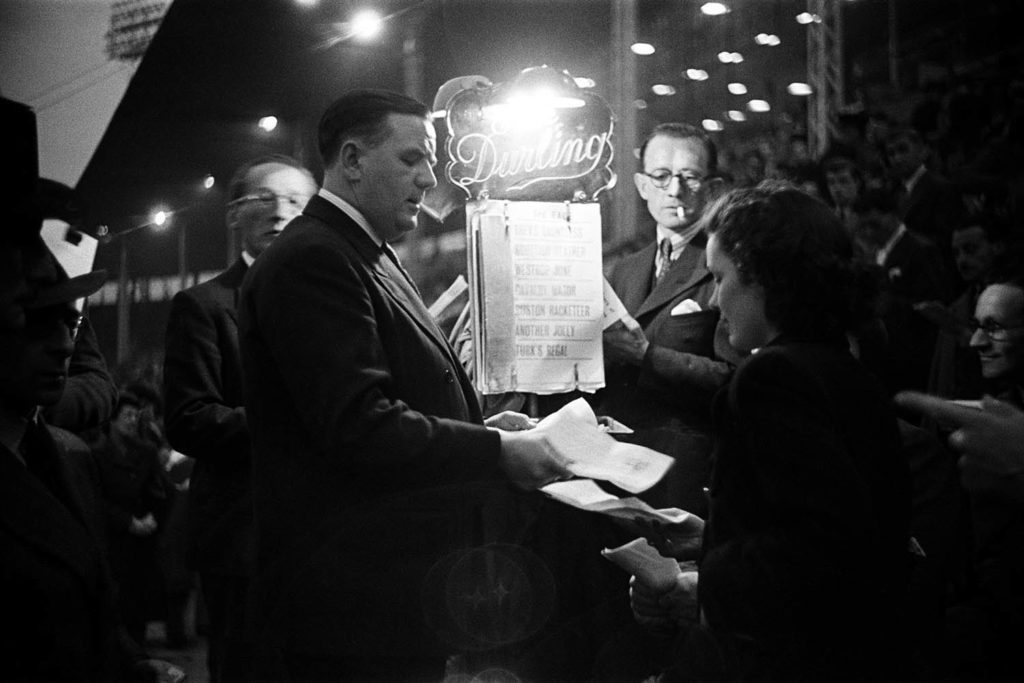
Not all gambling is like this. Not the Ladbrokes life, or having a bang on that or those fun publicity stunt wagers where a fat goalkeeper eats a pie midway through an FA Cup tie for no apparent reason. Betting like men has no truck with gimmicks, or with feats of clairvoyance. Were he alive today, Richard Baerlein couldn’t be suckered into trying to guess how many corners Arsenal would win on Saturday, or who would get booked; and neither could Arthur Samuel. They didn’t just have a flutter, they didn’t just have a punt. They bet, like men. There’s a distinction.
First, let’s clear up the inherent sexism in that phrase, because you may be troubled. Betting like men doesn’t mean betting like a male. There are plenty of alpha male mug punters, plenty of sharp women in the betting ring. Indeed, without doubt the smartest gambler in Britain is Denise Coates, majority owner of the company Bet365, whose ideas have transformed the industry.
Coates is, or should be, a feminist icon, not least for her unashamed sense of her own worth. In 2016, she paid herself £217 million; in 2017, that rose to £265 million; by 2021 she was paid £421 million, which was higher than all the FTSE 100 chief executives combined. The same year she gave £10 million to the University Hospitals of North Midlands to help fight coronavirus. Other charitable donations total far in excess of £100 million. In 2021, the year of the pandemic, she was paid just under £300 million and Bet365’s profits as of March 2021 stood at £470 million before tax, from a turnover of £2.8 billion.
Coates transformed her father’s small chain of provincial betting shops into the worldwide industry leader. She’s a genius. And while Coates is a bookmaker, she is also a gambler, because her company makes the market. Bet365 has built up online gambling and all of its splinter groups, the fun bets that entice the lower end of the market – those attempting to put in complex accumulators built around the minutiae of a football match: corners, free-kicks, goalscorers, yellow cards. Yet it also has a reputation for taking on the bigger wagers. Those betting like Baerlein; or like Denise Coates, which is the same thing.
And while gambling has never been more popular, as Coates’s salary suggests, in the United Kingdom it has also never been met with greater disapproval. There is a parliamentary proposal that would outlaw betting companies from advertising on football shirts – even though many of those involved are based abroad and target the Asian, rather than domestic, market – and calls for limitations on television advertising around sports events, as well as on perimeter hoardings inside venues. The growth in easily accessible online gambling, as well as campaigns that suggest sport means nothing unless a bet has been placed, are credited with a rise in addiction and harm. And that’s ironic because at the same time the big bookmakers are increasingly reluctant to entertain those who want to have a sizeable, properly researched bet.
Any serious gambler will tell you: try to get on. Not with Alexander’s of Leytonstone, who have long gone, and not because Joe Coral is trying to do you a favour; try to place a bet of significance with the industry names we see on our television screens every night, the odds-makers who take out the biggest shows on the pages of national newspapers. They’ll give you 1,000-1 on David Beckham to be the next James Bond; 500-1 that Piers Morgan becomes prime minister; 250-1 that Meghan Markle is the next president.
Yet try to place the modern equivalent of the Radiotherapy bet. In fact, scrub that. Try to place a bet that is the complete opposite, that any major bookmaker should be delighted to receive. In 2016-17, Lincoln City, then a National League side, enjoyed an extraordinary FA Cup run. By February, they had progressed to the fifth round proper, and were drawn away at Premier League Burnley. If Lincoln won they would be the first non-league team to reach the FA Cup quarter-finals since Queens Park Rangers in 1914. Flushed with optimism on the morning of the match, a friend attempted to put £10 on Lincoln. Not to beat Burnley – but to win the FA Cup. A ludicrous bet. Money down the drain. Even so, the household name betting company she approached with a sum no bigger than a round of coffees, would not take her money. She could stake, they said, 75p.
So yes, amid the smallness, the cowardice, the mugs and those who reel them in, there is something to be said for the risk-takers, the high-rollers, those who try to beat the book, beat the odds, who can be bothered to study timelines and bloodlines, and whose whims and information move markets. There is still a romantic gallantry about the big bet, and an admiration for those who make a living from it, the professionals: Phil Bull, who, as a publisher, launched what many gamblers regard as the bible: Timeform; Alex Bird, whose judgement in the days when photo-finishes at race meetings took five minutes to develop helped him build an annual turnover of £2 million; and Patrick Veitch, admitted to Cambridge at 15 to study mathematics, before choosing to put numbers to more profitable use.
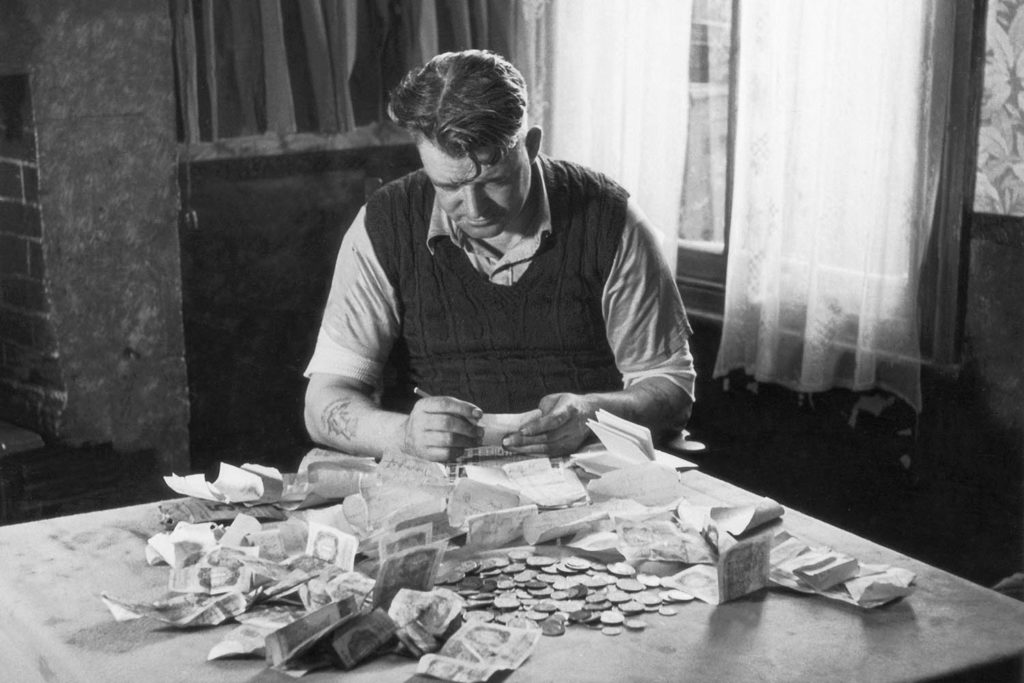
Their stories are legion. Bird noticed that horses crossing the line together created an optical illusion meaning the one on the far side often appeared the winner. He claimed that by standing on an elevated vantage point as near to the winning post as possible, keeping still and closing his left eye, he could create an imaginary finishing line across the track, that was truer than what others saw. Reportedly, he won 500 consecutive photo-finish bets that way.
Look, it may all be myths and self-aggrandisement. So much is. There is a lot of collateral damage in gambling, big and small, and that cannot be disregarded. Yet it is a human instinct to wager, to calculate odds and percentages, to try to outwit fate and chance, to turn our best judgements into profit. Dice games date back to 3000 BC in Mesopotamia; betting on fighting animals was common in China in 1000 BC; playing cards date from the ninth century, dominoes from the tenth century; the first casino appeared in Venice in 1638, the same century that the first form of poker originated in Persia. Horse racing is recorded as an event at the Olympics in 664 BC, although betting on the sport took another millennium to develop, and was at first largely centred around Newmarket. King James I developed that small town into a leisure resort for his inner circle, with horse racing, and betting on the outcome, part of the fun. James was very fond of his racing horses. This is why it became the sport of kings.
And poulterers. Arthur Samuel, of 50 weeks’ money to win three, was not a wealthy man. He had a rabbit stall in Bethnal Green Road, until the virus myxomatosis destroyed the industry in 1953, when he turned to poultry. He made a good living, but he didn’t bet because he had money to burn. Neither did Richard Baerlein. They bet because of instinct, adrenalin, a desire to roll the dice, not because it was some lifestyle choice portrayed during the commercial breaks, full of faux characters and pub high-jinks. They didn’t want to be lectured or hectored on the limits of fun, or when was enough. They made the decisions, they backed their judgement, they took the highs, the lows, and the responsibility.
Kerry Packer, the Australian billionaire, was a legendarily bold gambler. He kept a private room at the Ritz permanently, just in case he wanted to play cards. He lost £15 million in one night playing roulette at a London casino, and made $20 million at the MGM Grand in Las Vegas, before handing staff a $1 million tip. One night, at the Mirage hotel, Packer was playing blackjack alone against the house when a stranger asked to join him. Packer explained he was happy with his own company, but the man was quite insistent.
“You think you’re a big shot,” said the interloper. “Well, I’m a big shot, too. I’ve got a cattle ranch in Texas worth a hundred million dollars.”
“Yeah?” said Packer, getting a coin out of his pocket. “I’ll toss you for it.”
Martin Samuel is chief sports columnist for the Daily Mail and Mail Online.
This piece appeared in the Tortoise Quarterly, our short book of long stories. If you were lucky enough to grab a Founding Membership back in the early days of Tortoise, you’ll receive your copy in glorious, old-fashioned print. If not, you can pick up a physical copy in our shop at a special member price.
Photographs Getty Images


