Sensemaker Daily
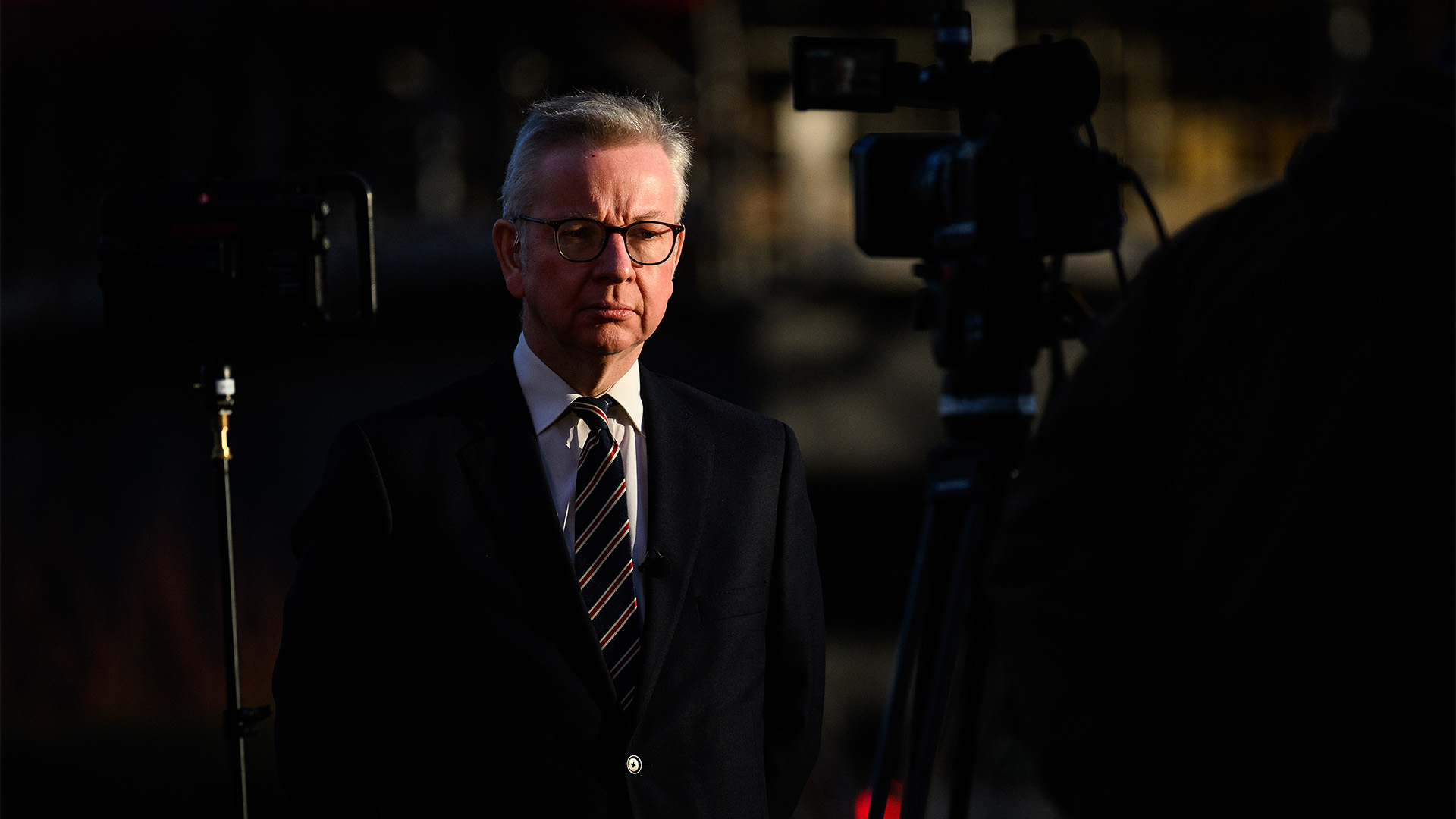
Even those who opposed him have admired the former levelling up secretary’s gravitas, intellect and commitment to inconvenient truths. Such qualities will not be valued in a government led by Liz Truss
In Celsius 7/7, his 2006 study of fundamentalist terror and the free world, Michael Gove had this to say about the fatwa imposed on Salman Rushdie for his authorship of The Satanic Verses and about the West’s response to that death sentence, imposed upon a British novelist by a foreign theocratic power:
As Gove noted, Rushdie was indeed, and quite rightly, given the police protection that he required to stand a chance of surviving the many assassination attempts that were made over the years. But the political establishment’s defence of the author was still much too equivocal.
Roy Hattersley, the deputy leader of the Labour Party, declared that the novel should not be published in paperback. Iqbal Sacranie, the founding secretary general of the Muslim Council of Britain, said that death was “perhaps too easy” for Rushdie – but was still knighted in 2005. When the novelist was himself knighted in 2007, the Liberal Democrat peer, Shirley Williams, condemned both the honour and its timing.
Gove was right, too, about the gravitational pull of appeasement. In 2006, during the controversy over Danish cartoons of the Prophet Muhammad – a controversy that resulted in at least 250 deaths worldwide – Labour’s foreign secretary, Jack Straw, took it upon himself to apologise for the images.
More recently, a teacher at Batley Grammar School in West Yorkshire who showed caricatures of the prophet in a religious education class, was suspended and forced to go into hiding. The school’s head teacher apologised “unequivocally” for the use of the image.
The warning issued by Gove 16 years ago came to mind, bleakly so, when Rushdie was brutally attacked on 12 August in Chautauqua, New York. Naturally, the attempted assassination – the writer was stabbed at least ten times and has has been left with life-changing injuries – was widely condemned. But the speed and conviction with which senior politicians responded varied considerably. Ditto the world’s news platforms.
Here, after all, was a barbaric attack on the foundational value of free expression that underpins all political, journalistic and artistic discourse. You might have expected a global outcry in the West; a sense that this was a moment of the highest importance; and active discussion of sanctions against Iran, where the attack was widely celebrated. Instead, and with a few noble exceptions, the response has been mostly performative: boilerplate denunciation of the attack, made with little sense of urgency or the scale of what is at stake in this latest confrontation between fundamentalism and pluralism.
The depressing truth is that, as the writer Kenan Malik has brilliantly observed, we have “internalised” the fatwa. Our strategic response has been one of self-censorship, a greater focus upon the supposed “harms” caused by speech than upon the protection of speech itself, and the replacement by stages of the marketplace of ideas with an intellectual creche for adults.
Whatever we claim to the contrary, the prevention of “offence” is now generally a higher priority than the defence of free expression. It is grimly ironic that so much energy is now expended upon psychological “safety” and the protection of supposedly vulnerable minds from allegedly dangerous language and images – at a time when the actual physical safety of those who speak freely ought to be uppermost in our thoughts; a time, after all, when a 75-year-old novelist lies in hospital, recovering from multiple stab wounds.
Gove has always understood this, and – though it was often politically inexpedient to do so – has warned consistently that when it comes to the clash between fundamentalism and the free society, it was not only pointless but downright dangerous to try to split the difference. This is one of many reasons why his imminent exit from high office should be a matter of regret, even to those who do not share his particular brand of politics.
In an article posted by the Times on Friday evening, Gove declared his support for Rishi Sunak in the Conservative leadership contest and revealed that he did not “expect to be in government again.” It is much too soon to write his political obituary: precedent suggests that the very talented are often recalled to high office in unexpected circumstances (remember Gordon Brown bringing his old foe Peter Mandelson back into the heart of government as First Secretary of State in 2009?).
All the same: it now seems overwhelmingly likely that Liz Truss will succeed Boris Johnson as Conservative leader on 5 September. Her camp has already briefed that, if the polls are correct and she becomes prime minister, “Gove’s done.” Instead of waiting for a lecture on his political failings and the merits of British cheese, he has preempted the sack by announcing his departure in advance.
I doubt that Gove will want for new challenges. Rumours swirl that he is being sized up for a national newspaper editorship, and he will be encouraged by the satisfaction his great friend George Osborne derived from his stint in the chair at the London Evening Standard. But his expected exit from senior ministerial office is bad news for his party and the country.
At the outset, it has to be conceded that Gove has often been a divisive figure. He has often become too immersed in factional intrigue, leading him to fall out with three successive prime ministers (David Cameron, Theresa May, and Johnson, who finally sacked him on 6 July as Secretary of State for Levelling Up, Housing and Communities). Many Tories have still not forgiven him for withdrawing his support from Johnson on the eve of his leadership campaign launch in June 2016 – forcing the latter to ditch his candidacy.
I have known Gove for more than 30 years and disagree with him on plenty: Brexit, in particular, and his generally dim view of Whitehall (who do you think has been running the country while the Tory Party has been indulging itself in a series of political acid trips?). But he has always been willing to defend his corner on the basis of analysis and evidence rather than populist advantage or gut prejudice. It is no accident that he has long drawn upon such an eclectic range of advisers. Though notorious for hiring Dominic Cummings, he also recruited Alice Miles, a formidable intellectual luminary of the New Labour era and Will Dry, a civil service policy advisor who was one of the leaders of the youth wing of the People’s Vote campaign for a final referendum on the Brexit deal.
Talented people have queued up to work with Gove over the years because they knew they would be given a hearing and that their ideas would count. However much one might take issue with it, his decision to back the UK’s withdrawal from the European Union was rooted in a rigorous assessment of the national interest. Compare and contrast Johnson’s famous brace of articles – one pro-Remain, the other pro-Leave – which amounted to nothing more than an assessment of self-interest.
Holding high ministerial rank since 2010 (with a brief hiatus in 2016-17), Gove has roamed from education, the office of the Chief Whip, and the Ministry of Justice to Defra, the Cabinet Office and the rebranded Department for Levelling Up. His impact was probably greatest in his first cabinet role where he moved mountains to encourage free schools and academies to open and flourish. But – in all these posts – one observed a patriotic, full-bore intelligence at work to an extent that is now vanishingly rare in contemporary government.
What do I mean by this? There are, after all, still plenty of clever Tory politicians around. Sunak is one: but his intelligence is narrowly applied and overwhelmingly technocratic. It has been painful during the leadership contest to see how he flails when forced from his economist’s comfort zone – acting as though all other areas of policy and public life are really distractions from the main event. Johnson himself has a fine brain but it has been deployed exclusively in the service of self-advancement rather than statesmanship.
Gove, in contrast, is one of the last true Conservative intellectuals, applying broad erudition and critical thinking to practical matters of government. There are a handful of others who have a similar cast of mind: Sir Oliver Letwin, the former MP for West Dorset, from whom Johnson withdrew the Conservative whip in September 2019; Daniel Finkelstein, a distinguished commentator and Conservative peer; Rory Stewart, who no longer considers himself a Tory; and Jesse Norman, former Financial Secretary to the Treasury, who has just been elected to a two-year Fellowship at All Souls College, Oxford.
Yet these are the exceptions that prove the modern rule; rebels against contemporary philistinism, short attention spans and the tyranny of TikTok. In its new populist phase, the Conservative Party has not smiled upon or generally rewarded intellectual firepower. It has reverted to the mentality that drove Lord Salisbury (AKA “Bobbety”) to denounce Iain Macleod, the Secretary of State for the Colonies, in March 1961 as “too clever by half.”
It was J.S. Mill who famously described Conservatives as “being by the law of their existence the stupidest party”. But this has not always been so. In the late 1970s and for much of the 1980s, British Conservatism fizzed with ideas, intellectual radicalism and a quest for fresh thinking. There is no equivalent today of the new think tanks and the Conservative Philosophy Group that formed the cerebral engine of what became Thatcherism.
Indeed, the most depressing feature of the leadership contest has been its lack of depth. At a moment of multi-faceted political, social and economic crisis, Sunak and Truss have offered absolutely nothing new, and have proved alarmingly ready to modify their positions to fit the Twitter cycle: to use the distinction made famous by Tony Benn, both are “weathervane” rather than “signpost” politicians, shifting with the wind of opinion rather than plotting a clear trajectory for the nation.
While Truss and Sunak have turned inconsistency into an art form in recent weeks, Gove’s evolution over the years provides a fascinating case study in the changing landscape of the centre-Right and the challenges it faces. In the Nineties, his politics was an intriguing hybrid of High Tory Unionism and social liberalism. Well before Cameron picked up the mantle of modernisation, he grasped – like Michael Portillo, who was the subject of his first book in 1995 – that the party had to change utterly if it was to regain power, “detoxifying” itself and diversifying its appeal.
That project was half-effective – sufficiently successful to get the Conservatives into office (albeit in coalition with the Lib Dems) but soon overtaken by the politics of austerity and Cameron’s fear of losing the Tory electoral base to Nigel Farage. Gove, meanwhile, had become persuaded that, as long as the UK remained part of the EU, the rewiring of the British state required to enact deep public service and economic reform would not be achieved.
To this day, Cameron has yet to forgive his former best friend for what he regarded as an unconscionable act of personal betrayal. It is easy to see why the former prime minister remains so angry. But he had reckoned without the force of Gove’s intellectual integrity and how much he was prepared to sacrifice to stay true to his beliefs.
More than any of his former cabinet colleagues, he has long understood that contemporary British Conservatism has to develop a new theory of the state if it is to remain politically relevant in the 21st Century. This does not mean, as so many Tories fear, adopting a sort of blue Blairism. But it does involve a fresh engagement with what government can and cannot do to address inequality, the climate emergency, the challenges of technology, regional disparities, poor productivity and the transformations required of public services in the 2020s and beyond.
For Johnson “levelling up” was just a slogan; for Gove it was an intellectual mission. How to spread power, resources and opportunity more fairly across the country and close the regional inequalities that have long bedevilled the UK, without simply reviving the parternalist, statist politics of the postwar era?
His 300-page levelling up white paper, published in February, is a locus classicus of intellectual ambition and political frustration. Thwarted by Johnson’s lack of grip and Sunak’s fiscal severity, its practical offering was meagre compared to the ultimate vision of its author. But, in a speech in the same month, delivered in Liverpool, Gove made clear that he understood how radical the task really was; involving, as it would, “an argument with what one might call trickle-down economics… If you leave the free-play market forces entirely to themselves, then what you see is inequality growing and particularly geographical inequality growing as well.”
This is absolutely right. But neither Sunak or Truss is remotely capable of taking on such a mission; Sunak because of his fiscal inflexibility and Truss because of the pitiless social Darwinism regarding regional disparities that she has long expressed in private, and occasionally allowed to slip into her public rhetoric.
What Gove conspicuously failed to resolve was the great crisis of modern politics: namely, that populism is great for winning elections and terrible as a basis for effective government. Assuming that Truss prevails, there will doubtless be a brief honeymoon period – much as May enjoyed in 2016. So low are general expectations of her prospective premiership that if she doesn’t actually nuke Brussels or make poverty a capital offence in her first 100 days, there will be a collective sigh of relief.
But the novelty will wear off quickly. As Gove warned in announcing his own departure, “the framing of the leadership debate by many has been a holiday from reality.” Which was his way of saying that Truss would find that tickling the Tory Party’s tummy with delusions will not translate into a programme for government; not even close.
His gravitas, intellect and attention to detail will be sorely missed by his party and, I think, by the country. But he is right that there can be no meaningful role for him in the sickly carnival of self-deception and superficiality that appears to lie ahead. It is greatly to Gove’s credit that, when it comes to reality, he is very much a remainer.


