Sensemaker Daily
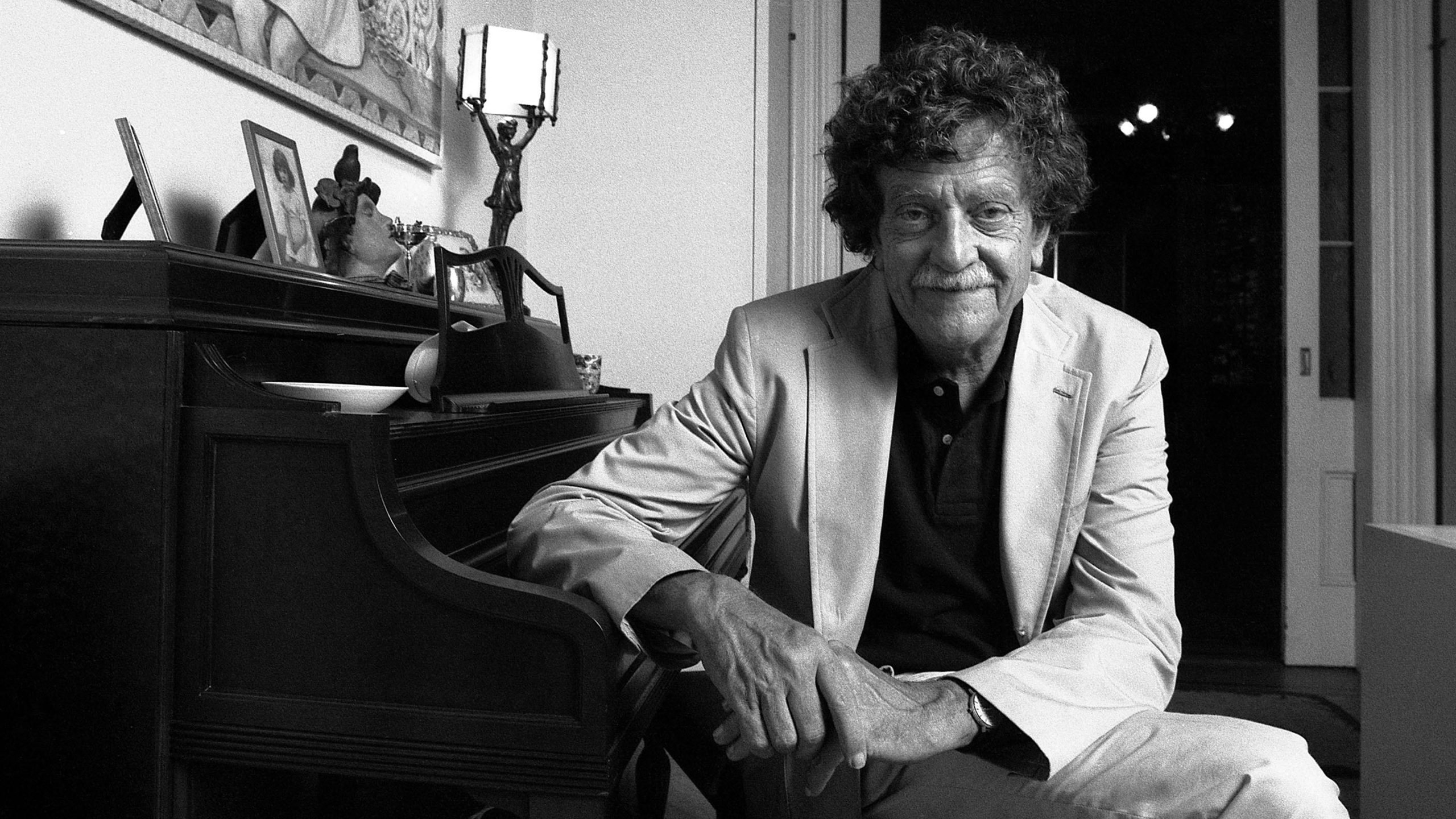
Robert B. Weide’s documentary on Kurt Vonnegut reclaims the writer for an age that needs his comic genius more than ever
“So it goes”: the laconic refrain from Kurt Vonnegut’s most famous novel, Slaughterhouse-Five (1969), is perhaps his most resilient bequest to contemporary culture; an all-purpose aphorism that suits the mood of our dystopian times. Yet these three words are also amongst the most misunderstood that he ever wrote.
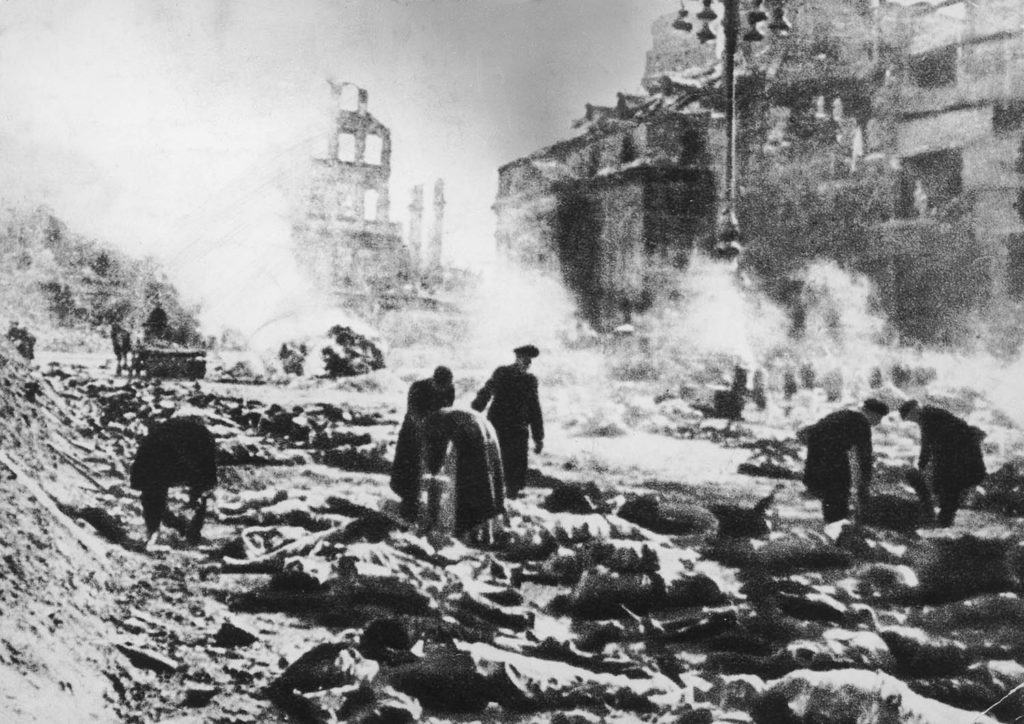
Vonnegut’s purpose, in this semi-autobiographical account of the firebombing of Dresden in February 1945, was not to shrug with indifference or resignation at the horrors of war. As Salman Rushdie has pointed out, the famous words are used exclusively as a commentary upon death. They signify a deeply humane recognition of loss, as well as an acceptance that life must end.
Naturally, Slaughterhouse-Five is central to Robert B. Weide’s fantastic documentary, co-directed with Don Argott, Kurt Vonnegut: Unstuck in Time (selected cinemas and video on demand, 22 July). Best-known for his award-winning collaboration with Larry David on Curb Your Enthusiasm, Weide charts his 25-year friendship with the author, which began with a letter in 1982, tentatively exploring the potential for a regular biographical movie, and ended in 2007 with Vonnegut’s death at the age of 84. It has taken Weide another decade and a half to finish the film and to set it free to do its work on-screen.
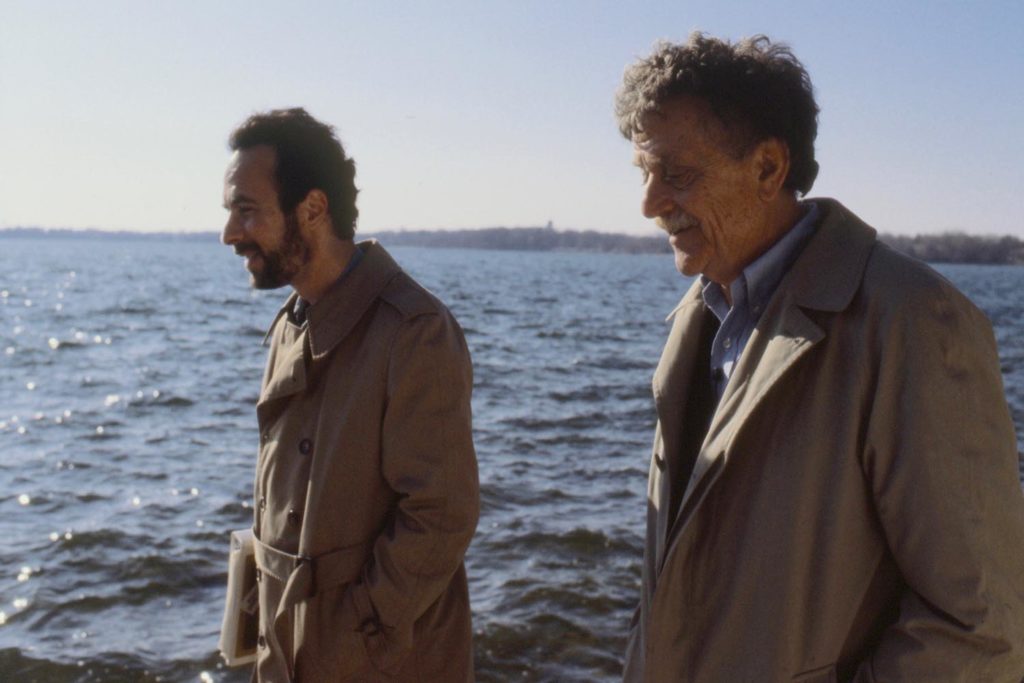
This procrastination, it becomes clear, partly reflected a reluctance to accept, definitively, that his idol and beloved mentor was no longer alive. But the movie’s long gestation enriches its significance as a tribute to the Mark Twain of the 20th Century – that is also an often moving account of a profound friendship.
Weide was a Vonnegut superfan before he was a film-maker, setting up an unofficial book club devoted to his work when he was at high school. He was 23 when he wrote to Vonnegut, who was about to turn 60. Weide himself is now 63. “How fucked up is that?” the director says, chuckling.
With his depth of personal knowledge, access to archive footage and original interview material, Weide establishes that three moments above all others formed Vonnegut as an author, traumatising him deeply but also releasing the twin muses of sadness and playfulness that shape his writing.
The first was the suicide on Mother’s Day 1944, of his mother, Edith – a melancholic woman from a wealthy background who had never recovered from the family’s exile from high society in Indianapolis after its finances collapsed in 1929.
“Sons of suicides find life lacking,” says a character in God Bless You, Mr Rosewater (1965). “Suicide is a legacy,” Vonnegut told Martin Amis in 1983. “As a problem-solving device, it’s in the forefront of my mind all the time. It’s like walking along the edge of a cliff. I’m in the country and the pump stops. What’ll I do? I know: I’ll kill myself. The roof is leaking. What’ll I do? I know: I’ll blow my brains out.”

The second disaster, of course, was Dresden, which inspired the strange tale of Billy Pilgrim, who has come “unstuck in time”, and is unable to control his movements back and forth through his life – an upheaval which is partially explained to him by the alien beings of Tralfamadore, who tell him that what humans experience as chronology is, in fact, predetermined, and that the belief in free will is a comical sign of inferior intelligence among the many species they have encountered.
In Weide’s film, we learn that Vonnegut invented Tralfamodore as a child when he was stargazing with his extended family on a jetty at their summer home on Lake Maxinkuckee in north-western Indiana. The role of this alien planet, it should be noted, is a thread that runs throughout his work, from his second novel, The Sirens of Titan (1959) to his last, Timequake (1997).

Vonnegut was taken prisoner in December 1944 during the Battle of the Bulge – a campaign in which the republic of letters was unusually well-represented. J.D. Salinger was there, as were Ernest Hemingway, Martha Gellhorn, and even Henry Kissinger.
After his capture, Vonnegut was among 150 POWs selected from the 106th Arbeitskommando 557, who left Stalag IV-B for Dresden on 12 January – little suspecting what they would go on to see.
The science-fiction dimension to Slaughterhouse-Five was clearly a coping mechanism, a means of confronting the intolerable memory of witnessing the smoking ruins of the German city after a firebombing that had claimed 135,000 lives. “Only one person benefited,” he later reflected, with typical gallows humour. “‘Me. I got several dollars for each person killed. Imagine.”
The novel was indeed a sensational success, a ready-made text, along with Joseph Heller’s Catch-22 (1961), for the anti-Vietnam movement and the pacifist campus culture of the Sixties. With his unruly hair, Groucho Marx wit, and quickfire intellect (“I haven’t been stumped very often. What would you like to know?”), Vonnegut found himself, at the age of 47, an unexpected icon of the age.
The third trauma recounted in the documentary is the death from cancer of his beloved sister Alice in 1958 – only two days after her husband James had been killed in a train accident. Without a second thought, Vonnegut and his first wife, Jane, took in and raised Alice’s four sons – in addition to their own three children.
To edge towards “artistic wholeness”, he reflects, is for an author “to write for one person in mind, and I thought about it, and I realised that I write with my sister in mind.” Sadness, he adds, is “an interesting emotion. You don’t know how anything is going to hit you.”
What he had shared most deeply with Alice was a love of the saving power of the absurd: “Laurel and Hardy… gave me permission not to take life seriously and it turned out it was okay to laugh your head off.” (For a deeply personal, warts-and-all biography, try And So It Goes – Kurt Vonnegut: A Life by Charles J. Shields.)
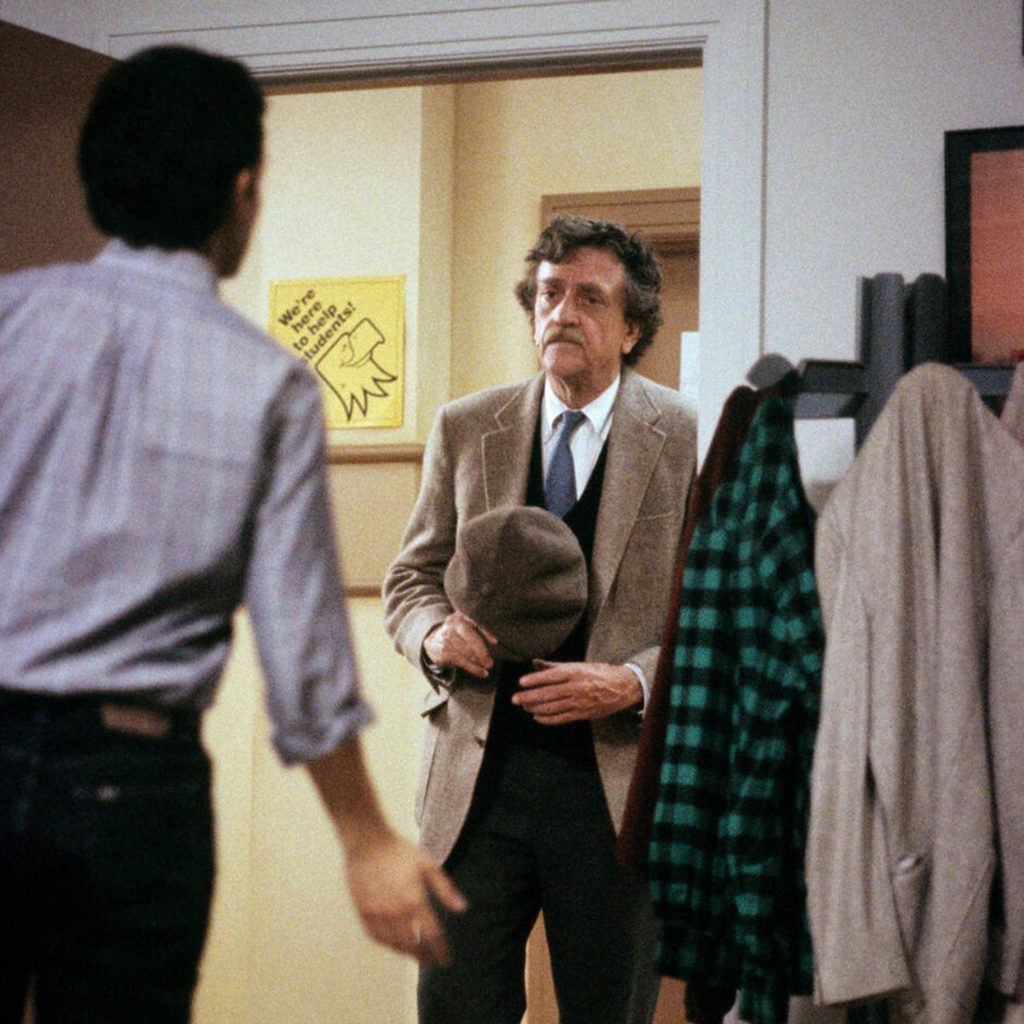
For many years, Vonnegut’s cultural importance was unchallenged. He appeared as himself in Rodney Dangerfield’s Back to School (1986), helping Dangerfield’s character with a paper on his work (he still gets an F). In Footloose (1984), Kevin Bacon’s character says that Slaughterhouse-Five is a classic. The Grateful Dead called their music publishing company Ice Nine, in homage to the lethal form of water that is at the heart of the apocalyptic Cat’s Cradle (1963). New Order’s ‘Blue Monday’ takes its title from the caption to one of the illustrations in Breakfast of Champions (1973).
Yet, by and large, Vonnegut did not make it through the checkpoint of the millennium quite as easily as, say, his fellow literary science-fiction writers, Philip K. Dick and J.G. Ballard, or the other great postwar chroniclers of Americana, John Updike, Philip Roth and Saul Bellow (like Vonnegut, a product of the anthropology department at the University of Chicago).
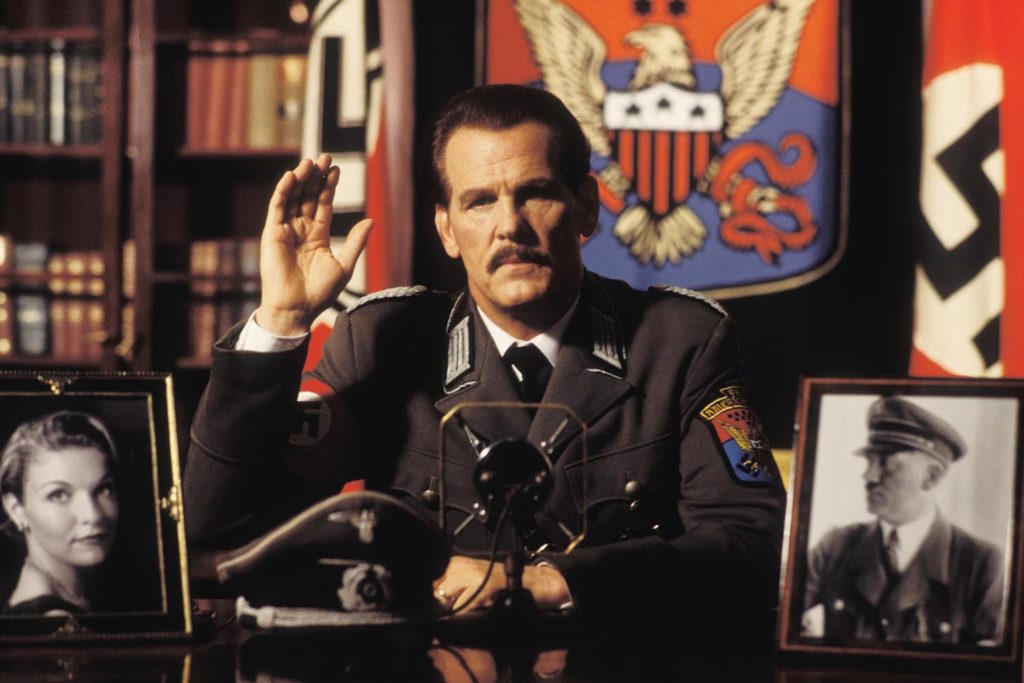
Some of this is down to bad luck. Vonnegut’s writing has never translated successfully to the big screen. George Roy Hill’s 1972 movie adaptation of Slaughterhouse-Five is an insipid mess, while Weide’s own screenplay version of Mother Night yielded a cinematic gem (1996), directed by Keith Gordon and starring Nick Nolte – that nobody went to see. In this context, it is a great shame that FX announced in August that it was ditching Noah Hawley’s series based on Cat’s Cradle (one yearns for David Lynch or Daniels, who directed Everything Everywhere All At Once, to be given a run at Vonnegut’s work).
I also suspect that his unrestrained sense of humour is too on-the-nose for the earnest sensitivities of some modern readers; and that they mistake the glib utterances of some of his characters – especially his fictional alter ego, Kilgore Trout – for glibness of thinking. What Weide’s documentary shows is how vividly relevant the author’s ideas remain; and how, in fact, he was more of a prophet than is widely recognised.
On automation, for instance, Vonnegut spotted, after his years working for General Electric, precisely what lay ahead. In Player Piano (1952), the mechanisation of most tasks has driven humanity to a full-blown existential crisis. “What do you expect?” says one of the characters. “For generations they’ve been built up to worship competition and the market, productivity and economic usefulness, and the envy of their fellow men – and boom! It’s all yanked out from under them. They can’t participate, can’t be useful any more. Their whole culture’s been shot to hell.”
On climate change and the environment, Vonnegut was miles ahead of the pack and spoke at the first Earth Day in 1970. Breakfast of Champions is the tale of “two lonesome, skinny, fairly old white men on a planet which was dying fast” and turning to a “poisonous, festering cheese”. In 1988, he wrote a letter published in Time magazine addressed to the “Ladies & Gentlemen of A.D. 2088”.
“The sort of leaders we need now,” he declared, “are not those who promise ultimate victory over Nature through perseverance in living as we do right now, but those with the courage and intelligence to present to the world what appears to be Nature’s stern but reasonable surrender terms.” More than 30 years later, those words are more trenchant than ever.
Perhaps most piercingly, Vonnegut foresaw the tenacity and durable menace of the totalitarian, fascistic mentality. In Mother Night, the tale of a Nazi propagandist covertly working for US intelligence, the narrator observes of American fascists: “I have never seen a more sublime demonstration of the totalitarian mind, a mind which might be linked unto a system of gears where teeth have been filed off at random. Such a snaggle-toothed thought machine, driven by a standard or even by a substandard libido, whirls with the jerky, noisy, gaudy pointlessness of a cuckoo clock in Hell.” They signed up to a “sort of truth” that would “probably be with mankind forever, as long as there were men and women around who listened to their hearts instead of their minds.”
One longs to know what Vonnegut would have made of the Trumpian era, of the age of post-truth and of the hellish cuckoo clocks that are tweeting all around us in 2022. As Gregory D. Sumner writes in his fine 2011 biography, Vonnegut’s novels “are more complex, and more subversive, than commonly remembered. They are about something more enduring than the earliest readers might have suspected… they deserve to be unstuck in time.”
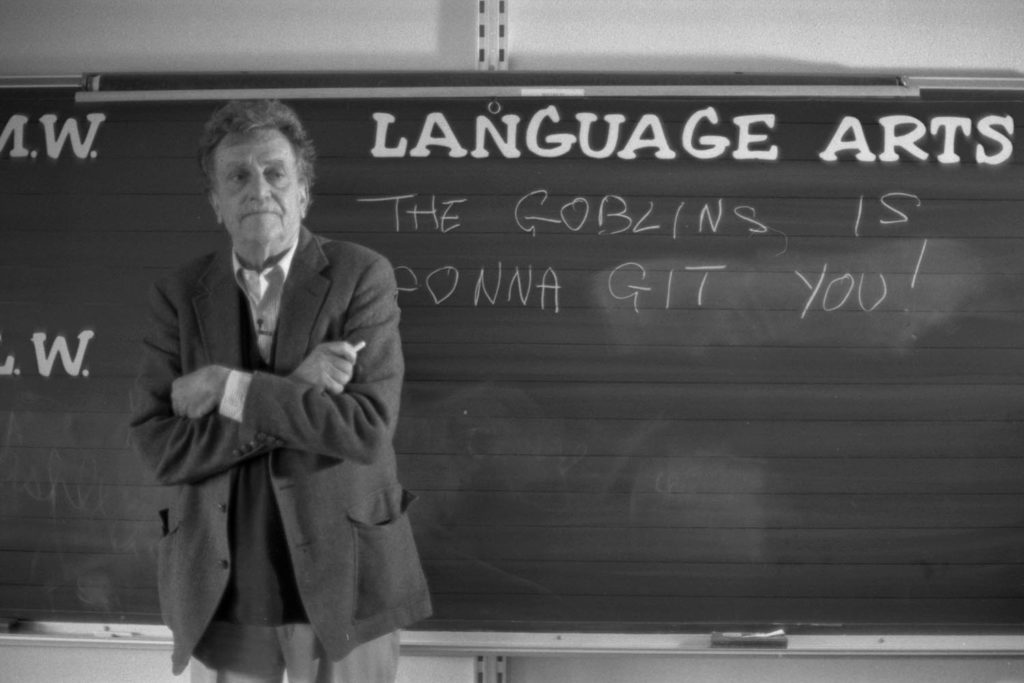
In Weide’s documentary, Vonnegut has been given the best possible chance of cultural reclamation: an introduction to a new generation of a masterly body of work. Considered together, his books are a tragicomic country of reckless, indomitable laughter; made gravelly in his case by a lifetime chain-smoking Pall Malls.
At the borders of that country, you can certainly hear the scream of despair – the scream of Dresden – but the laughter is rich and its stockade resilient. Now more than ever, we need to heed the man from Indiana and to embrace his raucous irony afresh.
Here are this week’s recommendations.
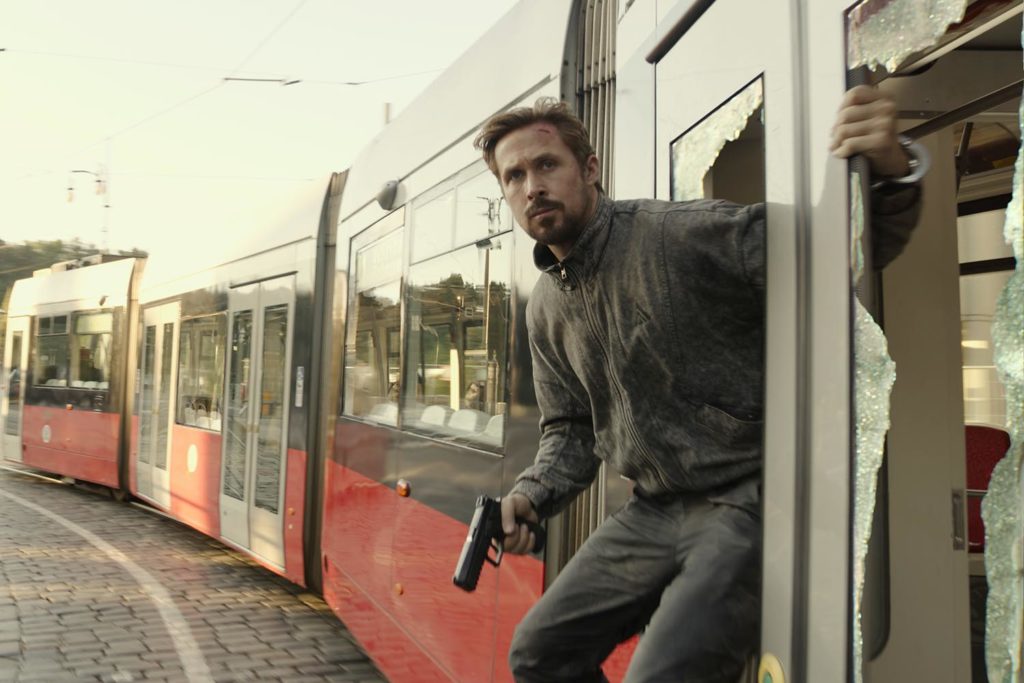
Sometimes, only an all-action shoot-em-up spy thriller starring Ryan Gosling, Chris Evans and Ana de Armas touches the spot: and a week of extreme heat and Tory turmoil is, I find, one such moment.
Directed by Anthony and Joe Russo – and based on the Mark Greaney book franchise – The Gray Man follows Six (Gosling), a deep cover CIA black ops agent who, as in Luc Besson’s Nikita, but with much subtlety, has been removed from prison so he can do the deadliest work that the spooks want done.
Needless to say, Six goes rogue when he discovers that his masters are up to no good – prompting them to hire Langley reject turned murderous private contractor, Lloyd Hansen (Evans, having great fun playing a role that is the diametric opposite of Captain America) to take him out.
Who can Six trust? There’s his mentor Billy Bob Thornton and fellow spy Dani Miranda (de Armas, back in the world of espionage less than a year after No Time to Die). But – like the old school movie star that he is – Gosling thrives in the role of the lonely fugitive, living on his wits and (naturally) his very particular set of skills. The action is relentless and hugely entertaining.
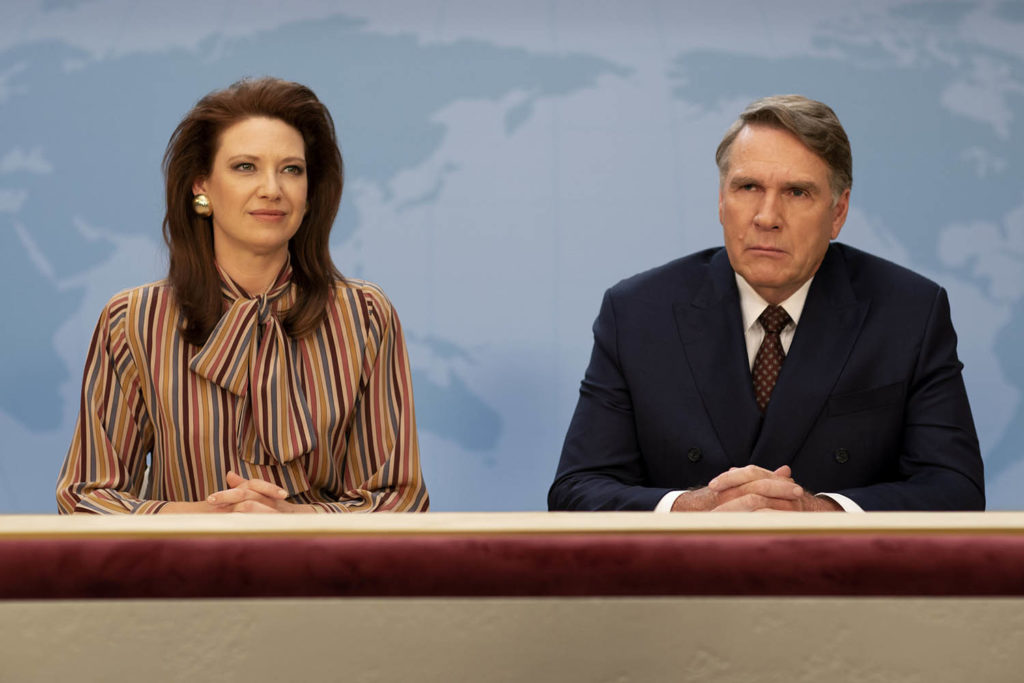
Anna Torv’s performance as psychology professor Wendy Carr is one of the many reasons that the FBI drama Mindhunter deserves a third season (come on, Netflix, stop dithering). In this award-winning Australian series, set in 1986, she is no less impressive as Helen Norville, a news anchor struggling to maintain her journalistic integrity and pursue her ambition in an overtly sexist workplace. Paired up with junior reporter Dale Jennings (Sam Reid), she covers the great stories of the era – the Challenger disaster, Chernobyl, the return of Halley’s comet, and the bombing of the Russell Street police headquarters in Melbourne.
More reminiscent of James L. Brooks’ Broadcast News (1987) than Aaron Sorkin’s slick HBO series The Newsroom (2012-2014), The Newsreader is full of mess, frustration, self-doubt and shouting (William McInnes is terrific as the volcanic news supremo, Lindsay Cunningham). From episode one, Helen and Dale appear to be following a standard will-they-won’t-they televisual story arc. But, as one would expect from a writer as celebrated as Michael Lucas, the plotline is not as crass as the newsroom chauvinism – and The Newsreader quickly reveals subtleties, ambiguities and grace notes that will keep you watching. Season Two is already in the works.

Is it really ten years since that extraordinary Friday night? Is it truly a decade since the Queen appeared to parachute into the stadium after an audience with James Bond? Since Rowan Atkinson as Mr Bean played with the London Symphony Orchestra?
Yes, it is. On Wednesday, 27 July, for one night only at selected cinemas across the country (see here for details of venues and starting times), a new cut of Danny Boyle’s legendary Olympic opening ceremony is being screened. A whole chapter of Jonathan Coe’s wonderful novel, Middle England, is devoted to the patriotism that this spectacular event inspires in a group of characters (“What he felt while watching it were the stirrings of an emotion he hadn’t experienced for years – had never really experienced at all, perhaps… Yes, why not come straight out and admit it, at this moment he felt proud, proud to be British”). And to give full credit where it is due, the artistic directors of the magnificent Paralympics Opening, on 29 August 2012, featuring Stephen Hawking and a huge version of Marc Quinn’s Alison Lapper fourth plinth sculpture, were Jenny Sealey and Bradley Hemmings.
Even better, all funds of the screenings are going to the Tessa Jowell Foundation, the charity formed to support excellence and equality in public health services, now backing 17 NHS Tessa Jowell Centres of Excellence across the country, in memory of the late, great Labour Cabinet minister and driving force behind the triumphant London Games, who died of brain cancer in 2018. There’s also a free screening at the Queen Elizabeth Olympic Park in London at 18:30 on 27 July.
Don’t miss it: it’s a great experience to relive – pre-Brexit, pre-Trump, pre-Covid, pre-everything-else – and a great cause, too; if you can’t #TurnUpForTessa at a local cinema, you can still text TESSA to 70470 to donate £5.


