
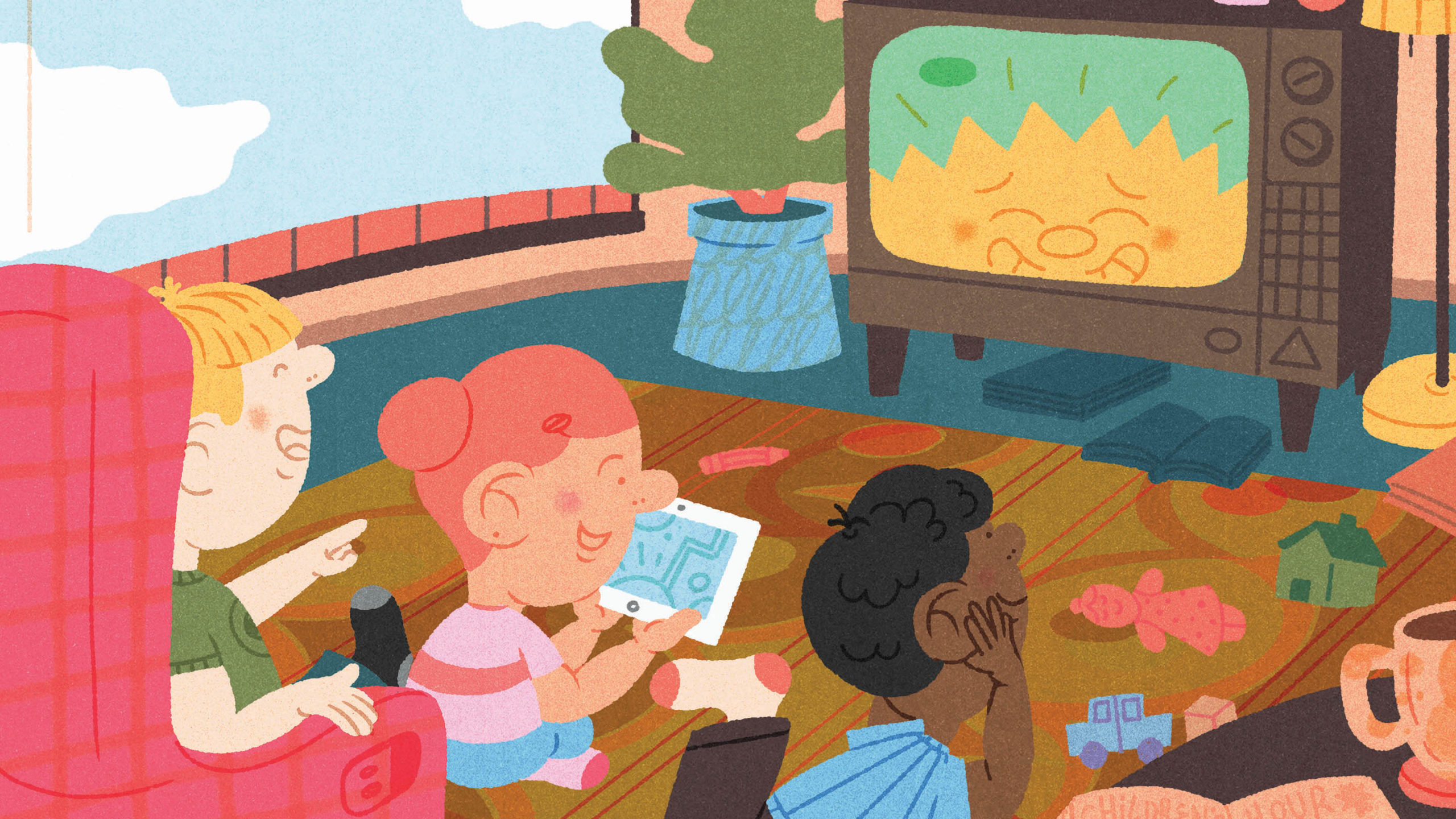
Children’s broadcast entertainment has a hundred years of history – but does it have a future?
This piece first appeared in Anniversary, the January 2022 edition of the Tortoise Quarterly, our short book of long stories. Head to our shop to pick up a physical copy.
The story started in a small, heavily draped studio in Birmingham, equipped with a piano, gramophone, chair and microphone. At 6pm on 5 December, 1922, an engineer cleared his throat, took a deep breath and presented 20 minutes of crackling radio entertainment specifically for young listeners.
“I wasn’t used to telling stories to children at all,” AE Thompson would recall. He played some records and span a yarn: “I said I had in the studio, a blue cat with yellow spots that always sat on my desk and got up to the weirdest antics … They seemed to like that very much. Except the small boys. I started getting letters saying ‘Dear Uncle Tom, couldn’t we have some stories about a dog please? Because cats are for girls’.”
“The response was immediate and staggering,” said Percy Edgar, then a BBC regional director. “Letters poured in from children and then from parents, begging us not only to continue but to lengthen the time devoted to them.”
Eighteen days later, the BBC’s London station introduced Children’s Hour – a schedule of stories, poems and songs. And so began a century of children’s broadcast programming in Britain.
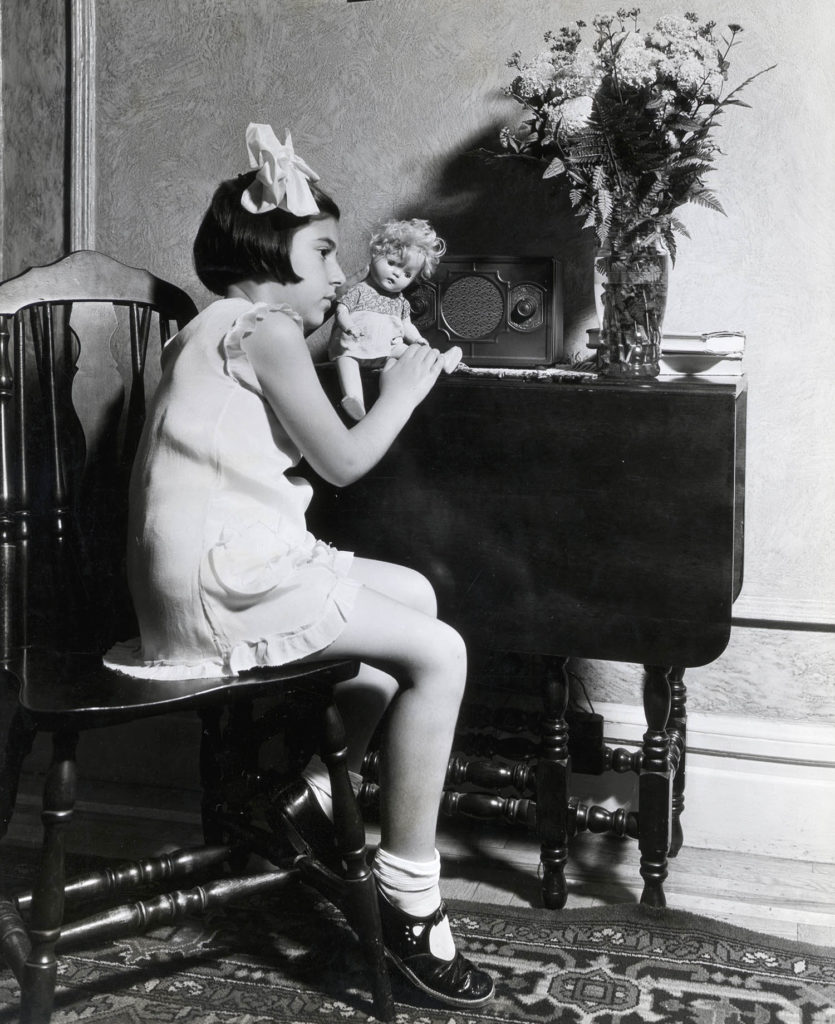
When post-war televisions switched on in 1946, those few lucky children with access to a set (numbering only 0.3 per cent of families) stopped what they were doing and sat cross-legged in front of Muffin the Mule. Sunday afternoons were suddenly transformed, but producer Mary Adams had greater ambitions for this new captive audience. Soon, she insisted, a ‘‘service in miniature” would exist, fulfilling the public service remit to inform, educate and entertain through: “plays, how-to-series, storytelling, a collectors’ corner, pets, travel, outside broadcasts from museums and factories, informational films, quizzes and encyclopaedia programmes”.
Over the following decades, her prophecy appeared to be fulfilled. Children’s programmes spread across new terrestrial channels: ITV, Channel 4, Channel 5. They broke free from after-school slots, seeping into Saturday mornings and eventually filling entire schedules on proliferating satellite and then digital channels: Cartoon Network, Nickelodeon, CBeebies …
Then, in 2021, as the bell was being readied to chime on Uncle Tom’s broadcasting centenary, the UK’s communications regulator Ofcom sounded the alarm instead. For the first time, British children were spending more time picking their own content on YouTube and Netflix than watching traditional television.
1950s – Watch with Mother
The first ever BBC TV series aimed squarely at pre-school children, Watch with Mother introduced Andy Pandy, Bill and Ben and more to our screens. Its name was a nod to BBC radio’s Listen with Mother slot. It was also, though, intended to calm concerns that the concept might free mothers to ignore their children for a moment and indulge in a little “me time”. Perish the thought.
Has children’s broadcast programming died just short of its 100th birthday? If so, what does it mean for those founding ambitions to shape the attitudes, aesthetics, accents and even attention spans of the youngest British citizens?
“I was brought up on radio,” says Anna Home, chair of the Children’s Media Foundation. “Some of my fondest and earliest memories are of the programmes I heard as a child, like John Masefield’s The Box of Delights. These early memories take root, they are very important.”
“It’s always been said that (for that reason) children’s media is one of the cornerstones of public interest broadcasting. But the assumption – entirely wrong in my opinion – has tended to be that because the audience is shorter in height and experience, less can be spent on their media. In reality, the children’s department was virtually an independent fiefdom. You’d only hear about it at times of crisis or renewal of the charter.”
Home’s first television job was on Play School. As executive producer of BBC children’s drama, she later commissioned Grange Hill. Finally, when head of the children’s television department, she introduced Teletubbies. Each show proved a landmark moment in modern British children’s broadcasting, holding a mirror up to changes in wider British society, and children’s evolving place within it.
Early shows like Muffin the Mule were loved by children: “but the format was very much ‘adults talking at children’,” says Home, “about subjects and in ways that adults thought were good for them.”
Change was in the air by the time Play School launched in 1964. In the streets outside the studio, stiff upper lips were loosening, youth culture supplanting the notion that children should be seen and not heard. Similarly: “the show was a lot more informal and inclusive. We talked with children, not at them.” The presenters looked and sounded different too: received pronunciation relaxed, ethnic diversity introduced.
That such on-screen developments were rarely calmly received might serve as a useful reminder to any parents pulling out their hair over screen-time. Hysteria about new entertainment rotting small brains, and ending civilisation as we know it, is far from new. Take Grange Hill.
Children adored the drama series set in a secondary modern school from the moment it first aired in 1978. For many, it was ground-breaking – the first time they had seen people like themselves, and experiences like their own, on screen. Yet: “it was disapproved of by both parents and teachers. They objected to hearing children talk like children. People thought it undermined authority, encouraged bad behaviour and bad language (though the worst it got, really, was ‘flipping eck’).”
More hand-wringing followed the launch of Teletubbies in 1997. Though created in response to the learning and communication patterns of young toddlers, Tinky Winky’s “eh-ohs” were the polar opposite of BBC English and sparked outrage over the imagined demise of speech development. “The grown-ups didn’t really understand,” says Home, “but there was money around in the Nineties. People were prepared to take risks.” Accordingly, the BBC funnelled £1 million into a Teletubbies marketing campaign. A magazine was followed by toys, toiletries, tableware and textiles. And it paid off. A million Tinky Winky, Laa Laa, Dipsy and Po dolls sold in just four months. Come December, Teletubbies Say “Eh-oh!” was only narrowed knocked from the Christmas number one slot by the Spice Girls. By 2000, merchandise sales had topped £1 billion.
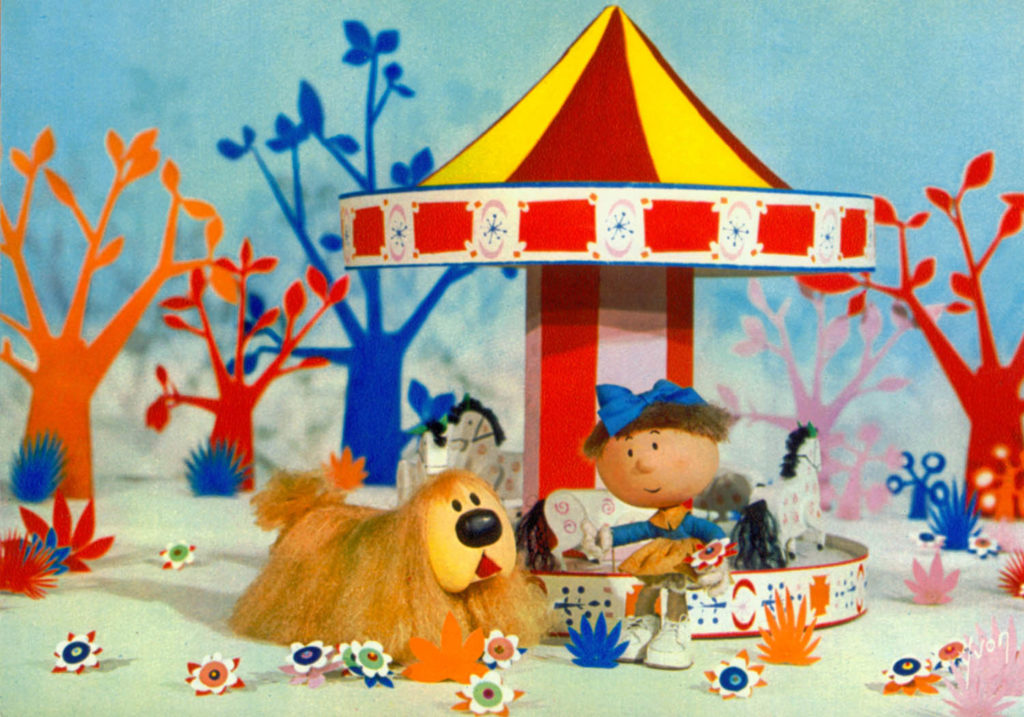
1960s – The Magic Roundabout
At its peak, eight million adults and children watched this show, broadcast in the five-minute slot before the early evening news. But what were they watching? The innocent adventures of a dog, rabbit, snail and moustachioed spring? Or a psychedelic advertisement of the joys of illegal substances?
“Amazon broke that whole income stream,” says Jules Coke, executive producer of Messy Goes to OKIDO, a science and comedy series for pre-schoolers that was acquired by CBeebies in 2015. AE Thompson, in his threadbare studio, would be overwhelmed if he could see the animation tools and technology employed by Coke’s production company, Doodle Productions. Yet, he would probably recognise and approve of the show’s inventive, informative and inquisitive ethos. OKIDO is a success. It has been sold to HBO, Netflix “and a bunch of big networks in China,” goes out in over 80 territories and episodes 78-104 are currently in production.
Yet squeezing any money from merch is tough. “Once upon a time, if you were a top-5 show on Cbeebies, you’d be guaranteed a toy deal, simply because kids had far fewer choices,” says Coke. “Now we’re flooded with toys. You can buy any toy you want, from anywhere in the world.”
Commercial broadcasters can no longer rely on advertising income either. In 2007, channels were banned from broadcasting junk food adverts during children’s programmes. An estimated £35 million in revenues disappeared overnight, leaving them increasingly reluctant to commission and schedule children’s programmes. By 2010, children’s dramas were being allocated just 30 per cent of the budget thrown at adult dramas (about £200,000 per half hour). Junior game shows garnered just 25 per cent of the typical adult budget. And that was before the next big challenge to children’s linear broadcasting arrived in the UK – the streamers.
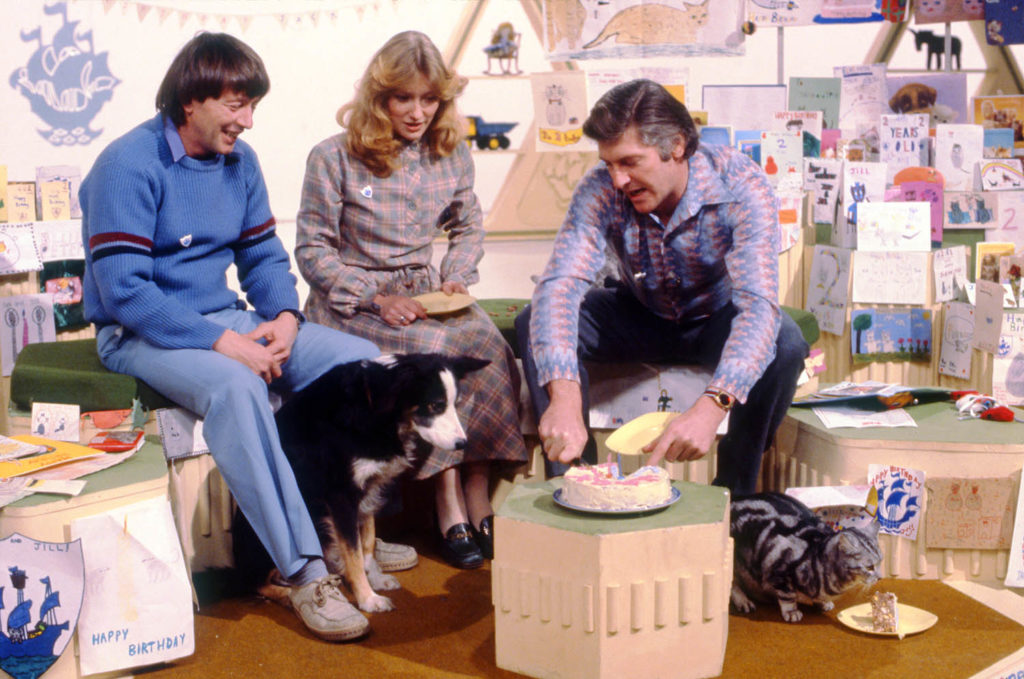
1970s – Blue Peter
Blue Peter’s most famous episode was actually aired at the very end of the Sixties, when Lulu the Elephant broke all remaining standards of formality and relieved herself on set. But the Seventies were the series’ golden era. The first colour episode aired in 1970, the Blue Peter Garden opened in 1974, and it was two decades before Richard Bacon would go on a spree even more Seventies embarrassing than Lulu’s.
When Netflix launched in the UK ten years ago, my firstborn was two years old and CBeebies was our favourite babysitter. Sure, we felt the occasional pang of guilt about screen-time, but he learned his numbers watching the Numtums, his letters from the Alphablocks, and obscure oceanography facts from Octonauts. Today, I asked him when he last watched linear television. He couldn’t remember. His sister, eight, was barely aware it existed. On Netflix, Disney+ and, to a lesser extent iPlayer, they create their own viewing schedules, composed exclusively of their preferences, at the time that suits them.
As young viewers fled from traditional broadcasters, the money followed. In 2018, Ofcom published a paper that showed 98 per cent of programmes on commercial children’s channels were repeats. Last year, Disney shut down a slew of television networks, and expanded Disney+ across South East Asia and Europe instead. But if linear television is dead, should children really mourn the loss? In the streaming era, the dismissive attitude to children’s shows that Home experienced has been upturned. “Suddenly there’s all this money flooding into making kids content,” says Coke. It cost about £5 million to make OKIDO’s first 52 episodes. Cbeebies put up 24 per cent of that. An indie distributor added another £350,000. The rest, Doodle Productions had to patch together themselves.
Sell a show to Netflix or Disney+ on the other hand: “and you might get £10 million to make 52 episodes. They tend to want to take global rights so if you’re the producer, you’re making all your money in that single transaction.” Still, it is a vast amount of money. What’s in it for the streamers? Subscriber retention, for one. As Coke puts it, and anyone who has parented through a pandemic is acutely aware: “Kids are a big barrier to people cancelling their Netflix subscription.” In September, Netflix spent a reported £500 million acquiring the Roald Dahl Story Company, giving it rights to Matilda, The BFG, Fantastic Mr
Fox and more.
Such mammoth budgets enable production values that children of the Eighties, like me, could scarcely have dreamt of (remember Metal Mickey, the “robot” seemingly built from studio recycling boxes). But streamers are not the only ones luring children away from linear television. On YouTube, Coke suggests, a contrasting ethos thrives: “the overarching thesis is that kids don’t really care about that. You should spend a lot less on production and pump out digital content.” OKIDO costs between £8,000 and £9,000 per minute. While YouTube is home to the widest possible spectrum of content and production costs, Coke is aware of successful videos made for between £500 and £1,000 a minute. A common model involves endlessly replicating existing content that is getting clicks: “if success looks like a video of a lorry going through a puddle, you make another video with a red lorry going through a puddle,” says Coke, “then a yellow one, then a green one …”
It’s easy to decry this principle of quantity over quality. Yet Muffin the Mule told stories to children. Play School talked with them. Grange Hill reflected their own lives and stories back at them. Now, with a tablet gripped in their chubby fists, children can push adults further still into the background. They choose their own content. So are these videos the final, pure reflection of children’s own appetites, undiluted by adult interference?
“It’s like a sweetshop,” says Jackie Edwards, Head of the BFI’s Young Audiences Content Fund. “What we should be doing is providing our children with a good balanced diet. Sweets are a part of it, but you also need the good nourishing stuff.”
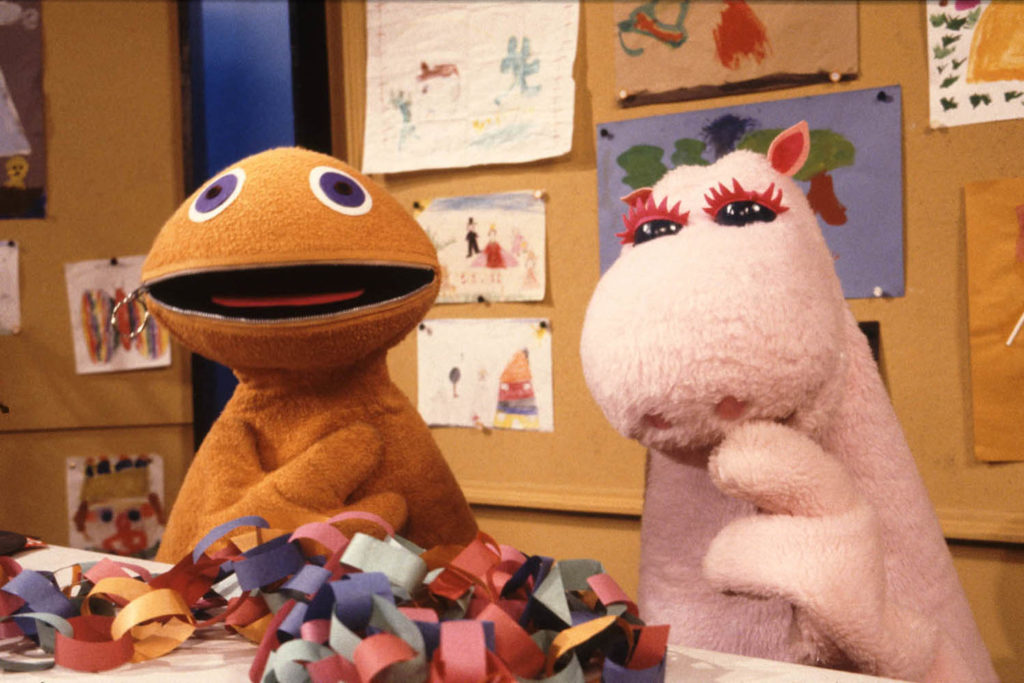
1980s – Rainbow
Originally conceived as a British rival to Sesame Street, Rainbow followed the adventures of George, a neurotic pink hippo with Love-Island-worthy eyelash extensions; Zippy, a megalomaniacal yellow martian with a zippable mouth; Bungle, an overgrown Ewok; and Geoffrey, the (with hindsight) understandably overwhelmed adult man with whom they all shared a house in suburbia.
Linear television creates a varied menu for children, allowing them to discover new interests and tastes. In a future without it, children from families that could afford subscription services might access big budget shows, while others would be left to navigate their own way through the wild-west of YouTube where quality shows jostle for children’s attention with unboxing clips and darker, damaging material. Either way: “algorithms mean disappearing down a rabbit hole of suggested content. It’s: ‘you like this? Then have more of similar,’ rather than: ‘and now for something different’. Won’t we be culturally poorer if that’s all that’s on offer to children?” It is a question that has stalked children’s media for a century. In 2010, the House of Lords select committee on communications concluded that children’s television: “remains one of the most significant ways that children receive, both formally and informally, culturally relevant information for their development.” But do children’s programmes have a duty to shape the cultural outlook and values of their young audiences? And if so, what should that culture look like? The promulgation of BBC English? The promotion of diversity and inclusivity through minority characters and presenters? Or is it the promotion of values like those Boris Johnson found in Peppa Pig: “safe streets, discipline in schools …”?
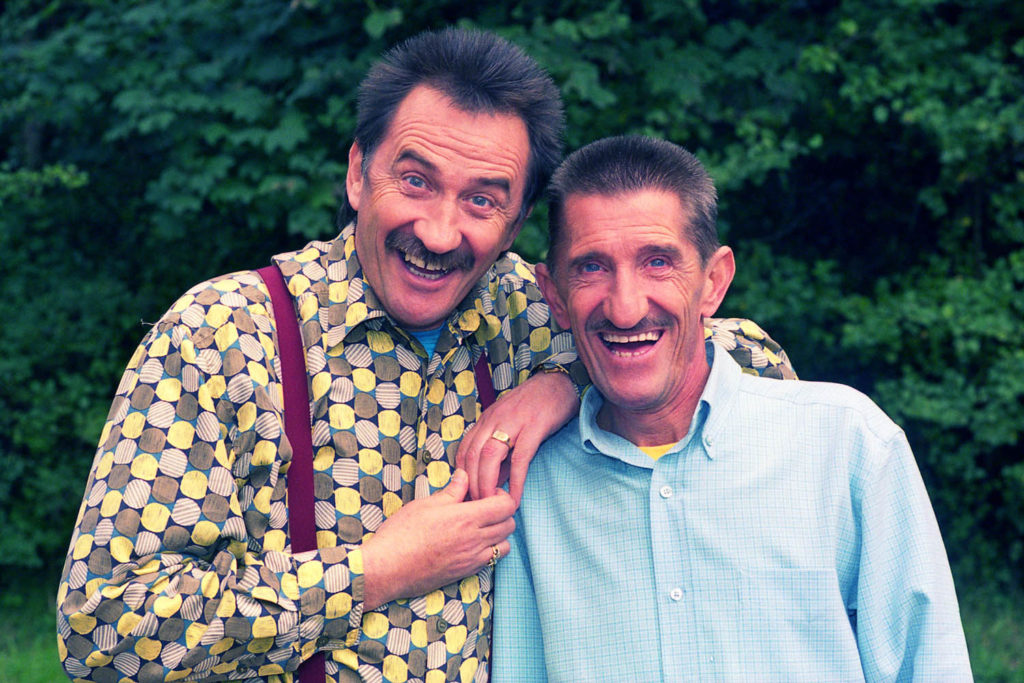
1990s – ChuckleVision
You can draw a direct line through British comedy from Laurel and Hardy to Mr Bean via the slapstick comedy of ChuckleVision. Real-life brothers Barry and Paul Elliott don’t often get the same critical acclaim for their work but the show aired close to 300 episodes and a whole generation now smiles at the mere mention of the words: “to me, to you, to me, to you…”
“I love the streamers,” says Edwards. “But a lot of the shows have this global nowhereness to them. Think of Sex Education. It was brilliant. But it’s shot in the Usk Valley in Wales, then the culture it’s portraying is American jock. It sits somewhere in the Atlantic and it’s not representing anybody’s experience very well.” It’s certainly not Grange Hill and, it seems, this could be a problem.
“We did some research last year that showed 75 per cent of kids in this country don’t think they see or hear people like themselves on television,” says Edwards. “If they can’t find it on the mainstream platforms, they look for it elsewhere.” The same research, in fact, suggests that young people do find these qualities on YouTube.
Edwards, however, sees glimmers of hope for linear television. Her £44 million pilot fund has already greenlit the production of 55 shows designed to turn this tide and bring children and young people back to “free to access, regulated and safe platforms”. That the majority of those that have been aired, like critically-lauded Teen First Dates for E4 and interactive game show Don’t Unleash the Beast for CITV, have already been recommissioned, is an early sign of mission success.
Yet these glimmers may be fading. At the end of January, the Department for Digital, Culture, Media and Sport announced that Edwards’ fund would not continue beyond its pilot stage. The pandemic has certainly played its part in wringing government funding dry. Ironic then, that it also bolstered public appreciation of old-fashioned public service broadcasters.
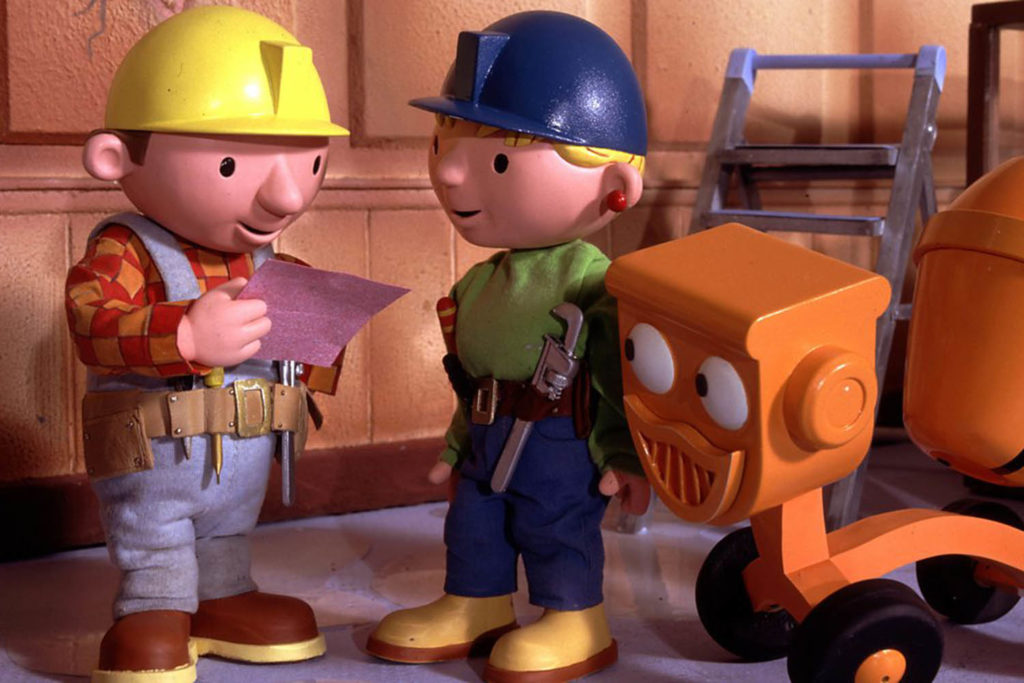
2000s – Bob the Builder
There was something incredibly reassuring about Bob, Wendy and their crew of anthropomorphised vehicles. Was it Neil Morrissey’s comfort-blanket voice? The traditional dignity of the team’s blue-collar work at a time when intangible, online worlds were proliferating? Did we all need a dose of practical positivity after 9/11? Either way, the show’s catchphrase – “Can we fix it? Yes we can!” – captured a zeitgeist so powerfully, that Barack Obama borrowed it for his 2008 presidential campaign (maybe…)
While the pandemic hampered their practical efforts, it may have bolstered their message. During the first lockdown, global linear television consumption increased by 24 per cent. Channel 4 announced that, in the first four weeks alone, young viewing volume increased by 29 per cent, as 16-and-overs tuned in to the news, but also returned to familiar, comforting programmes like Friday Night Dinner and Celebrity Bake Off. And while more recent data suggests 18-30 year olds may now have drifted back to the streamers, (prompting the chairman of the Commons digital, media, culture and sport committee, Julian Knight, to warn the BBC of a “demographic time bomb” this January), younger audiences may more loyal. Ninety-three per cent of 16-34 year olds tuned in to the BBC during the festive season.
Homeschooling revived appreciation for educational scheduling too. Parents punched the air when the BBC introduced a three hour block of primary school programming on CBBC, and two hours of GCSE content on BBC Two. This February, BBC Three made a linear television comeback after six years in the online wilderness, with a schedule of comedy, drama, entertainment, news, documentaries and live sport aimed at over-13s.
So, a century after the first scheduled broadcast, linear television for children might be critically wounded but it is not, Edwards insists, dead yet. Policy, and parent-policing are the CPR required: “children aren’t licence fee payers, they don’t have real, direct spending power. We as grown-ups need to think about their audio-visual diet.” Are we going to let them loose in the pick and mix aisle, or give them a balanced menu? It might be time for AE Thomson’s cat to make her comeback.
Illustration Dylan Woodall
Photographs Bettmann/Getty Images, BBC Archives, Fremantle Media/Shutterstock, HIT Entertainment, Alamy Images


