Sensemaker Daily
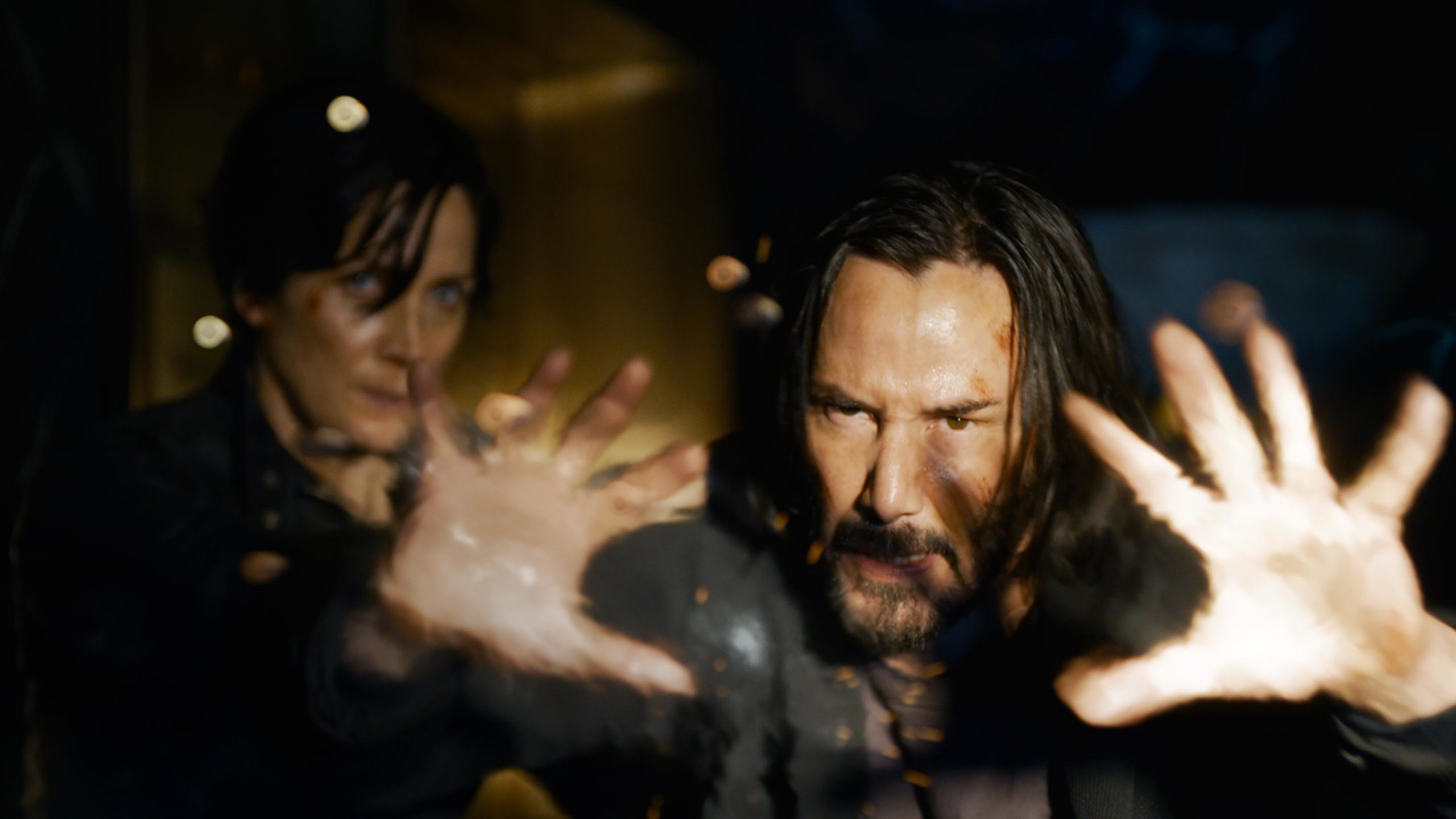
The new Matrix movie revives a sci-fi saga whose core ideas have moved from the digital counter-culture of geeks, hacks and stoners to the very mainstream of modern life
To grasp the significance of The Matrix Resurrections (general release, 22 December), the first and most important step is to bear in mind how much time has passed, and how much has changed in the 18 years since the third part of the original trilogy was released. To do so is to compare two entirely different worlds.
Consider, for a start, the transformation of the cultural, social and technological landscape since The Matrix Revolutions apparently concluded the science-fiction saga of Neo (Keanu Reeves) and Trinity (Carrie-Anne Moss); awoken from their sleeping captivity in a digitally simulated inner landscape to defeat the machine overlords that had subdued the human race, and – as Morpheus (Laurence Fishburne) had foretold – to liberate the real-life rebel-citizens of Zion.
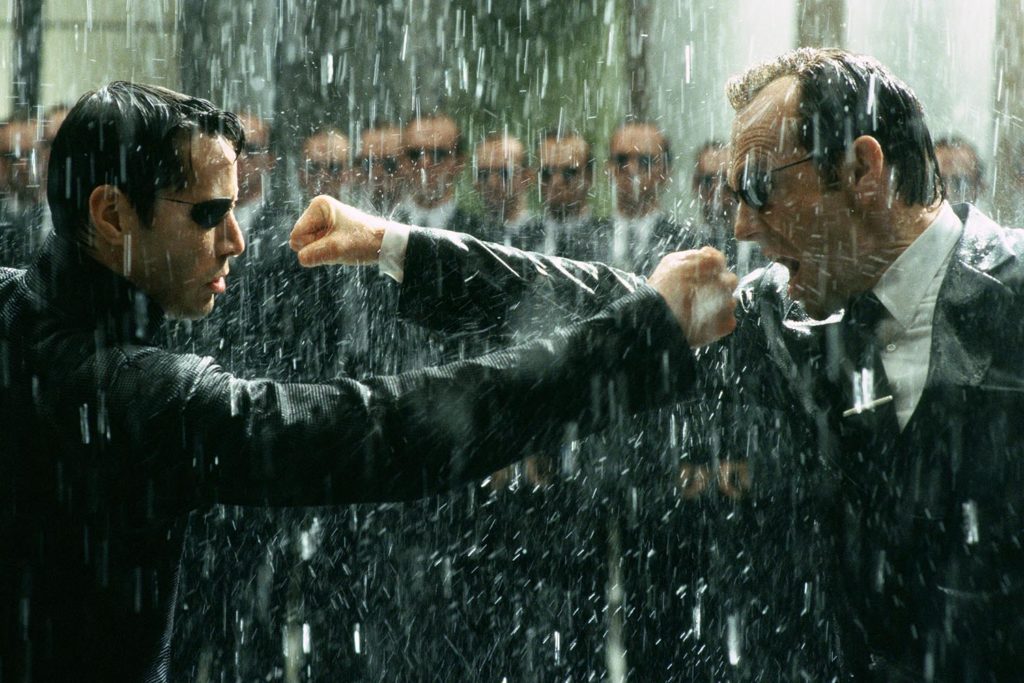
In October 2003, as audiences flocked to see Neo’s final battle with the deadliest “programme” within the Matrix, Agent Smith (Hugo Weaving), the launch of Facebook was still four months away – and Twitter was not to begin its own conquest of the world until 2006.
Netflix was still a DVD rental membership service, the era of multi-channel streaming scarcely conceivable for most viewers. Amazon was no more or less than a very successful online retail company – and hardly looked like the first step towards Jeff Bezos’ launch of a rocket ship in July this year, with a view to building a private space station in the second half of the decade.
As the movie franchise slumbered, Steve Jobs unveiled the first-generation iPhone in January 2007, the Apple app store opened in July 2008, and the original iPad went on sale in April 2010. The initial Matrix trilogy was the child of the dial-up Internet age, with its fiddly modem cables. In 2002, there were fewer than 200,000 broadband users in the UK; four years later there were 13 million.
In The Matrix (1999), Reeves is Thomas Anderson, the cubicle-bound employee of the software company, Meta Cortex, who leads a double life as the hacker “Neo”. In both guises, he works away at old-fashioned desktop computers.
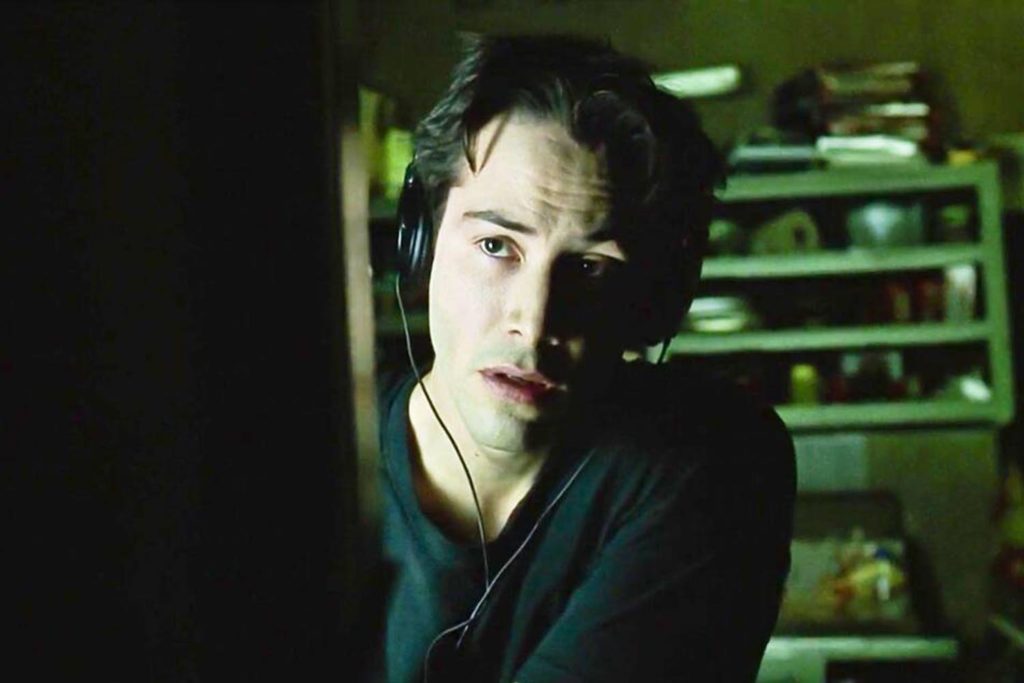
Contrast the first trailer for Matrix Resurrections (“I’ve had dreams that weren’t just dreams”) in which we see him in a lift surrounded by people all looking down at their phones and tablets, poised between real life and the digital world. It’s not just a movie franchise that has been reborn, in other words. So have we.
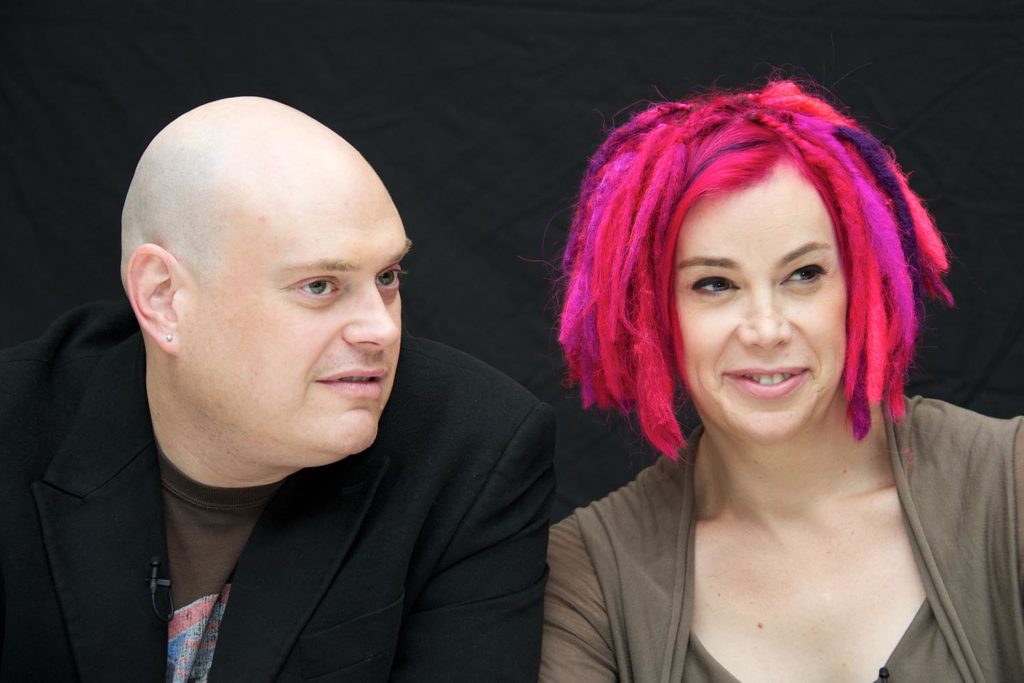
And so indeed have the film-makers themselves. In the intervening years, the enigmatic siblings behind the Matrix phenomenon – the Wachowskis – have completed their transition to transwomen, Lana and Lilly. As it happens, Resurrections is directed only by Lana, who recruited the novelist David Mitchell, author of Cloud Atlas, to co-write the screenplay, and has introduced a range of new characters, including Yahya Abdul-Mateen as a different incarnation of Morpheus, Jessica Henwick as Bugs, Neo’s new guide (“If you want the truth, Neo, you’re going to have to follow me”), Neil Patrick Harris as his therapist, and Jonathan Groff as his sinister business partner.
The original film was the mesmerising culmination of late 20th-century geekery: bringing together the Wachowskis’ love of cyberpunk, anime, and gaming with – at the time – state-of-the-art special effects that made the fight scenes, in particular, truly breathtaking.
Inside the Matrix (as opposed to Morpheus’ battered real-life hovercraft, the Nebuchadnezzar) the characters wore the black clothes of cyber-ninjas and the world’s coolest shades. It’s important to remember that, above all else, the series has always been supremely entertaining, packed with action, imagination and dazzling combat and chase sequences unlike anything that had ever been on screen before – as well as the love story of Neo and Trinity. In the words of Lilly Wachowski: “It’s about robots vs kung fu.”
Yet the movies have also burrowed under the skin of the audience to pose and popularise philosophical questions. For analysts of class struggle, struck by the films’ preoccupation with control and human serfdom, it was more than coincidence that the word “Matrix” was an anagram of “Marx” and “IT” (see Joshua Clover’s 2004 book in the BFI Film Classic series). The notion that everything we experience is really nothing more than appearance and representation was also linked to the French philosopher Guy Debord’s classic 1967 tract, Society of the Spectacle.
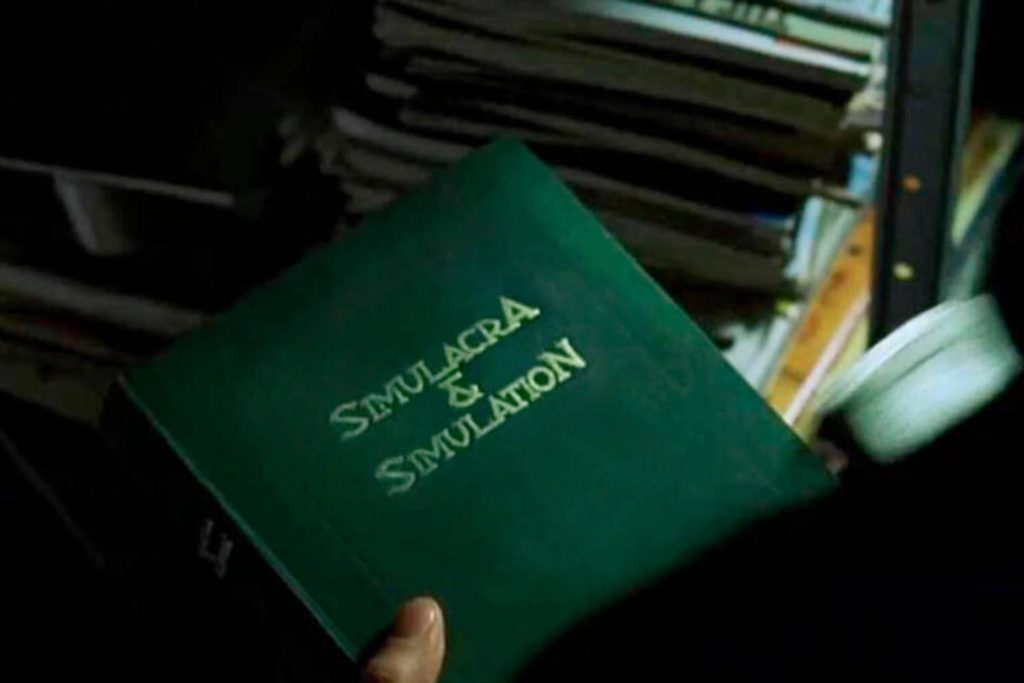
What pressed hardest on the collective nerve, however, was the notion that we might all be living inside a hyper-reality generated by advanced technology. At the beginning of the first film, we see Neo with a copy of Jean Baudrillard’s Simulacra and Simulation (1981), which contends that we exist within a world of signs, symbols and representation. In April 2003, six months before the release of Revolutions, the philosopher and technologist Nick Bostrom published a highly influential paper in The Philosophical Quarterly, entitled: ‘Are We Living in a Computer Simulation?’ (answer: “almost certainly”).
This was not, of course, a new question. In 1977, the sci-fi writer, Philip K Dick had famously posed it thus: ‘If You Find This World Bad, You Should See Some of the Others’. This, in turn, drew upon a rich philosophical tradition of inquiry, stretching back (at least) to Plato’s allegory of the shadows in the cave: the captives in the cave watch only shadows flickering on its walls, which is their perception of reality. But what is the relationship between that perception and the real world?
Much more recently, in Anarchy, State, and Utopia (1974) the philosopher Robert Nozick conducted the “thought experiment” of the “experience machine”: if we could plug into a device that could simulate every imaginable pleasure, would we prefer it to real life? Nozick concluded that we would not settle for such a limiting experience (“Someone floating in a tank is an indeterminate blob.”)
This question is at the heart of the Matrix series. Will Neo take the red pill offered to him by Morpheus, and awaken from the great computer simulation – or the blue one that will leave him irrevocably plugged in? He opts for the red pill, and so, according to Nozick, should we all.

But one member of the Nebuchadnezzar crew, Cypher (Joe Pantoliano), betrays his comrades in return for a pleasurable re-entry to the Matrix: “You know, I know this steak doesn’t exist. I know that when I put it in my mouth, the Matrix is telling my brain that it is juicy and delicious. After nine years, you know what I realize? Ignorance is bliss.”
Today, the notion that we live in a computer simulation is common coin. In 2016, Elon Musk declared that “[t]he odds that we are in base reality is one in billions”, while Scientific American offered the more measured assessment last year of a 50:50 probability that we are all dreaming inside a simulation based on complex computer code. (For more on this, check out the documentaries Philosophy and the Matrix: Return to the Source and Rodney Ascher’s A Glitch in the Matrix, and William Irwin’s book The Matrix and Philosophy).
The point, of course, is that questions that were once counter-cultural have moved right to the heart of the mainstream. When Morpheus first challenged Neo to consider “your digital self”, he posed a question that mostly exercised only hackers, geeks and stoners. Now it is at the core of every discussion of contemporary culture, politics, business and society.
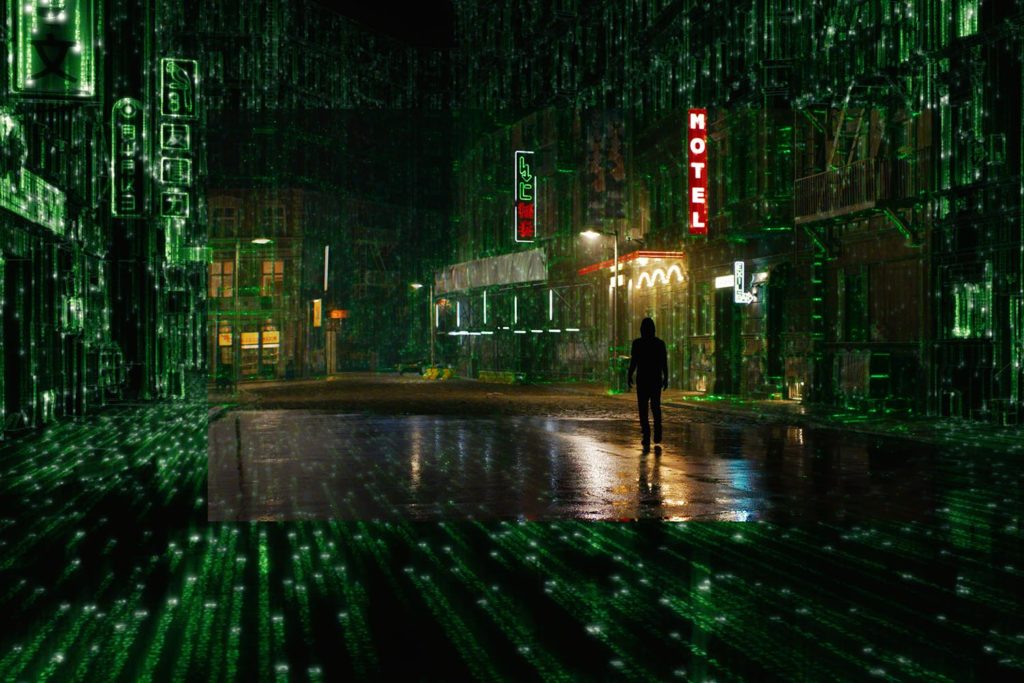
In the original Matrix, human beings had been reduced to unwitting power sources: the battery of the machine world. Today, we are providers of spectacular quantities of personal data, the fuel that keeps the digital beast alive.
If there is such a thing as the human soul, how much of it is composed of atoms and how much of bytes? Are our decisions the product of free will or algorithmic manipulation? How porous is the border between consciousness and the potential of artificial intelligence?
Neo and Trinity, in other words, return to a world in which the relationship between real life and simulation has been radically reordered. In 2003, the Matrix was still a dystopian fiction; in 2021, we are already spending much of our lives inside its metaverse of code, timelines, gaming levels and avatars. The days when we fretted about the absorption of our species into the digital world are behind us. We’re already halfway there.


