Capital Economy, Business and Finance

Believe it or not, there's a logic to the president's tariffs – informed by hedge fund research and a warped understanding of US history
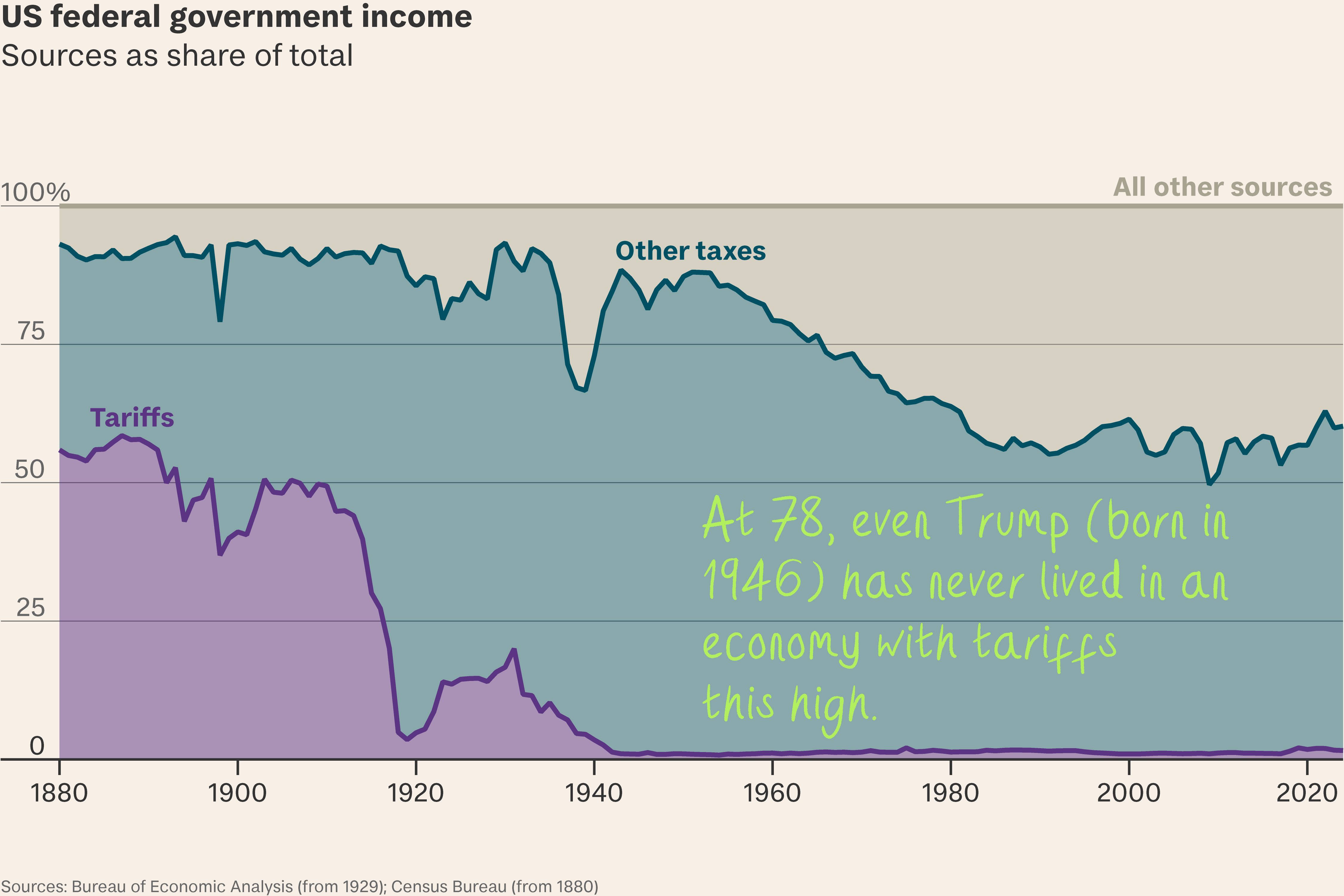
In his “liberation day” speech, Donald Trump said the Great Depression of 1929 would not have happened if the US had stuck with a policy of high tariffs brought in at the turn of the century.
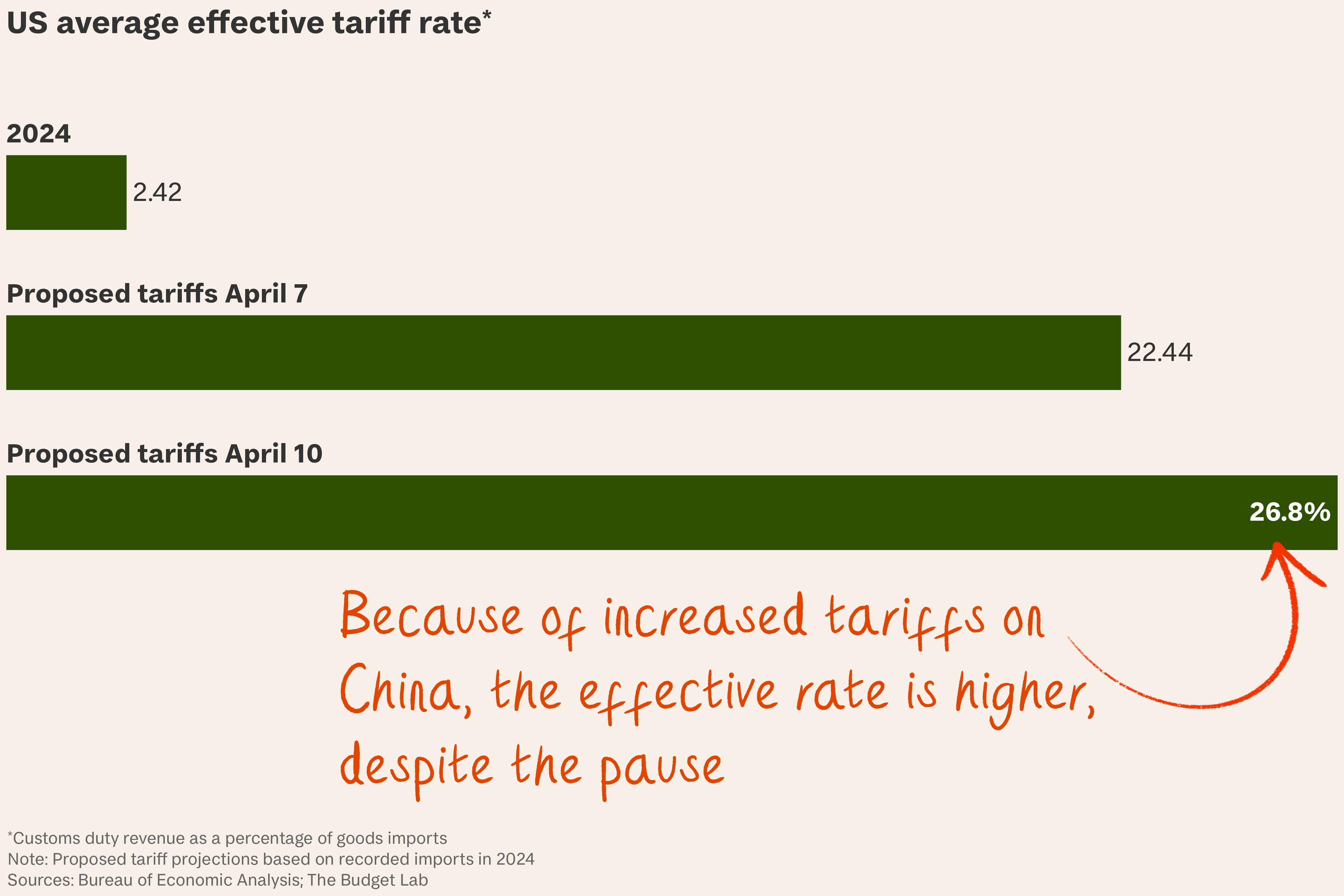
So what? History sometimes rhymes, but in this case it’s horribly dissonant. When the US raised a wall of tariffs in the late 19th Century, prices and trade fell. But tariffs levied against China in 2018 were broadly inflationary, and economists describe Trump’s latest attempt to reduce the US bilateral trade deficit to zero through universal tariffs as “an insane objective”.
Why do it then? Because Trump has become deeply convinced by the theory that the US has been “ripped off” – largely as a result of the dollar’s role as the world’s reserve currency. The hypothesis, partly informed by a paper authored by economic adviser Stephen Miran and published by Hudson Bay Capital, is as follows:
- Since the 1960s most countries have preferred to store savings in US Treasury bonds rather than their own currency in an effort to keep their exchange rates low.
- This has pumped the dollar, widened the US deficit and created a security risk because domestic manufacturing has declined. In Trump’s view: “If you don’t have steel, you don’t have a country.”
- The answer is to use global tariffs to raise revenue and as a bargaining chip to force partners to sell down Treasury bonds, share the defence umbrella and open their markets to US goods.
A dangerous deal. This theory, dubbed the Mar-a-Lago accord and more accurately described by the FT’s Martin Wolf as a “protection racket”, is stuffed with risks, including
- a sell-off in US bonds by private investors that bankrupts the world;
- currency swings that dampen trade and cause recessions; and
- surging inflation and interest rate rises.
Trump’s Capone-like intimidation of allies is true to form. But he can’t offer lower tariffs as bargaining chips and rely on them for revenue. It’s one or the other. Then again, Trump’s record of sticking with deals is mixed.
Time is of the essence. Even if tariffs revive US manufacturing long-term, over the next few years Trump risks inflicting major pain on his main political base.
- Of the 10 states with the largest share of GDP from imports, seven voted for Trump in 2024.
- Four Republican Senators including Rand Paul of Kentucky, Susan Collins of Maine, Lisa Murkowski of Alaska and Chuck Grassley of Iowa, have lobbied for lower tariffs or carve-outs.
- 70 per cent of Americans, including 62 per cent of Republicans, believe tariffs will drive up the price of groceries, according to Reuters. More than half said they did more harm than good.
McKinley misunderstood. Trump might be wise to revisit the history of his hero, the self-proclaimed “tariff man” and 25th US president, William McKinley. In his last speech to the public, a day before he was mortally wounded in an assassination attempt, McKinley turned against his own protectionist project.
“Commercial wars are unprofitable,” he said. “A policy of good will and friendly trade relations will prevent reprisals. Reciprocity treaties are in harmony with the spirit of the times, measures of retaliation are not.”
What’s more… The “golden age” of America to which Trump harks was powered by immigrant labour and technological advances. This week a survey in Nature of 1,600 scientists living in the country found three-quarters were considering leaving. Not the liberation Trump imagines.
Graphic by Katie Riley.