If the White House wants to know who’s in charge, the answer’s complicated.
Only one leader of Europe’s three major economies came out smiling after Europe’s four-day parliamentary elections. Giorgia Meloni hailed her party’s win as a sign Italy would have a “fundamental” role in shaping EU policies.
“I am proud that Italy will present itself to the G7, to Europe with the strongest government of all,” she said. “This is something that has not happened in the past but is happening today.”
So what? She’s not wrong. Meloni’s hard-right Brothers of Italy secured over a quarter of the vote in Italy, strengthening her position at home and abroad. By contrast, the leaders of Germany and France – traditionally the bloc’s powerhouses – were dealt bruising defeats.
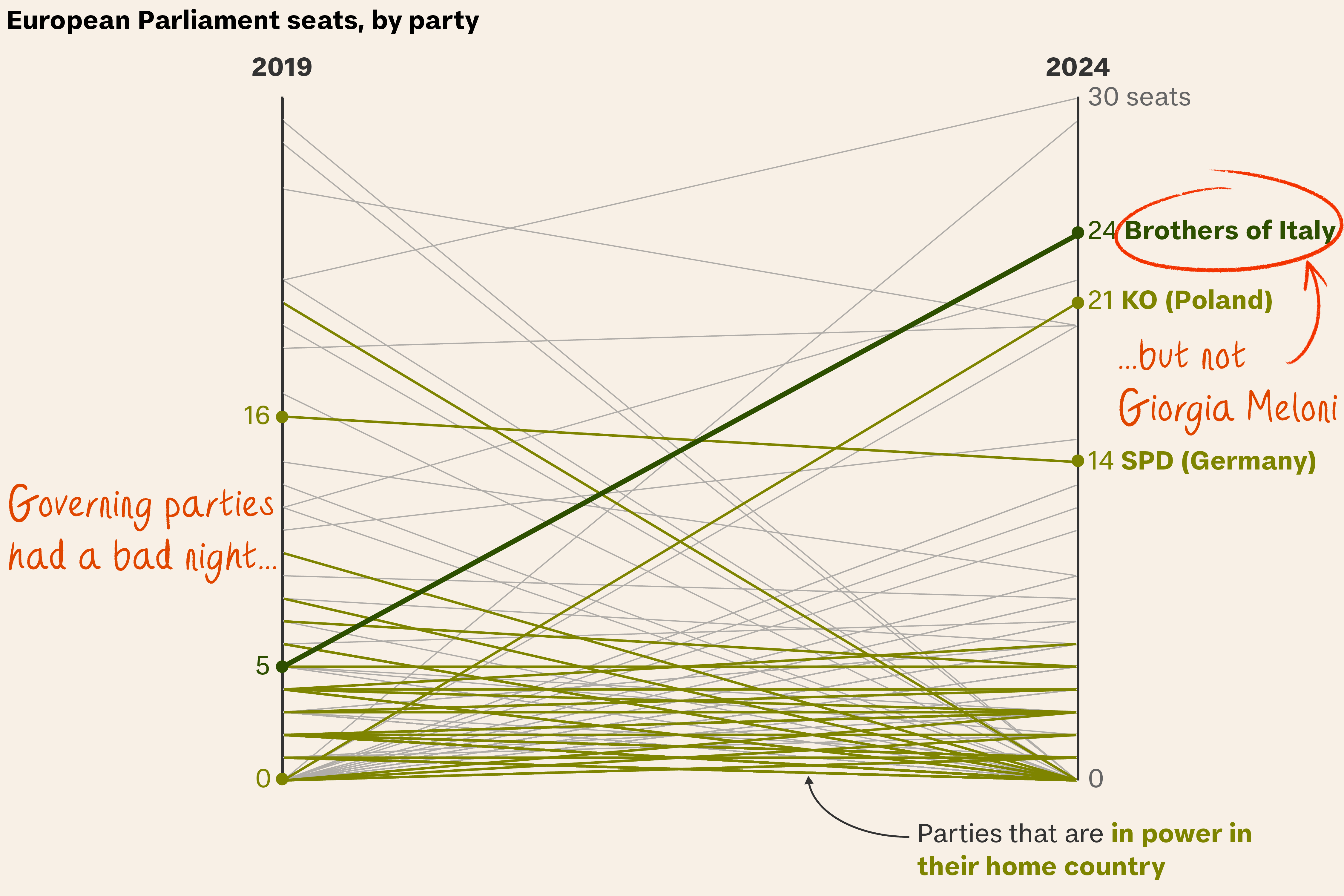
- In Italy, Meloni ran a highly personal campaign, putting her own name at the top of her party’s ballot. It paid off: her party, which has post-fascist roots, won more than 28 per cent of the national vote (up from six per cent in 2019), securing around 24 seats in the 720-strong European parliament. “She is the only one who has managed to consolidate, and even increase, her public support,” says Teresa Coratella of the European Council on Foreign Relations in Rome.
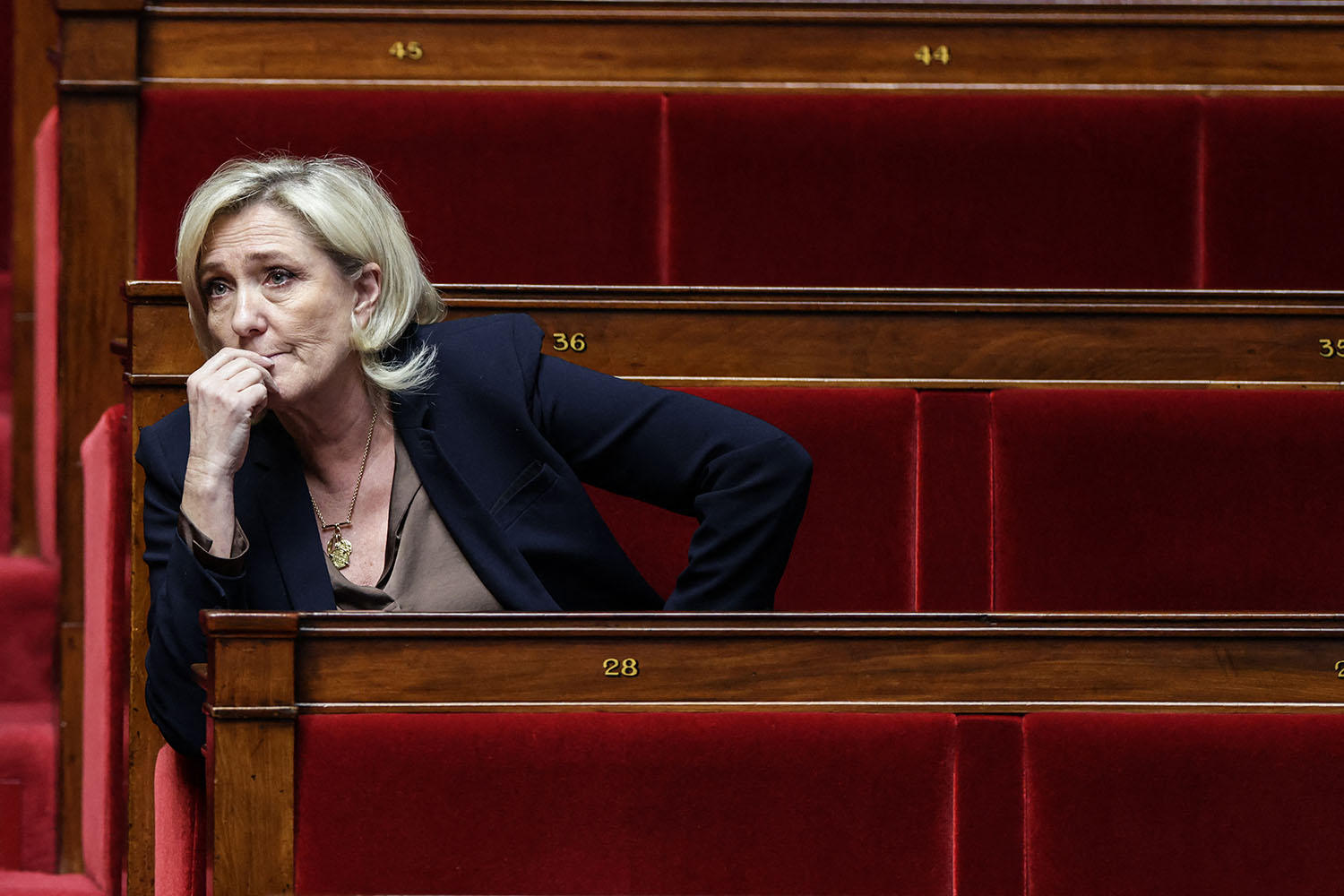
- In France, Emmanuel Macron astonished allies by calling a snap parliamentary election after his pro-EU centrist alliance was thumped by Marine Le Pen’s far-right National Rally (RN). “A thunderbolt”, cried the front page of Le Parisien, as people digested the possibility of a eurosceptic, anti-immigration party taking a majority – or emerging as the strongest party – in France’s 577-strong parliament later this month.
- In Germany, Chancellor Olaf Scholz, who also put himself front and centre on his SPD party’s campaign, spent the day rejecting calls for his own snap election after all three left-of-centre parties in his coalition lost to the far-right Alternative for Germany and the centre-right Christian Democrats.
The upshot. France has faced political sclerosis since Macron lost his parliamentary majority in 2022. Germany has been plagued by slow economic growth. The erosion of these two countries’ status as Europe’s sole indispensable nations has been “clear for some time”, says Mujtaba Rahman, the head of Eurasia Group’s Europe practice. But “what you do have now is very weak leadership. I don’t want to say ‘dead men walking’, but it’s not far off.”
That’s a bad position for the EU to be in ahead of this week’s G7 summit (host: Italy), says Coratella, with the world facing two wars including one in Europe and the possibility of a second Trump presidency in November. The fact that three out of the seven (France, Britain and the US) are heading into elections “won’t help at all” in terms of focusing attention on the bigger picture.
The other winner. Donald Tusk. Poland’s centrist prime minister returned to power last year as uncertain as his coalition partners whether their parliamentary win over the right-wing Law and Justice Party (PiS) was a blip or a sign of things to come. Sunday’s vote suggests the latter: Tusk’s Civic Coalition emerged by a whisker as Poland’s biggest party in the European Parliament – but it was the PiS’s first outright defeat in a decade.
Not forgetting. Ursula von der Leyen is well placed to win a second five-year term as European Commission president. Her centre-right European People’s Party is the biggest in the European Parliament but she still needs
- an EPP alliance with the parliament’s main centrist and centre-left blocs and support from either the Greens or the eurosceptic right to secure a parliamentary majority; and
- qualified majority support from the EU’s 27 national leaders.
Von der Leyen has three chances to woo them: at the G7, at a leaders’ dinner in Brussels next Monday and at a make-or-break EU summit on 27 June. Multiple sources tell Politico one consequence of Macron’s humbling at home is that he won’t stand in her way.
So where’s the power in Europe? Spread thinly between Meloni, Tusk, von der Leyen and the usual weary suspects in Paris and Berlin, with a rowdy talking shop in the European parliament. It’s roughly what the EU’s founders intended, but not ideal in an age of multiple competing superpowers. Washington will need all of them on speed dial (and Keir Starmer will too).
Additional reporting by Serena Cesareo.
Correction: The graphic in this article was amended on June 11.