Capital Economy, Business and Finance
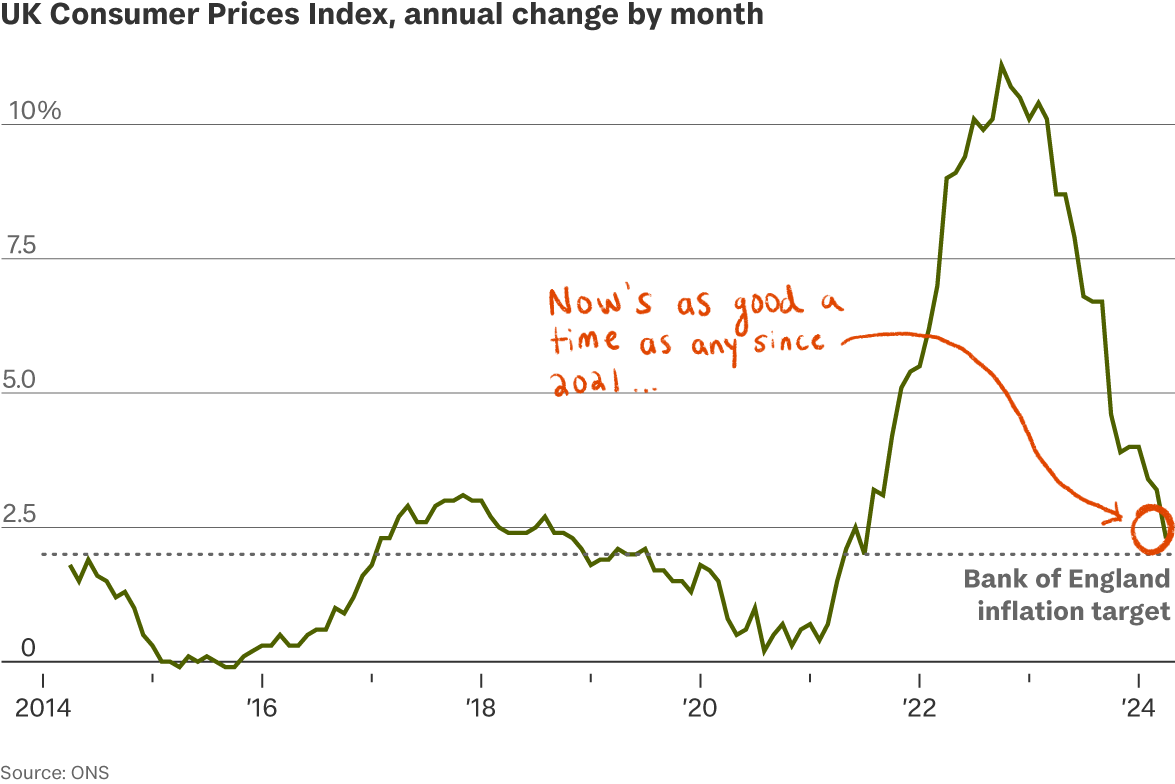
The graph below shows UK inflation over time. Between March 2022 and May 2023 there’s a mini-Matterhorn which represents an acutely painful 14 months when prices were rising much faster than wages. They aren’t any more. Yesterday’s election-triggering news that inflation had fallen from a high of over 11 per cent under Liz Truss to 2.3 per cent brings it well below average wage growth, which Rishi Sunak hopes will make voters feel better about life over the next six weeks. He probably hopes in vain because even though inflation is down, prices aren’t; and because 2.3 per cent is still higher than analysts expected, which diminishes the chances of a base-rate cut next month. That in turn increases the number of mortgage holders due a nasty rise in monthly payments when their fixed-rate loans expire. This group will stay bigger for longer if, as now expected, there’s only one rate cut in all rather than three between now and November. Three would have been worth waiting for. Now, the thinking goes, there’s little point.