Technology AI, Science and New Things
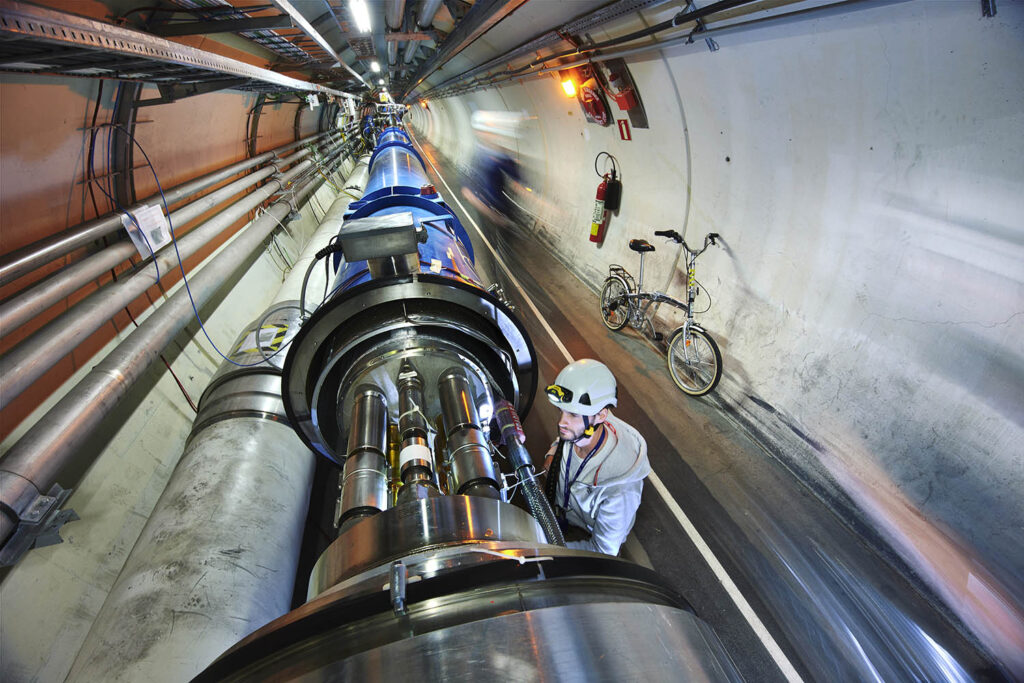
The Large Hadron Collider at CERN, just outside Geneva, begins smashing protons together at almost the speed of light this week in a bid to prove the existence of dark matter. The collider’s new focus stems from the fact that dark matter offers the best explanation of why galaxies don’t tear themselves to pieces with the speed of their spin. Astronomers believe it accounts for 85 per cent of the mass of the universe but doesn’t interact with light or any other forms of electromagnetic radiation. The LHC will generate six months’ worth of 13.6 trillion electro volt proton collisions (radiation from the Sun has one trillion electro volts) at an even higher luminosity – a measure of the number of collisions – than ever before.