Donald Trump has promised to make a statement on abortion sometime this week. All he’s said so far is that it will satisfy everyone.
So what? It won’t. Trump is caught in a political tangle of his own making between the anti-abortion lobby he emboldened in his first term as president and the pro-choice centrist vote he needs for a second.
- There is no mandate for a federal US abortion ban. Two-thirds of Americans favour access to abortion, including majorities in all major swing states.
- Polling suggests the Supreme Court decision to overturn Roe v Wade in 2022 is hurting Republicans and boosting support for Democrats.
- The movement that triumphed against Roe is doubling down, seeking to roll back abortion pill access and spreading anti-abortion messaging in the UK, and beyond.
The new frontier. A few months after the Roe ruling, a new anti-abortion group – the Alliance for Hippocratic Medicine (AHM) – filed a challenge against the US Food and Drug Administration’s initial approval of the abortion drug mifepristone in 2000 and its widening of access to the drug in 2016 and 2021 (“pills by post”).
The influential conservative legal group which had a hand in overturning Roe, the Alliance for Defending Freedom (ADF), supported the claim.
What happened next:
- November 2022: the AHM filed its challenge in Amarillo, Texas which all but guaranteed the anti-abortion Judge Matthew Kacsmaryk would hear initial arguments.
- July 2023: Kacsmaryk ruled to block the FDA’s original approval of mifepristone.
- August 2023: a federal appeals court issued a modified but still restrictive ruling that pre-2016 restrictions on mifepristone should be reinstated.
- December 2023: the US Supreme Court agreed to review the standing of the AHM’s case and whether the FDA should have expanded access to mifepristone.
Why it matters:
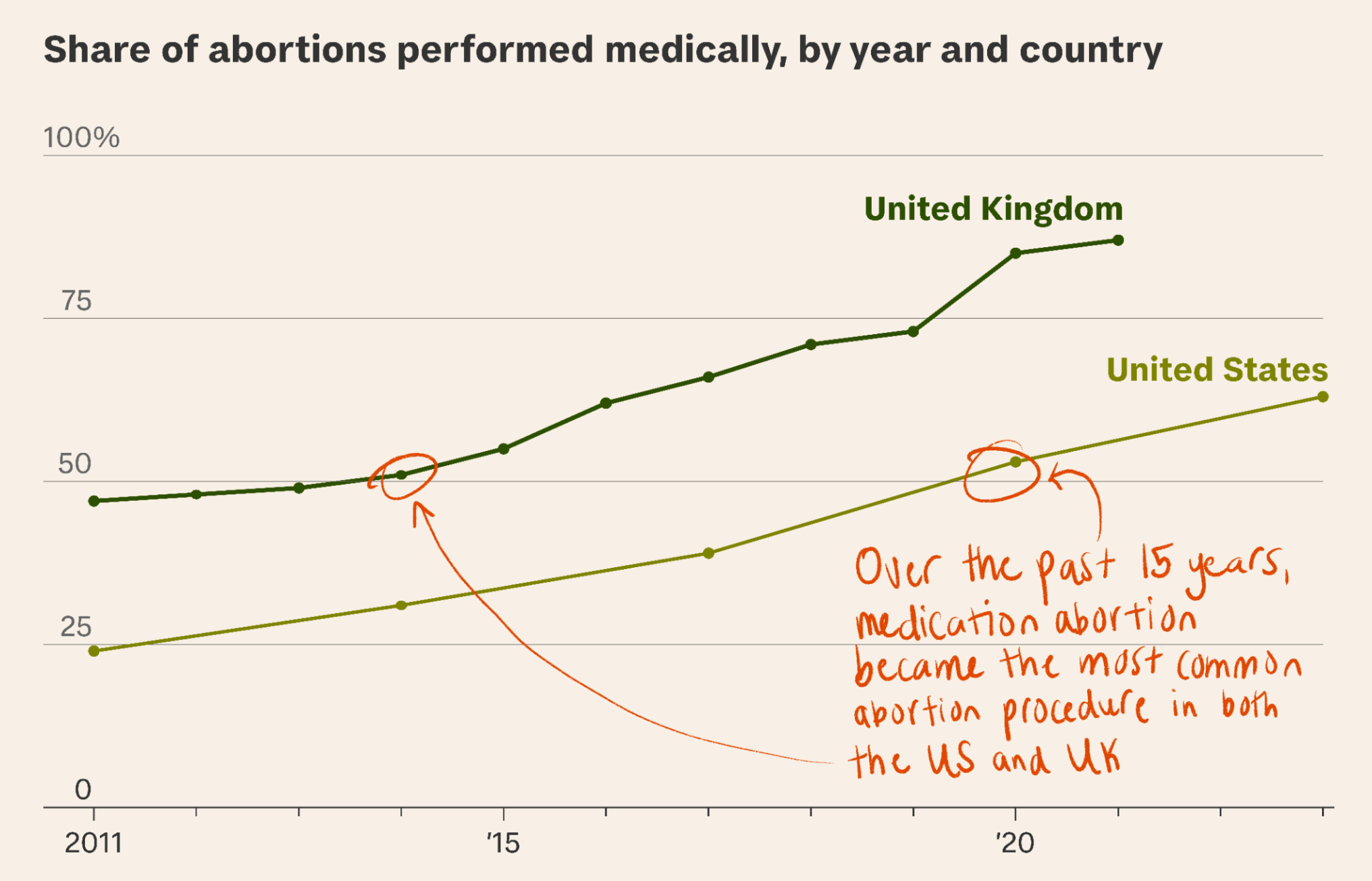
- Access. Pills were used for an estimated 63 per cent of abortions in the US in 2023. The availability of mifepristone is a major reason overall abortion rates in the US have increased since 2020 even though abortion is now illegal in 14 states. If the Supreme Court finds the FDA should reinstate mifepristone restrictions, that trend could reverse.
- Ballots. A number of states, including Florida as of last week, are moving to ask voters in November whether they want to protect abortion rights. That could increase pro-choice voter turnout, but some state initiatives could ultimately be overridden by a Supreme Court decision.
For Trump, a ban on “pills by post” doesn’t appear likely in the short term. In oral arguments at the Supreme Court last month, only two of nine justices appeared in favour of restricting mifepristone access.
It’s still a political hot potato Trump should avoid. A recent poll of US women found 70 per cent support federally guaranteed access to abortion while only 30 per cent support a national ban on medical abortions.
For Biden, even the suggestion of further rollbacks in abortion access could help build support among women and independents – even in trending-red Florida.
For Britain. The Observer reported yesterday that the Alliance for Defending Freedom has increased its spending and lobbying efforts in Westminster as MPs prepare for an historic vote on decriminalising abortion.
Covid and pills are behind the vote:
- Telemedical access to mifepristone was introduced during the pandemic, and made permanent by MPs in August 2022.
- Since 2020 there has been an increase in the number of British women prosecuted for ending their pregnancies with abortion pills after the 24-week legal limit.
- In response, Labour backbencher Diana Johnson has tabled an amendment to the Criminal Justice Act to stop it being a criminal offence for a woman to end her own pregnancy in England and Wales.
Will it pass? Probably. But Tortoise understands senior Labour figures are worried that the amendment could prompt challenges to telemedical abortion drug provision. The uptick in pro-life lobbying seems to bear out those concerns.
What’s more… International abortion providers say US-based pro-life organisations are running Facebook ads in countries, including Mexico and Ghana, claiming that abortion drugs pose “high risks” to women. They don’t.