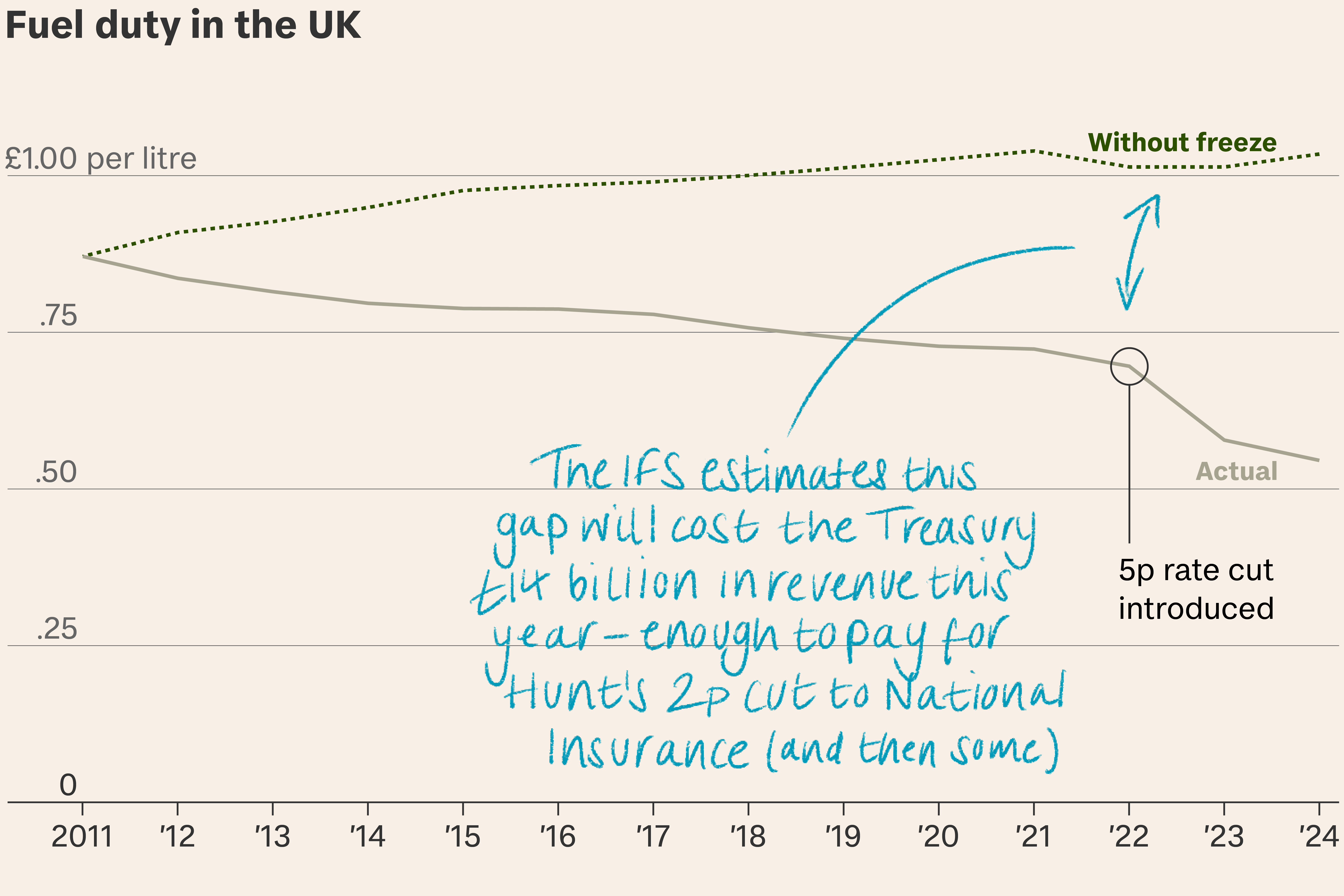
Hunt could have funded the entire £10 billion NIC cut – and then some – by dumping a single policy: the 13-year freeze on fuel duty.
Jeremy Hunt used his final budget before the election to announce a headline 2p cut in national insurance. He’ll fund it with plans borrowed from Labour to scrap the “non-dom” tax regime and extend the windfall tax on North Sea oil to 2029, as well as a post-election squeeze on public spending.
So what? Hunt could have funded the entire £10 billion NIC cut by dumping a single policy: the Conservative party’s 13-year freeze on fuel duty.
Revenues from fuel duty are around £14 billion lower in 2023-24 than if they had increased in line with inflation since 2010-11. Fulfilling the desires of Tories who called for a 2p cut to income tax would have cost the same amount.
Instead, Hunt has elected to once again “temporarily” freeze the duty at an additional cost of £6 billion this year.
Making £14 billion count. If the duty had risen in line with inflation since 2010, a litre of fuel would be 52p more expensive on average now. But additional revenues could be spent on:
- Tax thresholds. Keeping personal tax brackets frozen since April 2021 (instead of linking them to inflation) increased receipts by £12 billion last year, and led to 4.2 million more workers paying income tax. If nothing shifts by 2028, more than one in eight nurses and one in four teachers will be paying the 40 to 45 per cent rate. Workers on less than £30,000 are worse off overall because of this effect, known as “fiscal drag”, despite the last two cuts in national insurance.
- Councils. The spending gap for local councils is estimated to reach £4 billion over the next two years. This week councillors in Birmingham approved £300 million in cuts and a 10 per cent council tax rise in an attempt to stave off bankruptcy.
- HS2. Between 2011 and 2018, the fuel duty freeze led to an estimated 60 million fewer rail journeys and a 4 per cent increase in road traffic. The scrapped high-speed rail project that was intended to take some of that traffic off the roads was expected to cost £56 billion.
Wheels in motion. The 2035 ban on sales of new combustion engines is fast approaching, along with the need to find an alternative source of tax revenue to replace fuel duty. An obvious candidate would be a pay-per-mile road tax for all vehicles. Neither party has publicly backed that idea.
“If we wait 15 years, we’ll have lost all the fuel duty revenue already, and therefore will have nothing to give back to motorists,” says Carl Emmerson, deputy director of the IFS. “It’ll be much harder politically to say we’re going to introduce this new charge.”
There’s also the environmental argument. Research by Carbon Brief found that successive freezes and cuts to fuel duty have increased total UK CO2 emissions by 7 per cent. Raising the duty would encourage drivers to seek alternative forms of transport, choose more fuel-efficient cars or make the switch to EVs. Norway is a case in point: the cost of fuelling a petrol car for 100 miles is £2.65 higher than in Britain. Charging an EV to go the same distance is, by contrast, £5.70 cheaper. In 2023, 82 per cent of new cars sold in Norway were EVs.
Why keep it? Hunt’s reasons for sticking with tradition are:
- Forecast flattery. Despite 13 years of evidence to the contrary, the OBR assumes every year in its forecasts that the government will link fuel duty to inflation. This gives chancellors a small amount of extra wiggle room on budget day to say they’re sticking to their fiscal rules; the promise is that fuel duty will rise in future budgets. That increasingly looks like Rachel Reeves’ problem (more below).
- Motorist votes. Keeping fuel prices down is seen as a way to win motorists’ support, especially in at-risk rural Conservative constituencies. But there’s doubt about how much reaches consumers at the pump. SMF research found the bottom fifth of earners receive 10 per cent of the savings, compared with the top fifth who pocket up to a quarter. As a tax cut, then, the freeze is regressive.
“It can’t be right to pretend you’re going to increase [fuel duty] every year in line with RPI, and then each year say actually we’ll just have one more freeze. There’s no way that’s the right way to do policy,” Emmerson says. In line with Tory tradition, Hunt prioritised politics over policy. The irony is that it might have been better politics to do the reverse.
More than 70 countries are holding elections this year, but much of the voting will be neither free nor fair. To track Tortoise’s election coverage, go to the Democracy 2024 page on the Tortoise website.