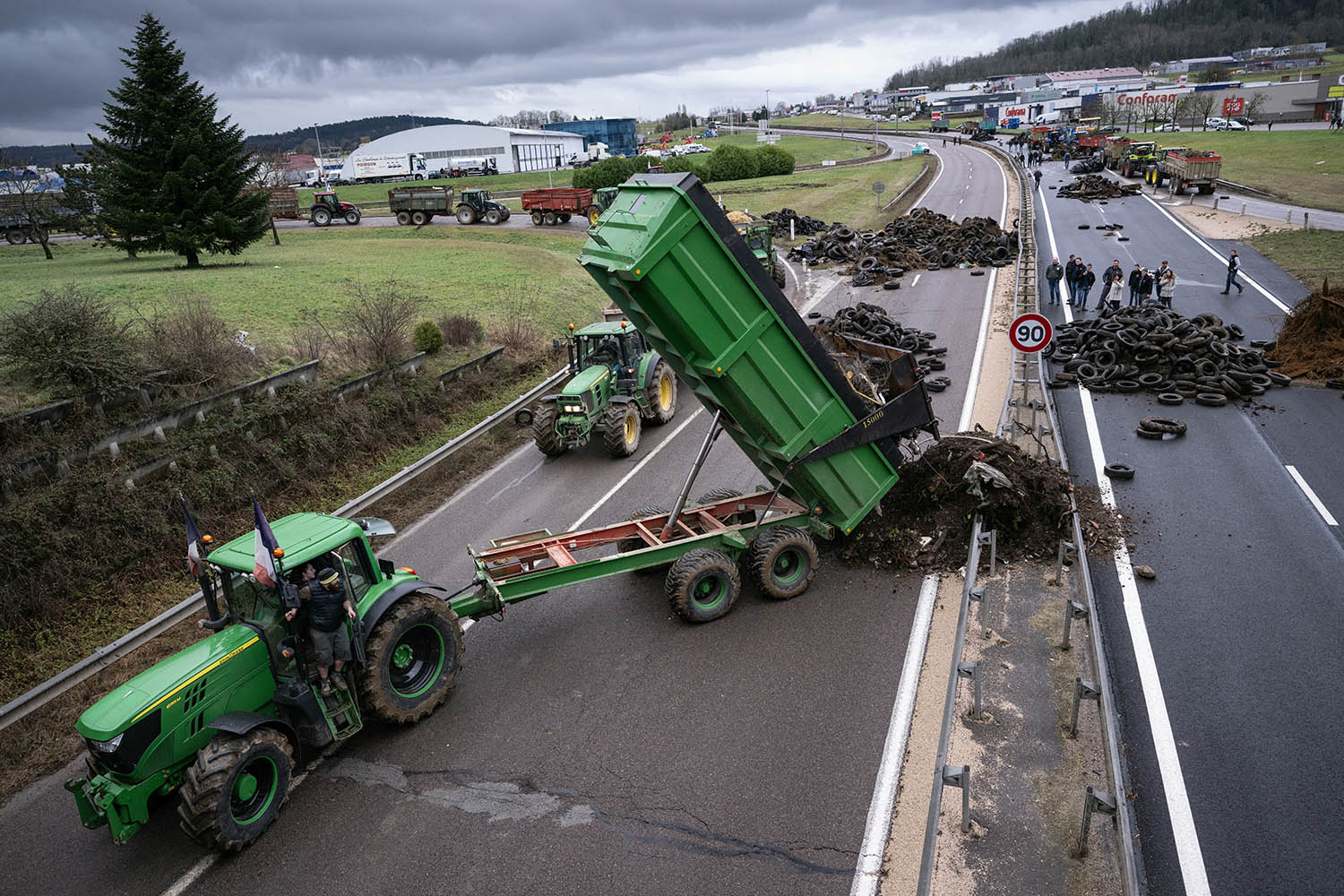
Europe’s farmers are tractoring to the barricades instead of to their fields in protest against fuel costs, net zero rules and Ukrainian competition
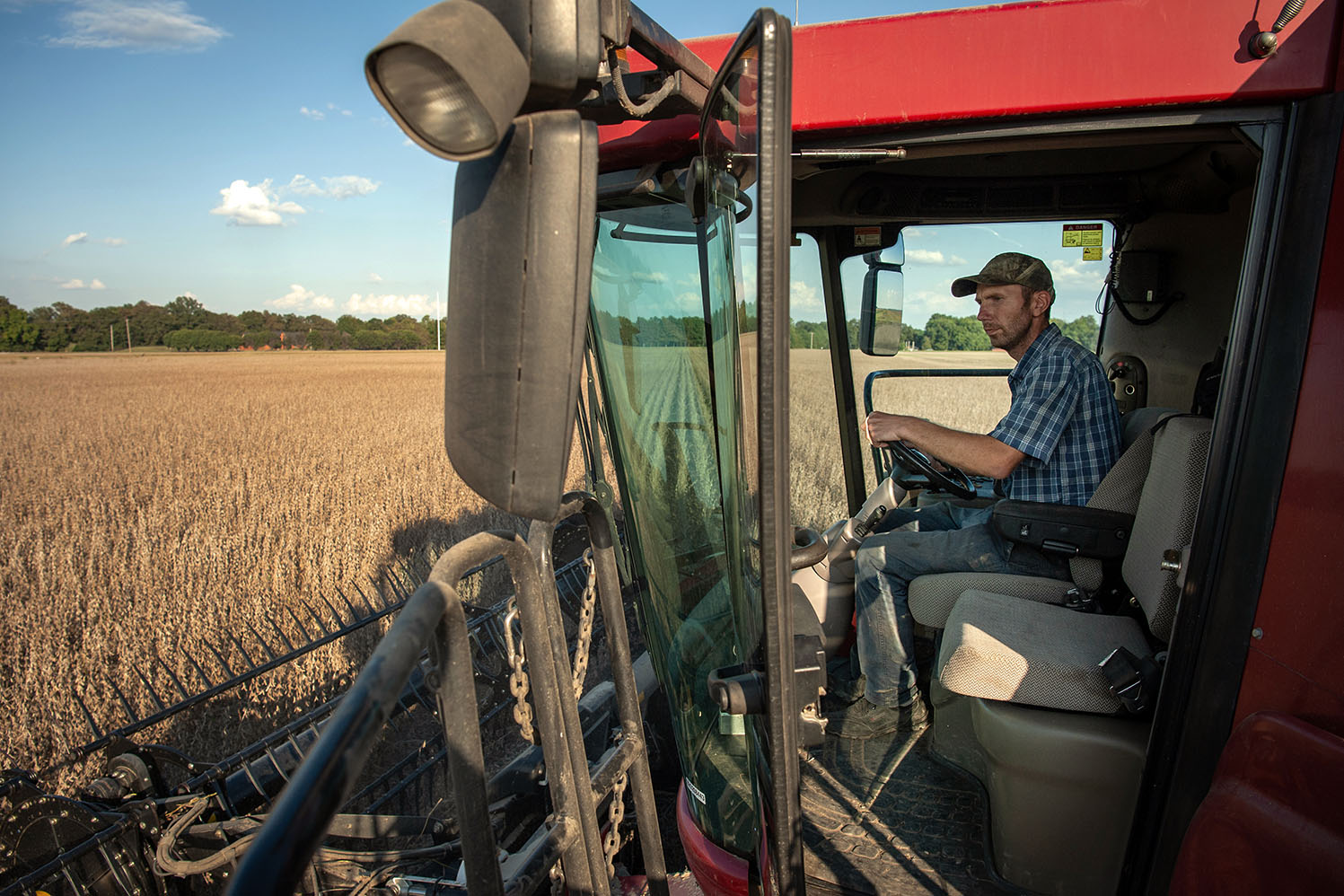
France’s protesting farmers aren’t alone. In Belgium, Poland, Germany, Romania, Italy and the Netherlands, farmers are tractoring to the barricades instead of to their fields, to register their anger over fuel costs, net zero rules and Ukrainian competition.
So what? They’re winning. Yesterday the European Commission proposed loosening green farming requirements while leaving agricultural subsidies untouched.
Birds, biodiversity and carbon targets will pay the price, and – in defiance of logic if not self-interest – Europe’s biggest farming’ lobby is demanding even more concessions for members suffering most from climate change.
Zoom out. EU leaders are struggling to balance the need to save rural livelihoods and reduce agriculture’s impact on nature.
The farm protests highlight that:
- While green policies are popular, voters are reluctant to pay personal costs.
- Cheap food imports can be acutely politically sensitive.
- Small farms, which tend to have greater biodiversity than their giant rivals, are rapidly disappearing as a consequence of economic pressure and younger generations that see their future in cities.
Germany. Farmers blockaded roads with tractors earlier this month, over government moves to cut agricultural subsidies – including an exemption from car tax for farming vehicles and cuts to tax breaks for diesel used in agriculture.
The Netherlands. In Europe’s biggest agricultural exporter by value, a farmers’ protest movement has generated a political offshoot, the Farmer-Citizen Movement (the BBB), which won seven seats in parliamentary elections last year. That protest was driven by a government target to halve nitrogen-based emissions by the end of this decade.
Poland. Farmers protested against imports of cheap grain from Ukraine.
France. Thousands of farmers have converged in tractors on Lyon as well as Paris, where ministers pledged support and undertook to block a planned EU trade deal with South America.
The protests have resulted in reversals for climate and nature-friendly policies:
- Germany will phase in the cut to diesel subsidies.
- France is freezing taxes on diesel used in farm vehicles.
- Dutch elections last year rewarded the far-right climate-sceptic Freedom Party, led by Geert Wilders.
Overall, agriculture is responsible for a tenth of the EU’s emissions. Unlike the power sector or manufacturing, greenhouse gas emissions from agriculture have barely dipped over the last two decades, while intensive farming has driven a stark decline in wild bird populations across the continent.
The EU wants to reverse this, with strategies to
- slash pesticide and fertiliser use; and
- rewild some farmland, starting with incentives to set aside 4 per cent of it and protect hedgerows.
War and peace. Those protections were meant to come into force last year. In practice they were suspended because of the war in Ukraine. Yesterday Brussels granted farmers a partial one-year exemption from the 4 per cent rule as well. They’ll now be allowed to grow nitrogen-fixing crops like lentils and peas on land previously designated as fallow, with no loss of subsidies.
Look up. Activists are upset. Ariel Brunner of Birdlife Europe calls the EU’s retreat a “shameful” capitulation to the chemical sector and an “anti-environment ideology”.
Complicating matters, Copa-Cogeca, a pan-European farmers’ lobby, wants more help for members in countries hardest-hit by extreme climate events. And the farm protests have picked up support from conspiracy theorists who’ve framed the Dutch curbs on nitrogen as a plot to cause mass starvation.
Look forward. The European Council on Foreign Relations forecasts a hard right turn after European parliamentary elections in June. ECFR analysts warn that an “anti-climate policy action” coalition is likely to dominate in the new parliament.
The irony is that green reforms are in farmers’ own long-term interests. Helping agriculture become more efficient, with less wanton use of inputs like fertilisers, helps cut costs and protect long-term soil fertility.
What’s more: failing to convince farmers of the need to change leaves political leaders fighting on two fronts: dealing with the rapid decline of the natural world while also losing voters’ trust.