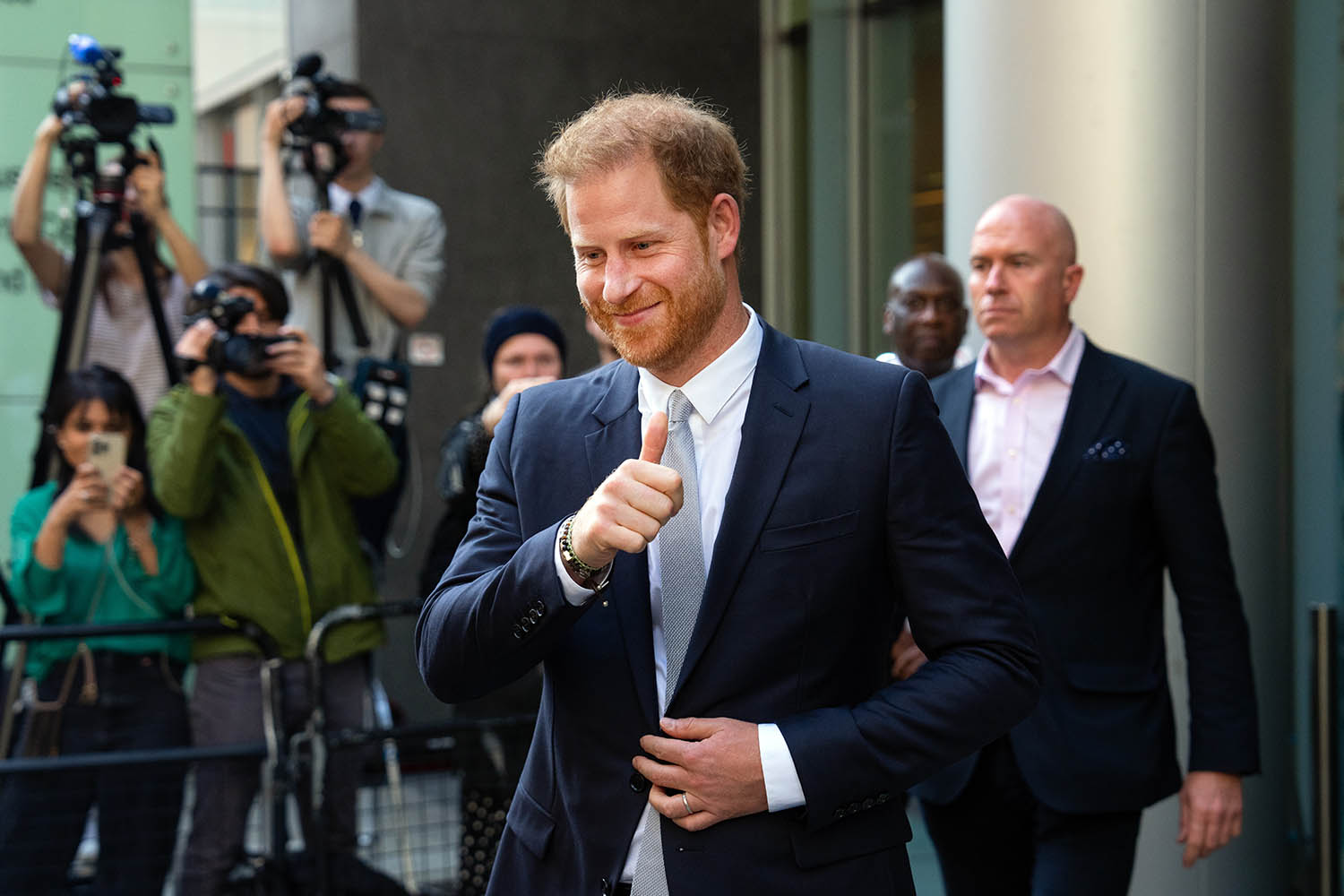
Prince Harry has won £140,600 damages in his phone hacking case against Mirror Group Newspapers.
So what? The damages awarded are less than the £440,000 the Duke had sought, and the judge described MGN’s hacking of the Duke’s phone as “modest”. That said…
- 15 of the 33 articles at issue were found to be the result of illegal activities by MGN, proving Harry’s claim that he was hacked;
- the judge accepted a separate claim that Piers Morgan knew about hacking while editor of the Mirror; and
- two Mirror group executives were named as “turning a blind eye”.
Case proven. Harry’s team did prove illegal activity on behalf of MGN. Unlawful investigations began in 1995 and were widespread from 1996 onwards, Mr Justice Fancourt said. Phone hacking began in 1996 and was “widespread and habitual” from 1998. The activity was more controlled from 2006 after the arrest of the News of the World’s former Royal editor Clive Goodman but “remained an important tool for the kind of journalism being practised” until 2011.
Editor implicated. The judge accepted evidence from the author Omid Scobie that he was asked to hack phones during his work experience at MGN and that Piers Morgan, editor of the Mirror from 1995 to 2004, knew that information for a story about Kylie Minogue was obtained through illegally accessing voicemails. Scobie, said the judge, was a “straightforward and reliable witness”.
Others named. Two named MGN executives – former chief executive Sly Bailey and former group legal director Paul Vickers – were described as “either knowing or turning a blind eye”.
More follows. Other senior journalists, including Morgan, will be discomforted by the judge’s conclusion that phone hacking was widespread and habitual from 1998 and that “the editors of the three newspapers did not report what they knew”.
What happens next? The ruling sets a very expensive precedent for the Prince’s ongoing actions against other newspaper groups and for the 100 or so other claimants bringing actions against MGN alongside Prince Harry – including Ian Wright, the estate of George Michael and Ricky Tomlinson. In his ruling, the judge found “Mirror Group was not responsible for all the unlawful activity that was directed at the Duke”.
Even more Hacked Off. “Today’s judgement lays bare the extraordinary cover-up which has taken place at Mirror Group Newspapers over the last two decades,” Nathan Sparkes, CEO of the Hacked Off campaign said. “Other newspaper groups will also be looking over their shoulders. It is now for the police to pursue charges of perjury against any senior individuals at the publisher who misled the first part of the Leveson Inquiry in their denials of knowledge of phone hacking.”
Sparkes said today’s findings should not have emerged in the context of a civil trial: “They should instead have been investigated through the promised Public Inquiry, known as Leveson Part Two, which was cancelled by the Conservative government as a sop to the press. Only such an inquiry is capable of getting to the bottom of this scandal once and for all.”
MGN apologises. An MGN spokesperson said: “ Where historical wrongdoing took place, we apologise unreservedly, have taken full responsibility and paid appropriate compensation.”
What does this judgement mean? Hacked Off is calling for MGN editors who gave evidence to the Leveson Inquiry to have their statements re-examined. The inquiry, led by judge Sir Brian Leveson, started in 2011 after it emerged that journalists at the now defunct News of the World hacked the phone of murdered schoolgirl Milly Dowler. The inquiry archive website, hosted by the National Archives and Kingston University, warns: “Evidence was given under oath, so if you find a falsehood in Discover Leveson testimony, that witness may be liable to prosecution for perjury.”
What becomes of the perjured? The offence of perjury carries a maximum penalty of seven years imprisonment and/or a fine. Only one former newspaper editor has been convicted in relation to hacking, and not for perjury. Ex-News of the World editor Andy Coulson was found guilty of conspiracy to intercept voicemails. He was sentenced to 18 months in prison, but released after five months into home-detention curfew.
Leveson Part Two. The first part of the inquiry looked at the culture, practices and ethics of the press. The second part was meant to investigate the relationship between journalists and the police and further probe the possible complicity of editors and senior executives. It was cancelled by then culture secretary Matt “Safe Hands” Hancock, who said that “the world has changed” since Leveson 1 and that the press was under threat from new digital forces that require “urgent” attention.
Will there be a Leveson revival? According to activists, the Conservative Party will not set up a second Leveson and the Labour party is unlikely to. A possible future Labour government may launch a public inquiry into AI and journalism, and, if so, concerned Labour MPs are expected to add Leveson-style questions.
Morgan noted in a statement that only one of the 15 articles the judge said may have been based on hacked material was published during his tenure as editor, and he called Omid Scobie a “deluded fantasist”.
Speaking to reporters outside his London home he said: “I have never hacked a phone or told anybody else to hack a phone and nobody has produced any actual evidence to prove that I did.”