Sensemaker Daily


Hardline ministers in Netanyahu’s government are seizing the moment to bolster security for Israeli settlers in the West Bank, which remains key to any future Palestinian state
Six people were killed on Friday in an Israeli raid on Nablus, bringing the number of Palestinians killed in the West Bank since 7 October to at least 275 people, including 63 children.
Second front. As Israel’s assault on Gaza continues, the occupied West Bank has turned into a dangerous labyrinth. It’s the second front in an expanding conflict, and what happens there will have far-reaching consequences for anyone trying to revive a two-state solution.
Settlers backed by the Israeli Defence Forces (IDF) are rushing to capitalise on the war:
- They are seizing the moment to build new settlements, deemed illegal under international law.
- Permitted routes between Palestinian enclaves are changing almost by the hour, so that journeys that once took an hour can now take up to five.
- Thousands of Palestinian families are effectively imprisoned in their homes, too fearful to go out because of violence on the streets and surveillance drones above.
By the numbers:
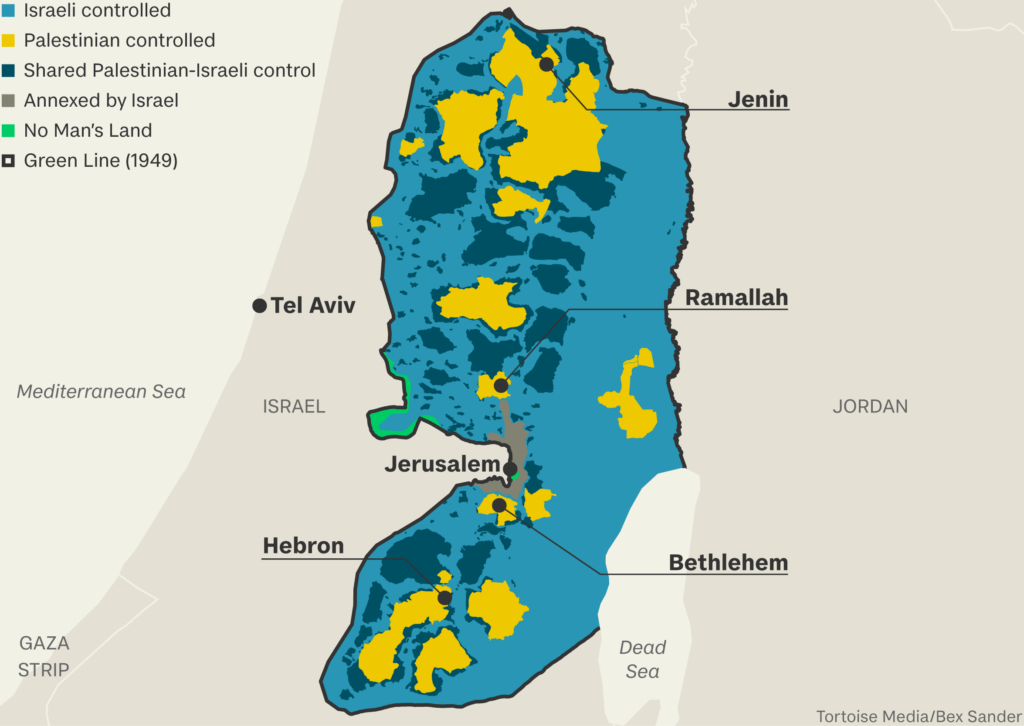
490,000 to 700,000 – Israeli settlers living in West Bank settlements classified as illegal by the UN.
3,000,000 – Palestinians living in the occupied West Bank.
279 – Israeli settlements in the West Bank and occupied East Jerusalem, according to UN numbers updated in March 2023.
265,000 – Israeli gun licence applications made since 7 October, up from roughly 30,000 last year.
Cycles of impunity. Simmering violence is nothing new in the West Bank, but in the past two months many settlers have been drafted into the security forces to protect their communities. Some have abused their new status to terrorise Palestinian civilians.
- One widely viewed video shows a mentally disabled man writhing in pain after being shot in the leg by an Israeli soldier.
- IDF raids are more frequent in the northern West Bank, Jenin, Tulkarem and Nablus, while settler violence is more intense in the south and the South Hebron hills.
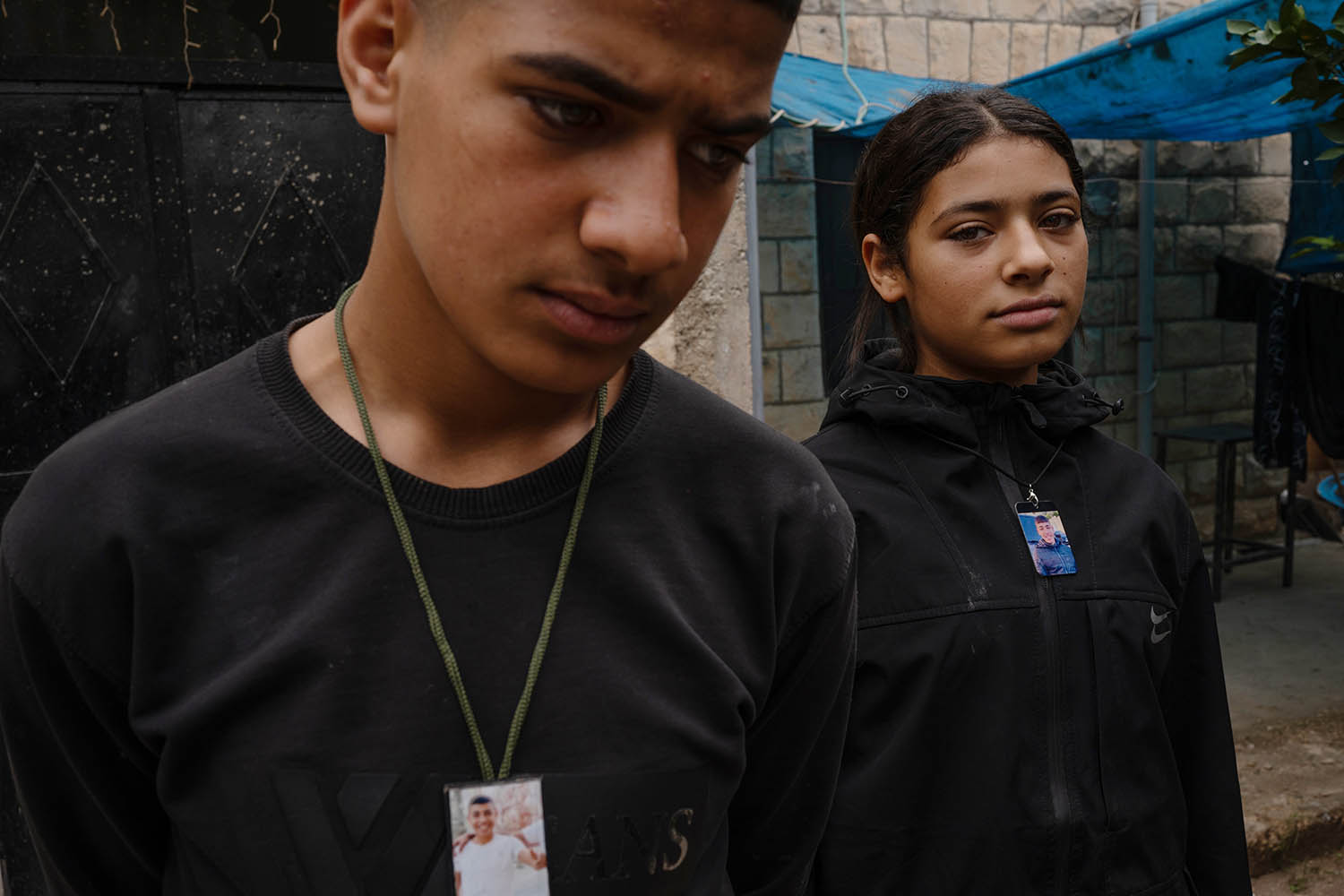
“Since my brother died I feel lonely. He was everything for me. I can’t sleep well,” Rayan Mohammad Faisal Abu Al-Wafa, told Tortoise. His 14 year-old brother was shot in the sternum on 25 November. “My mum and my sister don’t sleep at night. I’m more scared since my brother died and when I know soldiers are around, I try to go out of the camp.”
Friends in high places. The settlers have two key allies in government: Bezalel Smotrich, the finance minister, and minister for national security Itamar Ben Gvir. Despite frequent criticism abroad, they are doubling down, announcing a $105 million new fund to bolster security around the settlements citing the atrocities of 7 October as evidence that co-existence is impossible.
Smotrich recently referred to the West Bank Palestinians as “Nazis” who hate Jewish Israelis “exactly as do the Nazis of Hamas-Isis in Gaza”. He was likely referring to two surveys that found about 60 per cent of West Bank Palestinians supported the 7 October attacks, which has only deepened anger and suspicion on the Israeli side.
American influence. The only international player with leverage over settler policy is the US. In a rare disciplinary move that could influence thinking in the Knesset, Washington imposed visa bans last week on extremists responsible for violence in the West Bank and their families.
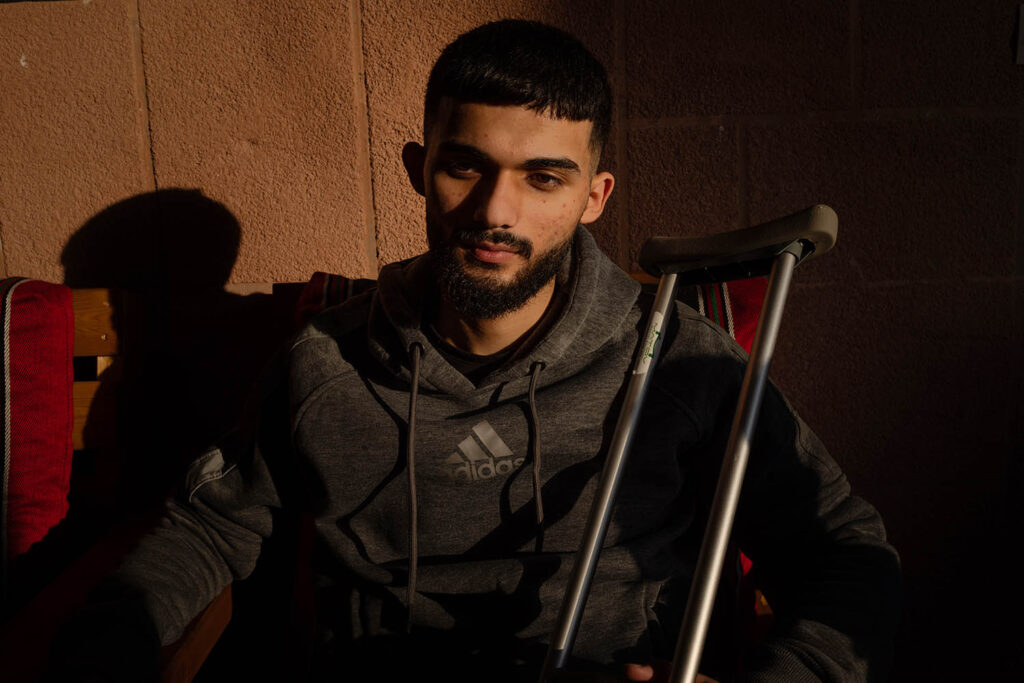
Prisoners. Since the negotiations with Hamas over Israeli hostages in Gaza began more than 200 Palestinians have been released from prison. One was Jawad Tawfiq Yousef Kamil, an 18 year-old from Qabatiya near Jenin, who spent a year in prison before being released on 24 October.
“Since 7 October the situation in prison got worse for detainees; they started beating us as punishment of what happened,” he said. “I was very happy when I was on the bus going back home, but I was scared of being back… I don’t feel safe. Israeli soldiers can storm our house at any time. I fear they can pick me up again.”
Authority. The Palestinian Authority still administers more than a third of the West Bank. In one post-war scenario its remit would extend to Gaza. For now, that seems fanciful at best.
Photographs Carolina Rapezzi