Israel has multiple war aims and an urgent need to limit civilian casualties if it wants to keep its most powerful ally on side. But it’s in the middle of a political crisis. So who’s really in charge?
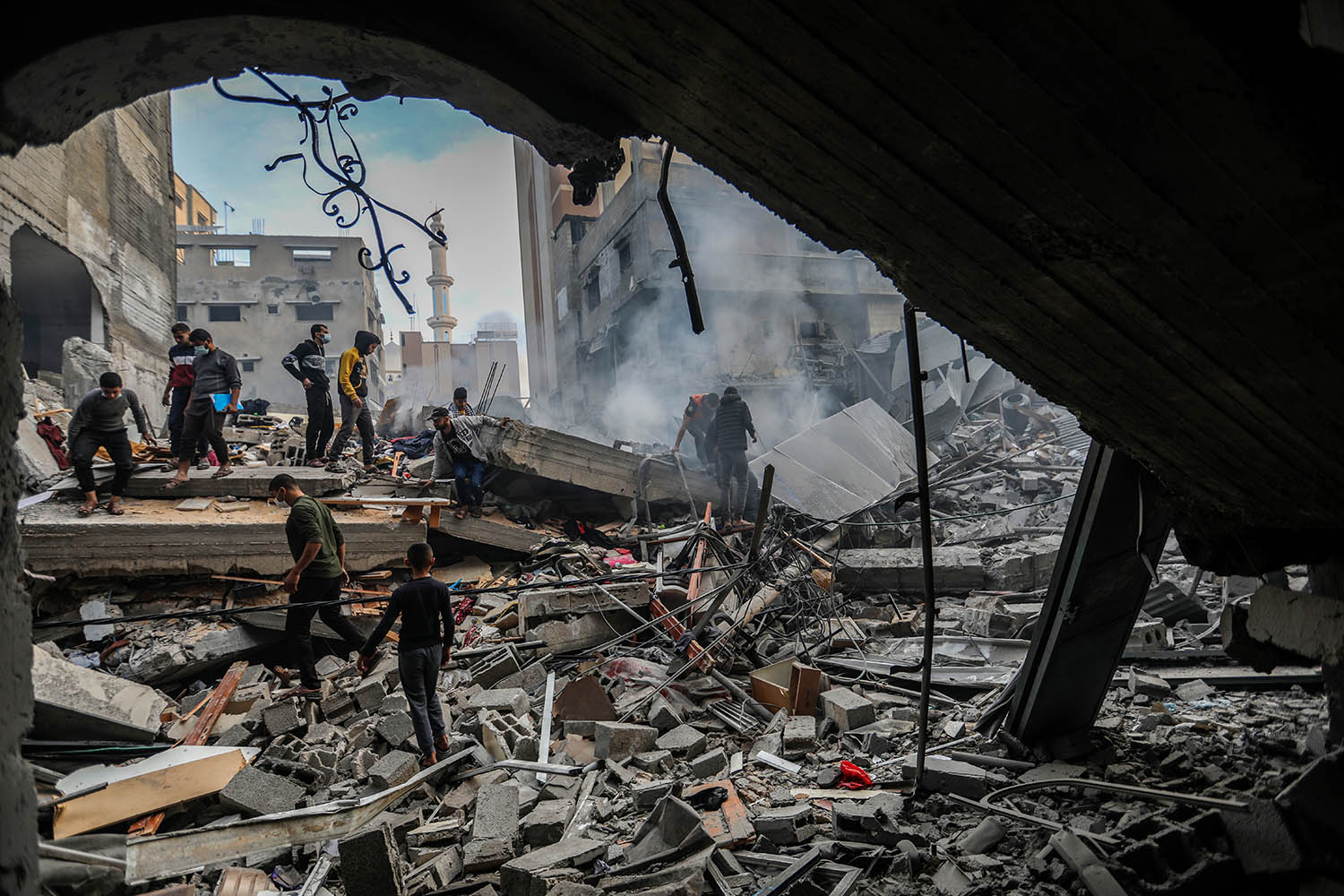
Israeli forces are pushing into southern Gaza, with tanks seen near the city of Khan Younis.
So what? Khan Younis is already packed full with civilians who fled their homes in the north. Since fighting resumed with the collapse of a week-long ceasefire on Friday, Israel has had to consider
- the acute vulnerability of more than 2 million Palestinians in the south of the enclave;
- the limited tolerance of its key ally, the US, for more civilian casualties;
- the safety of more than 100 hostages still held by Hamas and other terrorist groups; and
- the need to find and kill Hamas leaders in order to realise its central war aim of eliminating Hamas as a threat.
The people deciding Israel’s next steps include:
- Benjamin Netanyahu, whose poll ratings have tanked over the intelligence failures which preceded Hamas’s massacres on 7 October;
- Joe Biden, who wants – and so far, within limits, has – a say in return for backing Israel with ample weaponry including two carrier battle groups to deter Hezbollah from joining the war in earnest; military support against Houthi missiles fired towards Israeli ports; and an intensive part in the hostage negotiations.
- A war cabinet consisting of Yoav Gallant, the defence minister, and Benny Gantz, a former military chief of staff, along with two observers. Netanyahu’s position as prime minister means people still defer to him, says Yossi Alpher, an ex-Mossad strategy expert. “But the [Israeli] public is reassured by the fact that he’s not running this war alone.”
- Herzl Halevi, the Israel Defence Forces’ chief of staff. “The Army says what’s possible,” Alpher says. It makes recommendations but ultimately accepts political decisions which have to take into account a broader range of factors including US pressure. That said, “you can’t get the army to do anything it doesn’t want to do”.
- The Israeli public, which pressured Netanyahu to agree to the week-long truce on November 24 to allow negotiations through Qatar, which brought back 110 of 240 hostages. He was “cornered” into the hostage deals, says Aviv Bushinsky, a former Netanyahu adviser.
Fissures. Netanyahu’s government, like most of Israel’s public, strongly supports the war, but he faces internal pressures.
- Coalition. Two extreme right ultranationalist ministers, Itamar Ben Gvir (who voted against the truce) and Bezalel Smotrich, need to be kept on side for his coalition to hold together. Both welcomed the end of the ceasefire.
- Cabinet. Netanyahu and Gallant aren’t close personally, but a potentially more serious war cabinet rift is with Gantz over Finance Minister Smotrich’s allocation, despite immediate war needs, of $1.3 billion of “coalition” funds, partly for settlers in the already volatile West Bank.
If anyone can navigate these pressures, Netanyahu can. Gantz has – so far – backed down from veiled threats of resignation, and Netanyahu’s office says he personally ordered Israel’s representatives back from Qatar where hostage negotiations had been expected to continue, even though the breakdown triggered the resumption of war.
Back in Washington. Biden’s administration is credited with its role in the hostage releases, for warning Israel against a full-scale war in Lebanon, and for securing a humanitarian aid corridor into Gaza, much as it falls short of dire Palestinian needs. But Netanyahu has consistently resisted US urgings to spell out his post-war plans for Gaza, and openly opposes Biden’s preference for the Palestinian Authority to take it over.
If not, what? In the wake of over 15,000 Palestinian deaths, US Defence Secretary Lloyd Austin warned at the weekend that “you can only win in urban warfare by protecting civilians”. There’s broad scepticism that Israel’s evacuation orders to the 2 million Gazans now crammed into southern Gaza will deliver any such protection.
According to Amos Harel, Haaretz’s military commentator, when Gallant and the IDF’s Halevi told Antony Blinken during his visit last week they envisaged “a few more months” of high-intensity combat, the US secretary of state retorted: “You don’t have that much credit.”
If and when that credit runs out is now the number one question of the war.
Donald Macintyre is a British freelance journalist and the author of Gaza: Preparing for Dawn. He is currently in Israel.
Must read: Christina Lamb for the Sunday Times – First Hamas fighters raped her. Then they shot her in the head