
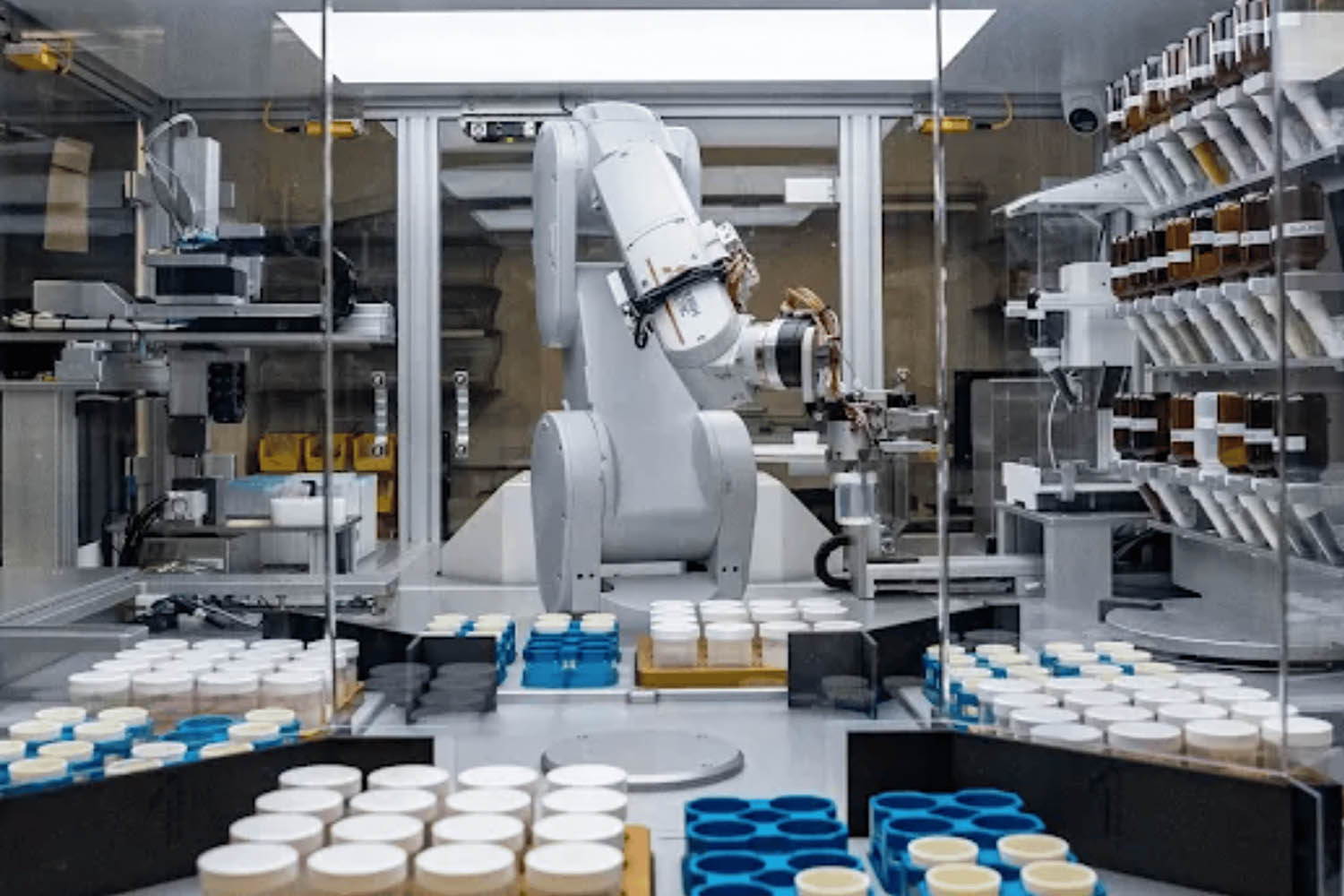
Scientists using conventional computational simulation have, to date, come up with about 48,000 stable crystal structures, each with a different chemical recipe. Google DeepMind researchers have potentially discovered 2.2 million new ones using a machine-learning tool – GNoME (Graph Networks for Materials Exploration) – that can use existing libraries of chemical structures to predict additional ones. They say these advances promise to dramatically accelerate the discovery of materials for renewable energy technologies and next-generation electronics, as well as showcasing the sheer power of AI to divine new shapes. Whether any of DeepMind’s millions of new crystals will be useful remains to be seen. But even if they aren’t, the techniques used to make the predictions show how AI can shortcut years of scientific experiments. DeepMind estimates this crystal modelling represents the equivalent of 800 years of experimentally acquired knowledge.