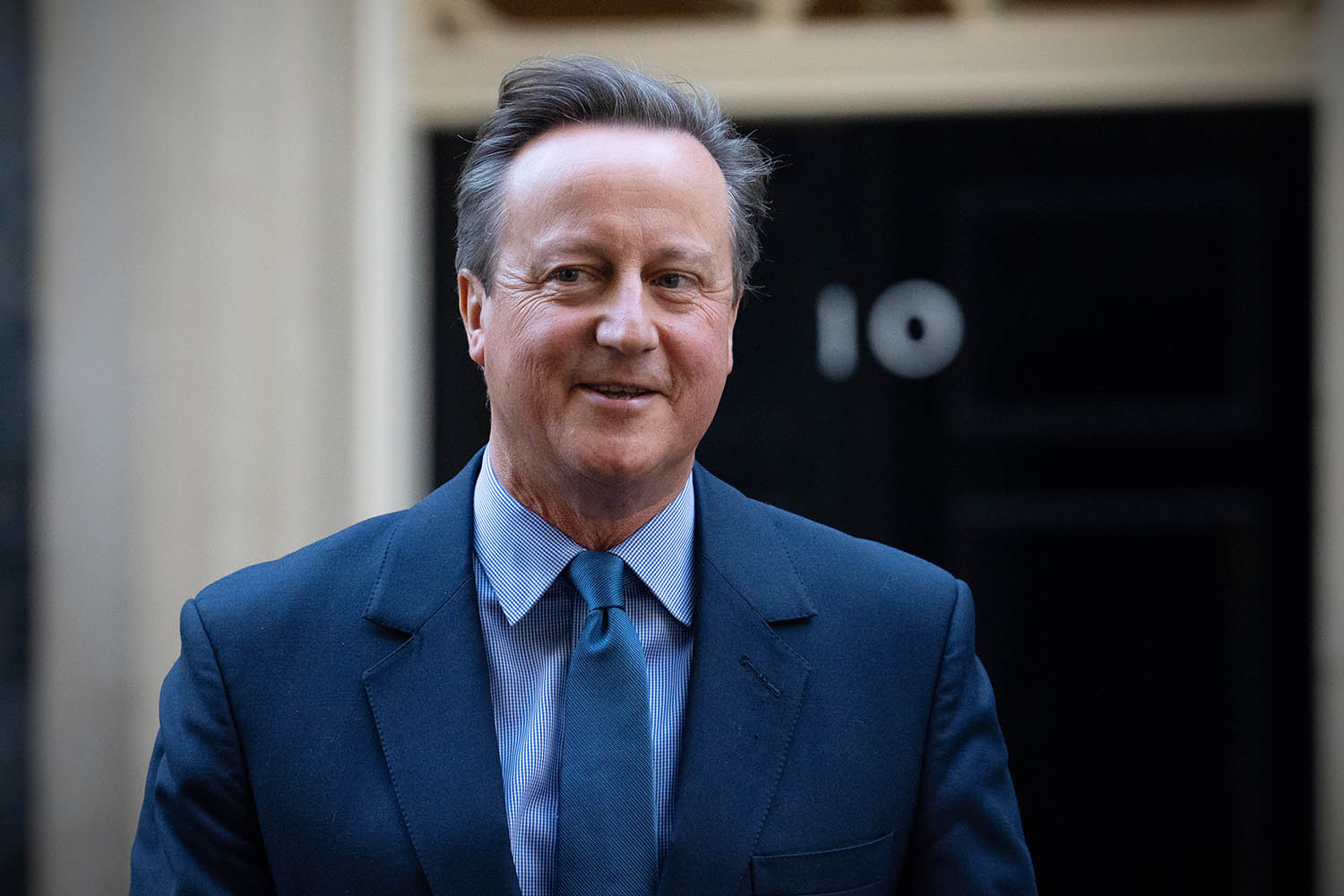
David Cameron’s wilderness years are over. Rishi Sunak brought him back into the heart of British government this morning in a dramatic reshuffle that puts a Remainer in the Foreign Office
It took multiple inflammatory speeches, an incendiary column and incessant sniping at the boss, but Rishi Sunak has finally sacked home secretary Suella Braverman.
So what? The reshuffle is not a surprise; the return of a former prime minister certainly is.
The bigger news coming out of Downing Street today is the return of David Cameron as foreign secretary. Cameron, who resigned after the Brexit referendum, has also been made a baron for life. He replaces James Cleverly, who is taking on the domestic brief vacated by Braverman.
Cameron’s return. A month ago, Sunak pledged to be the candidate for change and vowed to shake up 30 years of political consensus. Instead, he has brought back a man who led the party a decade ago and took it into the divisive Brexit era.
Cameron’s return has – so far – been well received by colleagues, with some caveats.
“We all love him,” one minister said. “He’s a proper politician and we need someone like him now for these challenging times.”
A former minister added: “I hugely respect Cameron. He is a statesman. But I don’t think having him as foreign secretary is the right decision by the PM. How do we in the House of Commons hold him to account?”
The surprise move raises questions about:
- Reputation: Cameron’s post-government reputation suffered after he was implicated in the Greensill lobbying scandal. Within minutes of his return being confirmed, his political opponents were weaponising it.
- Quality: The fact Sunak had to look outside his current crop of MPs and peers has not gone unnoticed. One told Tortoise it “says a lot about what the PM thinks of the quality of his MPs”.
- Strategy: Until now Sunak has been leaning towards the post-Brexit realignment with attempts at providing red meat for the Red Wall. Cameron represents Green centrism – he is the man who rebranded the Tories away from its “nasty party” reputation. One former minister said: “It demonstrates [Sunak] is being pulled in both directions – and has no direction. I am not sure what he stands for.”
- Rebellion: The combination of Cameron’s return and Braverman’s departure will upset key right-wing Tories. “Plan A was to get sacked,” says one MP. The next stage of the plan is “destabilise from within”.
With Sunak’s reshuffle ongoing, and a busy week ahead, answers to some of these and other questions may emerge:
- The Supreme Court’s decision on the legality of deporting asylum-seekers to Rwanda will be published on Wednesday morning. If it blocks the government’s plans, Sunak could pledge to leave the ECHR as part of his next manifesto. With Cleverly as home secretary, that calculation may change – setting up a fight with the party’s right-wingers.
- Keeping Jeremy Hunt as chancellor signals that the prime minister is sufficiently content that the economic picture is improving, with critical inflation data due out this week and the Autumn Statement on 22 November.
- What will Nigel Farage do? The former Ukip leader and perennial thorn in Tories’ sides is about to take part in the reality TV show I’m a Celebrity. Having stirred the pot at the party conference, Farage is likely to make the most of this platform to cause more trouble for Sunak.
- The return of Cameron could usher in other changes. He was instrumental in creating the “Green Toryism” of the last decade that Sunak has set about watering down. It’s not the foreign secretary’s brief but it is close to his heart. Cameron has also criticised Sunak’s U-turn on HS2.
Fresh out the blocks. In a statement on X, the UK’s new foreign secretary emphasised the “daunting set of international challenges”. Those include positioning the UK in relation to the war in Gaza – but also contesting the next election. For all the changes around the Cabinet, the biggest question remains whether voters can be wooed back. The Eurasia Group said today there was a 90 per cent probability that Labour would win.