
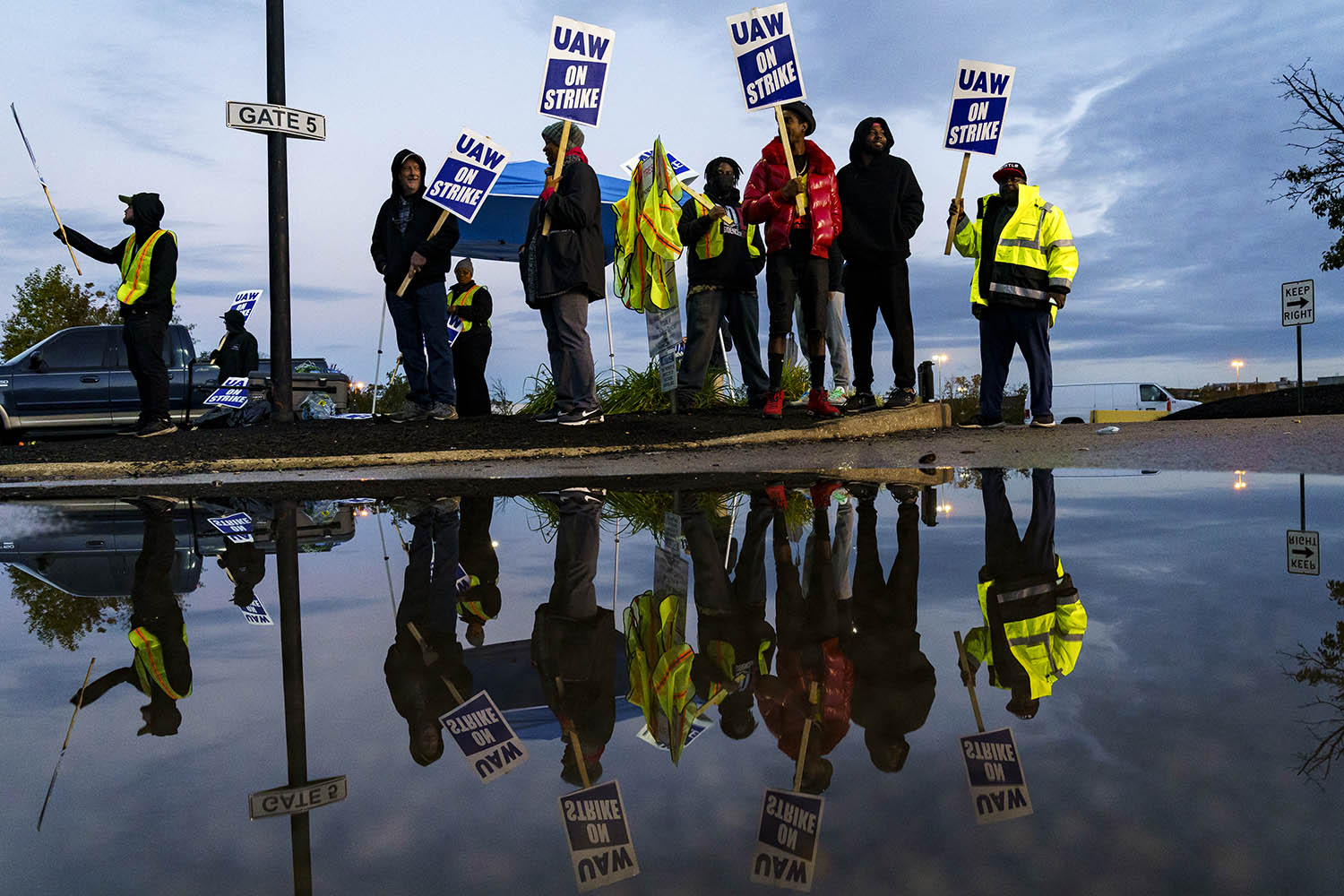
“We told Ford to pony up and they did,” says Shawn Fain, the president of the United Auto Workers union, after reaching a tentative deal with Ford Motor to resolve a strike joined by 45,000 workers since September. He’s got a point: Ford has apparently agreed to a 25 per cent wage increase over the next four and a half years, with an initial pay rise of 11 per cent. Ford workers have been told to return to work while the agreement is ratified – putting extra pressure on General Motors and Chrysler parent Stellantis, the other Detroit “Big Three” car firms facing walkouts that have caused an estimated $9.3 billion in total economic losses so far. The big question: what happens at the new joint venture electric vehicle battery factories that these firms are building with Asian partners? “If [Fain] can use this as a lever to organise Tesla and companies like that, he’s brilliant,” Jeffrey Scharf of Act Two Investors tells Reuters. “If they fail to organise the other companies and the differential causes jobs to go out of Detroit and to the other companies, then he’s a failure.”