The hostages’ families are pleading with Qatar to negotiate their release – but progress has been slow.
In the 13 days since Hamas seized at least 199 hostages in Israel, not one has been released. There has been no news of them apart from one video clip of a French-Israeli woman being treated for a broken arm, and no contact with Hamas except through Arab governments and a few NGOs.
It has been a desperate week for the hostages – 40 of whom are foreign nationals – and for their families. But the families have not lost hope and in fact are seizing the initiative.
Negotiations are not Israeli-led. At a press conference on Thursday, the Hostages and Missing Families Forum appealed to Qatar to intervene. Daniel Shek, head of the forum’s diplomatic team, explained that the Gulf state has form in these uniquely delicate negotiations.
- Qatar has been the favoured go-between for the US in its dealings with the Taliban, Venezuela and Iran.
- It has also mediated between Ukraine and Russia and helped release American aid workers and journalists held in Africa.
- In 2020, Dr Mutlaq bin Majed Al Qahtani – special envoy of the Qatari Minister of Foreign Affairs – received a UN award for counterterrorism and mediation in conflict resolution.
“Qatar has always seen itself as the country that tries to have a working relationship with actors on both sides of the Middle Eastern divide,” says Dr Shadi Hamid, senior fellow at the Brookings Institution. “It may be the world’s fourth richest country by GDP per capita but it also is quite insecure. It’s a very tiny state, very vulnerable on different sides in a very dangerous neighbourhood.”
Progress is slow. The oil-rich state began discussions with Hamas on the day of the raid, Shek says, acting as go between for the US – so far to little effect. In the meantime the International Red Cross has been trying to get access to the hostages to offer medical assistance.
Hamas wasn’t the only hostage taker. The situation is complicated by reports that other Palestinian groups including Palestinian Islamic Jihad took advantage of the Hamas raid to grab Israelis. Gaza-based gangsters may also have taken some.
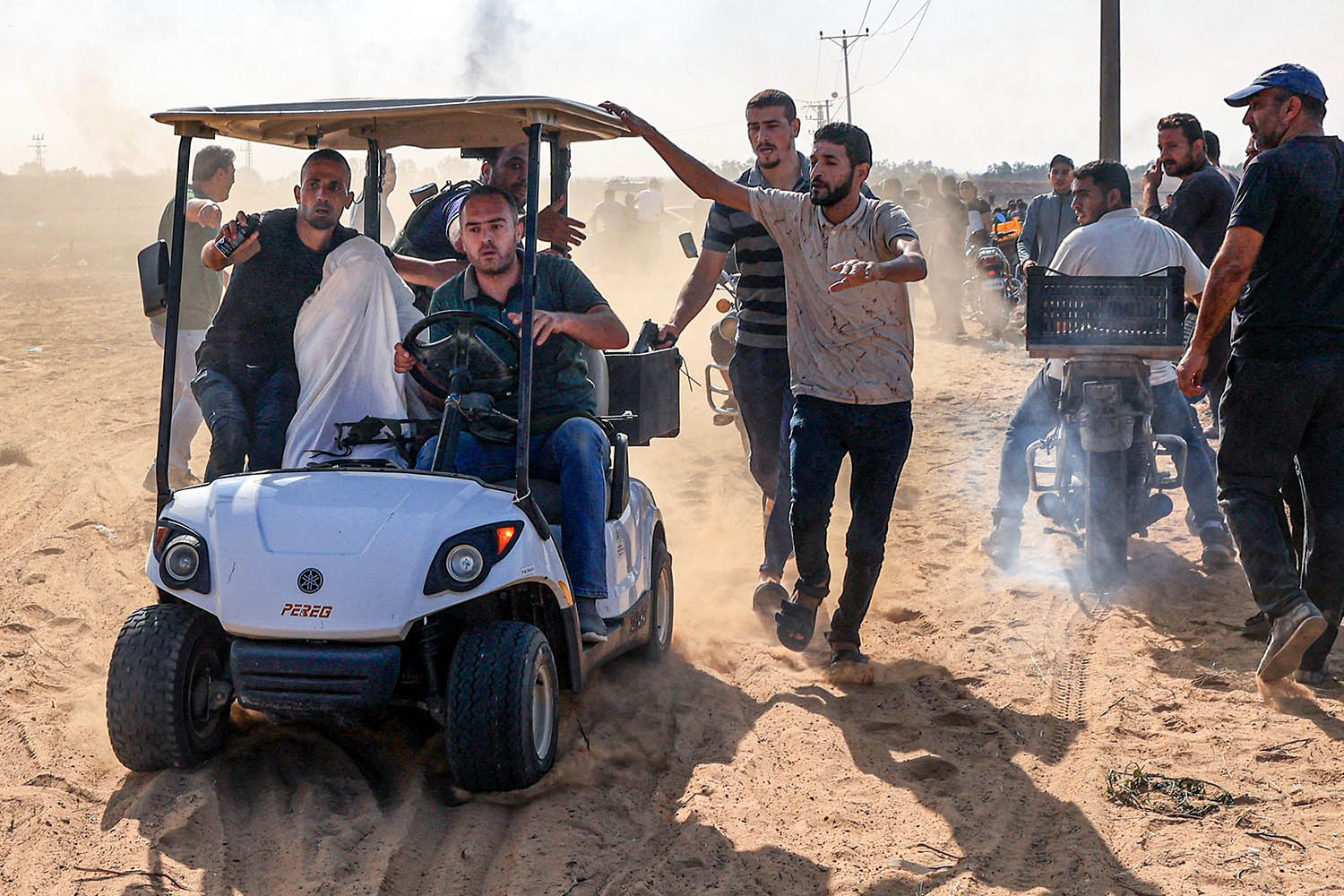
More than they bargained for. A Hamas planning document Israeli emergency responders claim they found in one village appears to show the attackers expected to take hostages to use as human shields “in the field” during an expected stand-off with the Israeli military. It indicates Hamas expected a stronger response from the IDF and anticipated a battle on Israeli soil that might have lasted days. The improvised transport, including SUVs, golf carts and motorbikes, used to take hostages back into Gaza suggests Hamas was not expecting to take so many.
“Take soldiers and civilians as prisoners and hostages to negotiate with,” the purported planning document advises commanders, instructing them to “kill those expected to resist and those that pose a threat”. The document is dated October 2022, suggesting, if authentic, that the attack had been planned for at least a year.
Confusion reigns. “We are not even sure about the numbers – as far as we know there are 199 people taken,” Shek says. “But there are more people missing and we don’t know if they are kidnapped or dead as there are still unidentified bodies. We do worry about the term hostages – it is very generic. Think of human beings of all genders as young as six months and as old as 87.”Will sacrifices be made? For Israel, bringing the hostages home is “an existential matter,” according to Vincent Lemire, historian and director of the French Research Center in Jerusalem. “When other countries fail to bring hostages home, it doesn’t call into question the state itself. In Israel, it does. Whatever the price of a return, hostages must come home. This is the implicit contract entrusted to the country’s leaders.”