
Report stubs out hopes for smoke-free Britain
The UK government has launched an eight-week public consultation on how to create a “smoke-free generation” and stop young people vaping.
It follows Rishi Sunak announcing plans at the Conservative party conference last week to make it illegal for anyone aged 14 and under to ever buy a cigarette.
The only country where a law of this kind has been implemented so far is New Zealand where – as of this year – it is illegal for anyone born in or after 2009 to be sold smoked tobacco products.
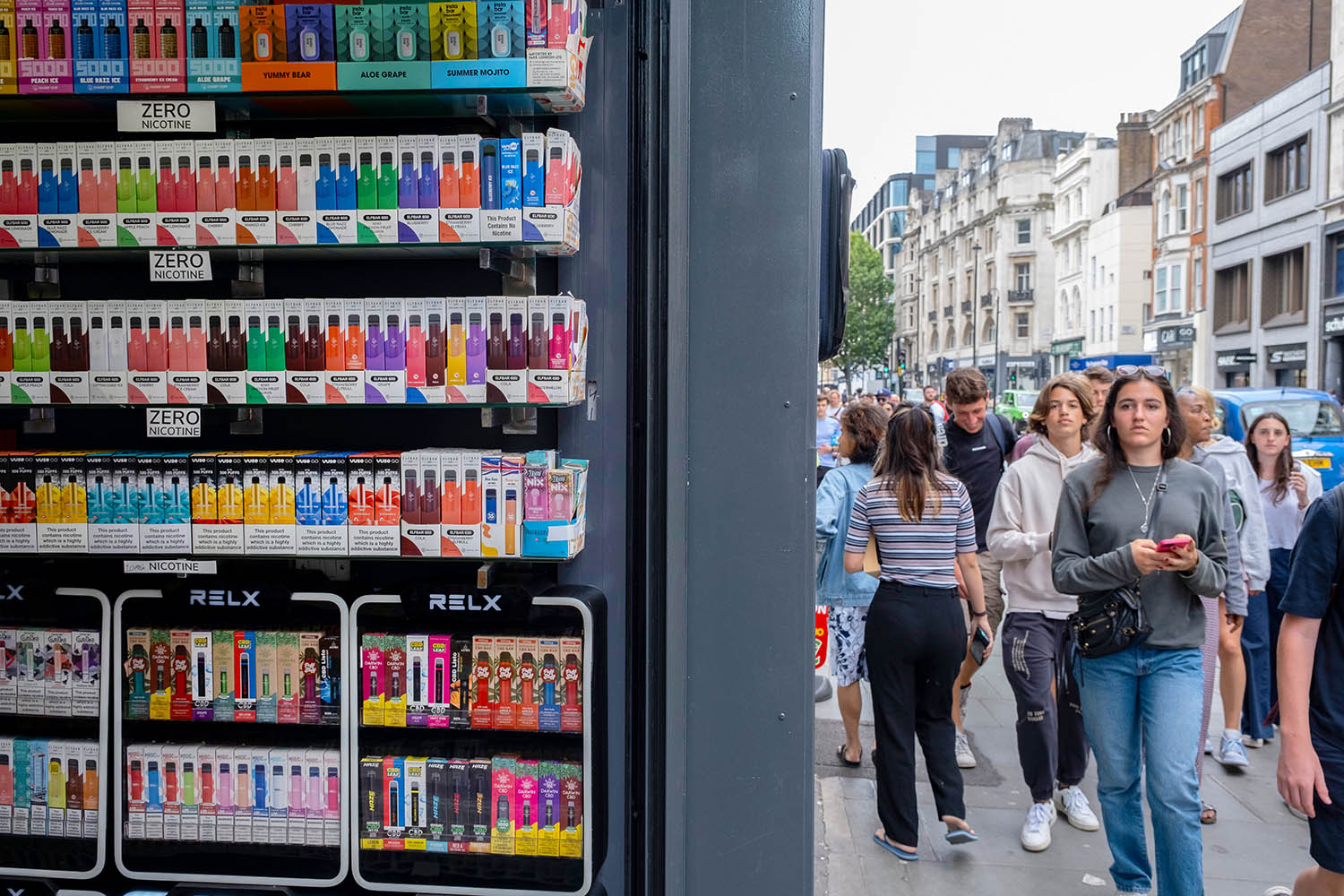
Proposed anti-vape measures include restricting flavours of vapes, stopping the sale of disposable vapes and on-the-spot fines for selling vapes to under-18s.
Fag packet policy?
The “smoke-free generation” law was first proposed for the UK in a review published last year by Dr Javed Khan that examined the government’s ambition to make England smoke-free by 2030 ( with less than 5 per cent of the population using cigarettes).
In 2022, 12.9 per cent of the population were smokers (or 6.4 million people), a fall of 7.3 percentage points since 2011.
Dr Khan’s review found that “without further action, England will miss the smoke-free 2030 target by at least seven years, and the poorest areas in society will not meet it until 2044”.
Earlier this year, Wes Streeting, the shadow health secretary, floated the idea of a New Zealand-style age ban stating that Labour would have to think “radically” to reduce smoking rates.
Labour has said in response to Sunak’s proposals they will support the Conservatives in pushing through the law.
It’s a warmer response than Sunak received from some of his party to the proposal – including former prime minister Liz Truss.
Philip Davies, a Conservative MP, said that he would be voting against the “anti-freedom, anti-personal responsibility smoking age policy” as it was a “silly idea and completely unenforceable”.
There is broad public support for the idea, with polling suggesting 71 per cent of British adults in support of restricting cigarette sales in this way.
Every year around 76,000 people in the UK die from smoking and the government estimates it costs £17 billion annually in lost earnings, unemployment, early deaths and NHS costs.
Will it work?
Although the smoke-free generation plan is a key plank of New Zealand’s plan to cut smoking rates, it comes alongside a number of complementary measures including dramatically reducing the amount of nicotine in tobacco products and restricting the number of retailers that can sell them.
Chris Bullen, Professor of General Practice and Primary Healthcare at the University of Auckland, summarised the policies as:
- turning off the tap of new smokers,
- making it harder for existing smokers to access the products,
- making the way out of smoking more attractive by providing support; and
- making the current products less attractive by reducing the major addictive component [nicotine].
He told Tortoise that the modelling suggests it is the “de-nicotisation” and retailer restriction that could lead to a “very rapid drop off” in smoking in the country whereas the “smoke-free generation” policy will “take time to work through”.
There has not been an indication that the UK government intends to limit the number of retailers selling cigarettes or restrict nicotine content.
But the policy is a step in the right direction.
Cancer Research UK’s Chief Executive, Michelle Mitchell, said “Raising the age of sale on tobacco products is a critical step on the road to creating the first-ever smoke-free generation” and that the prime minister “deserves great credit for putting the health of its citizens ahead of the interests of the tobacco lobby”.
Downing Street has said it expects that the plans will mean up to 1.7 million fewer people smoking by 2075.