Sensemaker Daily

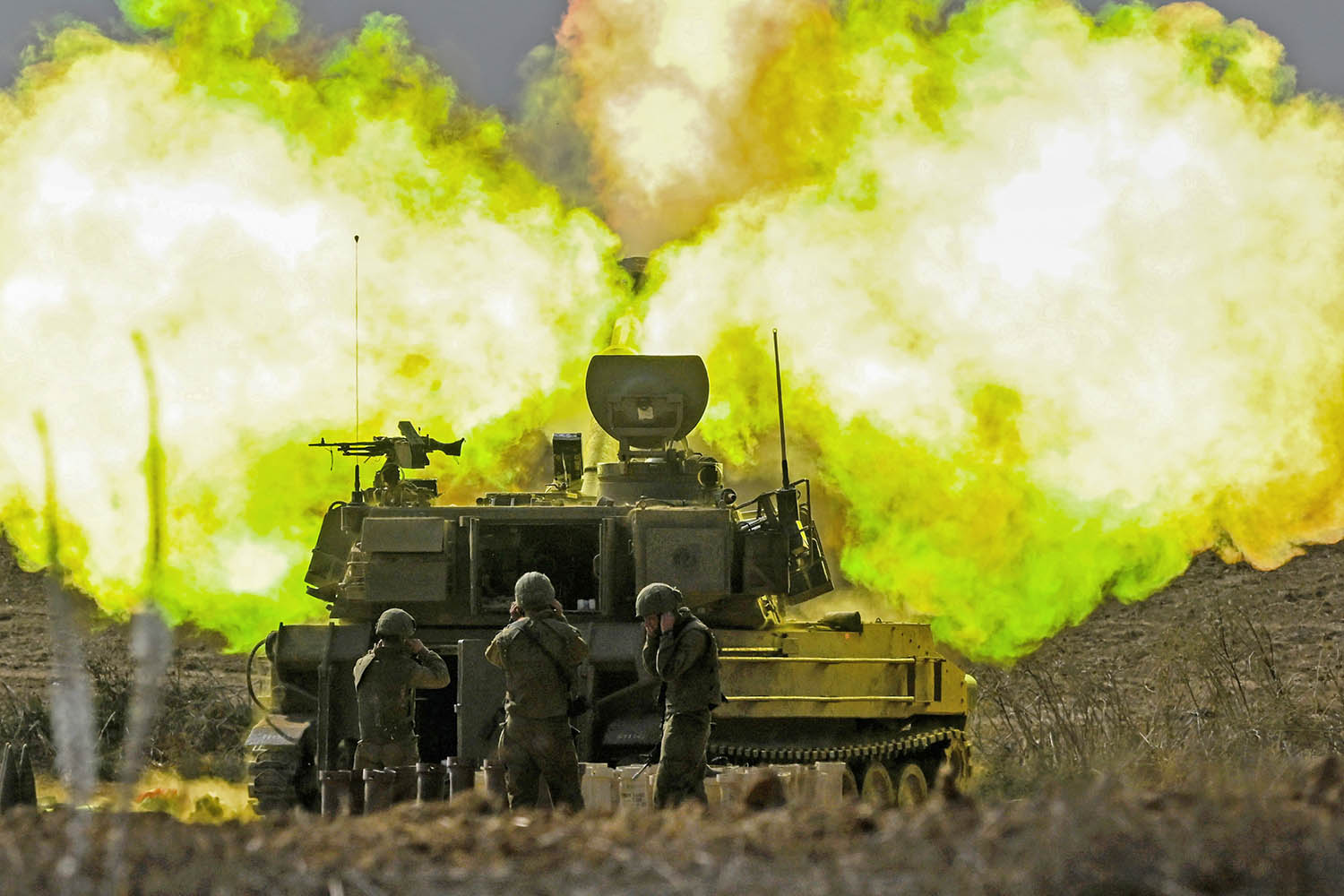
As troops mass on border, the history of the Jewish state looms behind them
Hezbollah fired rockets into northern Israel from Lebanon yesterday, and Israel hit back with shelling and an air strike.
The ground war in Gaza hasn’t even started and Israel is already fighting on two fronts. It’s fighting with an army caught fatally off guard, led by a government opposed by half the country, using reservists from every continent.
Israel is fighting out of a conviction that there’s no alternative. Palestinians trapped in Gaza have their own deep-rooted narrative of oppression and defiance, but since last weekend the threat to the Jewish state has seemed to many of its people immediate as well as existential.
- To survivors of the Hamas attacks, Israel’s founding promise in the shadow of the Holocaust – “never again” – feels broken. The leader of a kibbutz all but destroyed on Saturday said it seemed the state of Israel had “ceased to exist”.
- Postponing the inevitable recriminations, opposition leaders including the centrist former defence minister and armed forces leader Benny Gantz agreed to join a unity government formed yesterday by Benjamin Netanyahu.
- The signs are this government will order a ground invasion of Gaza despite the near inevitability of heavy losses of its own soldiers and Israeli hostages, not to mention Palestinian civilians.
To understand why, it helps to revisit the rudiments of Israeli-Palestinian studies.
History. Founded in 1948 after the murder of six million Jews in World War Two, Israel has existed ever since in a state of conflict with its neighbours and the Palestinian people over history, borders, land and water. This conflict has flared up repeatedly, including in
- 1973, when despite their fearsome reputation Israel’s armed forces were taken by surprise by the Syrian and Egyptian armies in the Yom Kippur War; and
- 2014 and 2021, when Israel responded to Hamas incursions and rocket attacks with waves of air strikes that killed more than 2,000 and more than 200 Palestinians respectively.
Saturday’s attacks undermined Israel’s raison d’etre, says a British businesswoman recently returned from Israel who’s spent the past three days procuring body armour for members of her staff there who’ve been called up to fight. Whatever form the response takes, “you have to view it through the lens of Jewish history, otherwise you’ll miss the main point”.
Geography. Nearly half the world’s Jews now live in Israel. Early reports of cross-border Hezbollah attacks yesterday were retracted by Israeli officials, but the threat to Israeli targets and territory from the north as well as Gaza is ever-present. President Biden and Antonio Guterres, the UN secretary general, have warned regional players against attempting to expand the war, but that is part of Hamas’ strategy and Hezbollah has said it will attack in earnest if Gaza is invaded. In these circumstances “Israel has to defend itself,” Daniel Finkelstein writes in The Times. “Or where will we go?”
Ideology. The goal of the destruction of Israel has been written into the Hamas charter from its publication in 1988.
- The charter was revised in 2017 to remove some of its more inflammatory language, but it still demands an Islamist Palestinian state from the River Jordan to the Mediterranean and from the Lebanese border to Eilat.
- Hamas has always rejected the Oslo Accords and a two-state solution.
- It resumed rocket attacks on Israel soon after taking control of Gaza following its defeat of the more moderate Fatah movement in an election in 2007.
The UN reported overnight that 340,000 Palestinians in Gaza have been displaced by Israeli counter-attacks since Saturday. Eleven of its own staff have been killed, out of more than 1,000 Palestinians in all. With no power except from back-up generators, water and sewage systems have stopped working. Doctors describe treating children with horrific injuries as they run out of basic supplies including antiseptic.
The atrocities of last weekend have brought Israeli unity where there was bitter division and may even save the Jewish state, Yossi Klein Halevi writes. For years to come, that state will have to be a fortress.