
Africa’s CO2 emissions are the lowest in the world but climate change is heating it up as fast as anywhere
- Enrique Tarrio, leader of the Proud Boys, was sentenced to 22 years for his role in the January 6th insurrection.
- The UK said it would declare Russia’s Wagner Group a terrorist organisation.
- Builders bulldozed a section of the Great Wall of China to shorten their route to work.
Africa has historically contributed least to the emissions that are driving climate change. One American fridge uses three and a half times an average African’s annual energy consumption.
So what? That could change. If Africa develops by consuming fossil fuels – including extracting oil and gas from the Congo basin, one of the world’s biggest carbon sinks – its carbon emissions will soar.
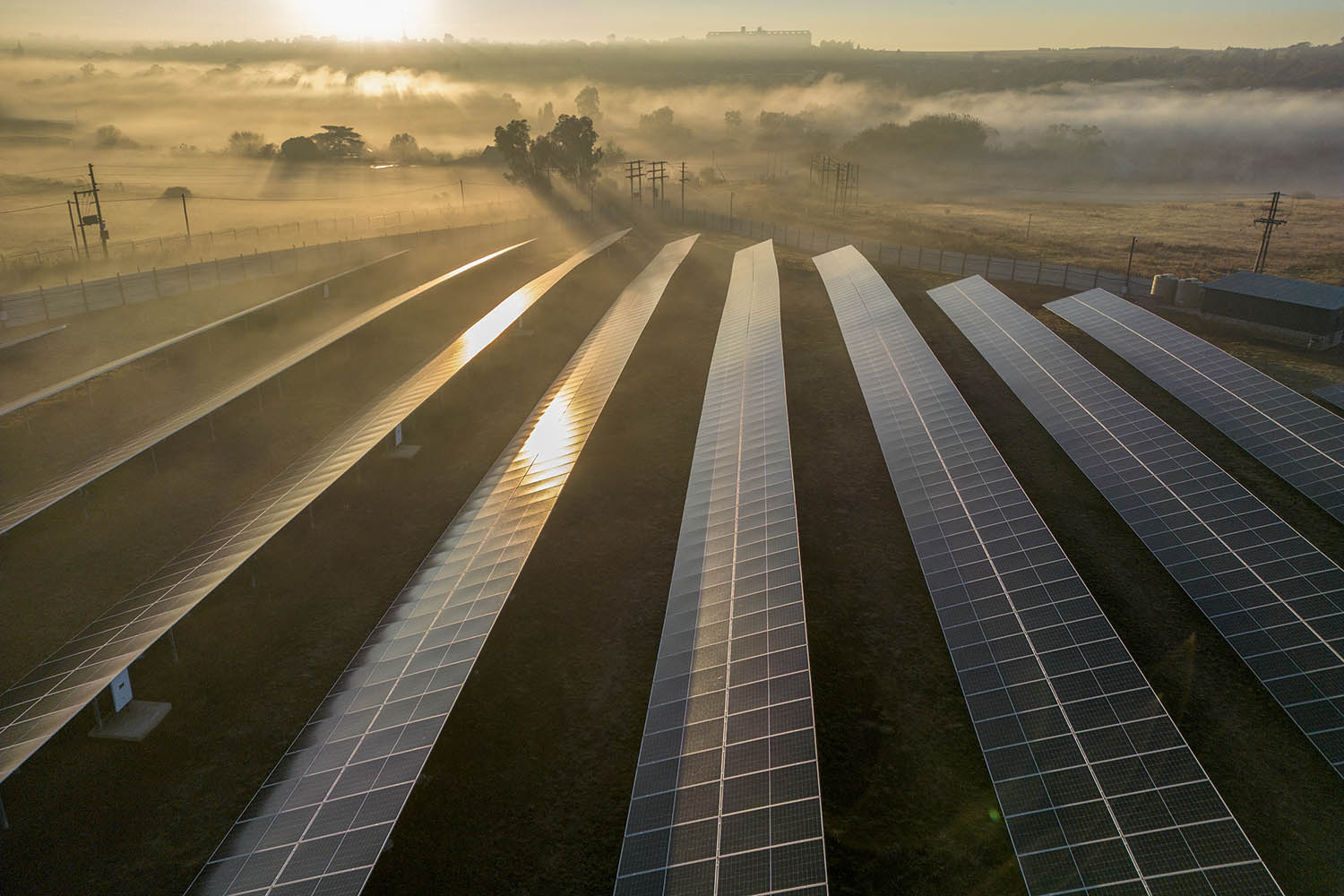
Helping the continent transition to renewable energy will be critical to bringing down global emissions. The transition should also be an economic boon. Optimists at this week’s Africa Climate Summit foresee a $6 billion market for carbon reduction projects by 2030.
But funding and geopolitics are heading in the wrong direction:
- Debt. African countries face rising costs servicing their foreign debts and dealing with the immediate impacts of climate change. “We are forced to divert resources that are meant for economic growth into dealing with the effects of climate change,” says Kenya’s president William Ruto, hosting the summit in Nairobi. Kenya alone spends $8 billion a year servicing its foreign debt and Ruto tells the FT livestock losses from drought have cost the country $1.5 billion “as a direct consequence of climate change”.
- Coups. A string of military takeovers has jeopardised climate action from Mali to Sudan and beyond. Last month, Gabon agreed a $500 million deal to refinance a portion of its debt in exchange for a commitment to ocean conservation. Last week’s coup has thrown that deal into question. Instability in the Sahel also threatens the Great Green Wall, a plan to plant an 8,000km long stretch of trees across the region bordering the Sahara.
- Donors. Donor financing has fallen short. According to the UN, $2.5 billion of funding for the Great Green Wall has been disbursed. Another $17.5 billion is expected by the end of 2025, but the total needed is $33 billion.
Not that the scheme necessarily deserves it. “A lot of these climate projects are dreamed up in capitals where local ecology and power dynamics are not taken into account,” says Alex Orenstein, a drought specialist who has worked on the Sahel for more than a decade. “You end up with these ideas which are either super nebulous like the Great Green Wall, or super heavily militarised, where the idea of mitigating climate change is to create a park where a dentist from Idaho can come once a year to shoot a rhino.”
The Gabon conservation project is more realistic but just as vulnerable to events. “To have the government that signed the deal be deposed with the ink still fresh is uncomfortable and raises a great deal of uncertainty,” says Sebastian Espinosa of White Oak Advisory, which helped Barbados arrange a debt-for-nature swap. “Maybe the regime that emerges decides to put conservation at the top of the agenda and everything works out fine, but you can also see very different scenarios.”
Bottom line. Undermining climate action in Africa is a fundamental imbalance in the cost of capital. African countries pay on average four times more for borrowing than the US, UN Secretary General Antonio Guterres told the summit. Added to which…
- Further instability in the region risks further driving up the costs of financing.
- While many climate adaptation projects in the developing world are only feasible with finance provided by development banks at below market rates.
Africa is not a monolith. Kenya is a role model for the continent’s potential, with around 90 per cent of its electricity coming from renewable sources. But the retreat of democracy elsewhere may also turn out to be a defeat for climate action.