
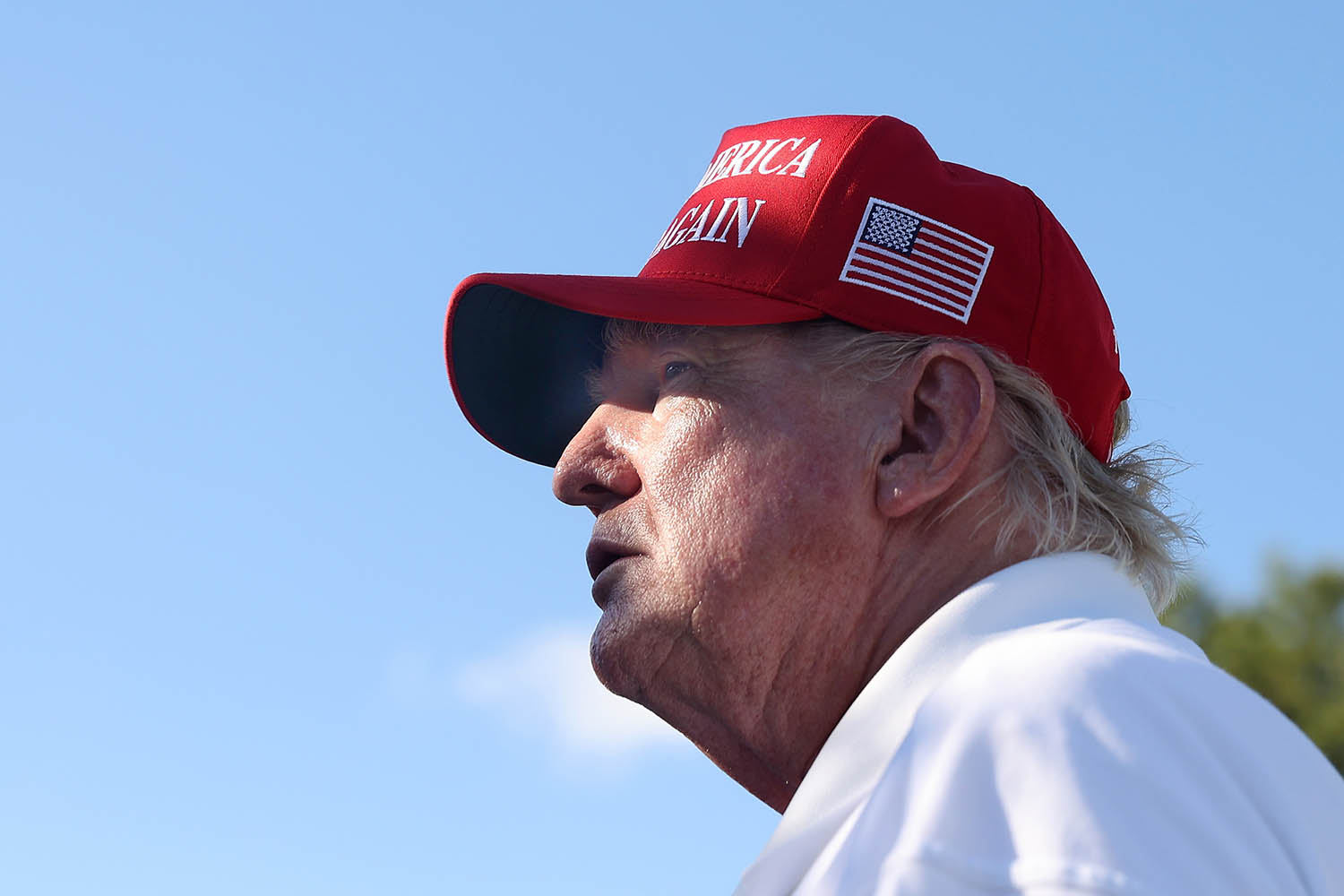
Giuliani is front and centre too
Ever since the 2020 US election the closest thing to a smoking gun for those seeking to hold Trump accountable for trying to overturn the result has been his phone call to the Georgia Secretary of State. “All I want is this,” he told Brad Raffensburger, a Republican, on 2 January 2021. “I want to find 11,780 votes, which is one more than we have, because we won the state.” In fact he lost it by 10,000 votes. His lawyers made dozens of claims of voter fraud but none was upheld. Thirty-one months on the reckoning has begun in earnest. A 98-page criminal indictment against Trump and 18 named co-conspirators was handed down last night by Fani Willis, DA for Fulton County in suburban Atlanta, itemising 41 counts and 161 acts under six broad headings: lying to state and elected officials, creating fake electors, harassing election officials, solicitation, breaching voting machines and cover-up. Willis wants a trial within six months. Trump’s lawyers will seek to delay, as they have with the five other trials already scheduled for their candidate between now and May. His political advisors are trusting none of them will change many voters’ minds and they may be right. Like the moon landings, these indictments are winning successively smaller TV audiences. Then again, they may be wrong.
There are at least three notable differences between this indictment and the federal criminal indictment handed down last month by Special Prosecutor Jack Smith in the January 6 insurrection case:
- Willis has bundled most of her counts under Georgia’s RICO anti-racketeering law (for Racketeer Influenced and Corrupt Organizations act), designed for the pursuit of mobsters but a “nightmare” for defence lawyers, one expert tells the NYT, because it enables prosecutors to go after bosses – in this case Trump – without having to prove they participated directly in a conspiracy.
- Rudy Giuliani, Trump’s former personal lawyer, is not named in the Smith indictment but is this time, as an architect of the plan to substitute fake electors for those genuinely delegated to confirm the election result. He also led the charge in spreading false rumours of voter fraud in Georgia, on one occasion saying of two Black election workers that “they look like they’re passing out dope, not ballots”.
- Trump’s lawyers will try to move this state case to a federal court but if they fail and he’s convicted, even if by then he’s president, he cannot pardon himself.