
What just happened
- Jeff Shell resigned as head NBCUniversal over an “inappropriate relationship with a woman in the company”.
- China’s envoy to Paris united Europe in condemnation after he questioned the sovereignty of former Soviet states.
- An Italian woman rode a horse to work in protest after being told she couldn’t work from home while her car was fixed.
Karam Al Sadeq is a 43 year-old lawyer currently jailed in the tiny Gulf state of Ras Al Khaimah. He claims to have been kidnapped, subjected to torture and pressured into signing a false confession.
So what? These allegations are not in themselves surprising. Ras Al Khaimah is part of the UAE, whose human rights record is poor*. What is surprising is who Al Sadeq blames.
Neil Gerrard is a former London police officer who rose to become head of white-collar crime at Dechert’s, a take-no-prisoners corporate law firm. Gerrard, 68, once claimed to have been shortlisted to be the next head of the UK’s Serious Fraud Office. Now – thanks to allegations made by Al Sadeq and others – he is facing allegations described as the most serious ever levelled against a British solicitor.
Gerrard is embroiled in at least three separate legal cases. Claims against him include complicity in torture and human rights abuses, dishonesty, cyber hacking and coaching witnesses to lie to the UK’s High Court. The tactics of top law firms usually stay hidden, but these cases could reveal much about how far such firms are willing to go to protect their clients.
Gerrard and Dechert’s both strongly deny all the allegations against them. They say they will defend all the claims in court.
A tangled web
- Karam Al Sadeq and Jihad Quzmar. Two lawyers detained in Ras Al Khaimah since 2014 allege that Gerrard was partially responsible for their fate. They say he conducted interrogations when they were blindfolded and had no legal counsel, threatened their families and pressured them into making false confessions. Gerrard denies all these claims.
- Farhad Azima. A US-based businessman who worked in Ras Al Khaimah was sued by the emirate’s investment authority, represented by Gerrard. In the High Court case, Gerrard said that he had innocently obtained a cache of Azima’s private emails from a friendly journalist. Eighteen months later, a private investigator, Stuart Page, alleged that the emails were hacked and that Gerrard had not only known this but attempted to cover it up. Page said Gerrard invited him to what Azima’s lawyers said amounted to a “perjury school” for key witnesses, in advance of the trial, at a five-star hotel in the Swiss Alps. Gerrard denies Page’s claims.
- ENRC. In a 2022 case, Gerrard was found to have breached his professional duty towards Kazakh mining company ENRC, his then-client. He secretly talked to the SFO about alleged corruption at ENRC and leaked information to journalists. It was claimed he told colleagues he was “in rape mode” and promised to “screw these fuckers for £25 million”. Gerrard denies using those phrases.
The emotional impact of Gerrard’s alleged behaviour is clear from witness statements filed by Al Sadeq and Quzmar in the High Court, and from a series of interviews given to Tortoise by Al Sadeq from prison.
“I was cuffed behind my back, shackled,” Al Sadeq remembers of his first meeting with Gerrard. “I entered the room where Neil Gerrard and another officer were. My head cover was removed, but I remained shackled. He started his interview by saying that he knows everything about me; my whole life; things that I might not even know, he would know.”
According to Al Sadeq, Gerrard’s message was: “I work for Sheikh Saud. I am the law.” Gerrard, who retired in 2020, denies Al Sadeq’s account, denies saying he was “the law”, and says any interviews were conducted consistently with UK and UAE law.
Al Sadeq and Quzmar’s claims will be tested in a court case likely to take place next year. Key questions will include
- how far Gerrard and his former firm, Decherts, were prepared to go for their deep-pocketed client; and
- to what extent such behaviour is commonplace among corporate lawyers.
Allegations of hacking are of particular interest. Hacking-for-hire claims have surfaced in dozens of big corporate disputes in recent years and Al Sadeq’s lawyers have alleged that hackers attempted to steal information from them on behalf of the emirate. The Gerrard cases could expose how such a hacking operation is commissioned and executed.
If Al Sadeq is to be believed, his opponents were prepared to go to any lengths. “They are willing to do absolutely anything. Anything.”
*The UAE ranked 131st in the World Population Review’s Human Freedom Index for 2023
Arm chip
Softbank is fattening up the Cambridge-based Arm chip designer for its US flotation by letting it be known Arm is getting into making chips as well as designing them. This is not a fine distinction. Focusing only on chip design and maintaining Swiss-style neutrality as to who buys the designs has been fundamental to Arm’s enormously successful business model: its chip designs are now in 95 per cent of all smartphones. So if it ain’t broke, why fix it? To draw attention to its latest, most advanced design; and to persuade investors they are buying into a manufacturing as well as an IP business. Softbank’s Masayoshi Son needs a blockbuster Arm IPO having lost $16 billion on his latest $50 billion of investments. One party that won’t benefit much from the flotation – because it will happen in New York – is UK plc.
Fusion funds
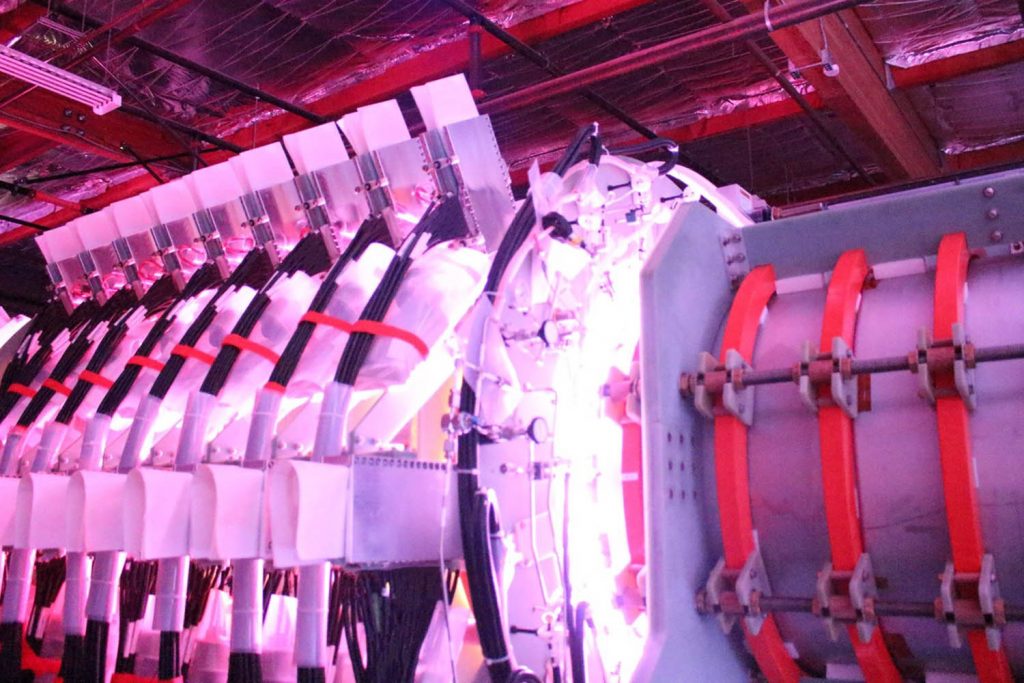
Sam Altman, who brought the world ChatGPT, has quietly invested $375 million in a fusion energy start-up that claims to be building the world’s first nuclear fusion power plant. A lot of firms have made similar claims since the fresh burst of interest in fusion occasioned by the “ignition” achieved last December in an experiment at California’s Lawrence Livermore lab. But Helion Energy’s technology is unique in two respects: it doesn’t use lasers or magnetic donuts known as tokamaks, but fires pairs of plasma pulses at each other at a million mph instead. And rather than produce power by converting heat to steam, it claims to be able to extract it directly from the fusion reaction via fibre-optic cables. Altman is one of many investors piling into the sector on the basis that, as one tells the WSJ, “you either lose one times your money, or you can make a thousand times your money”. Nice work if you can afford it.