Sensemaker Daily
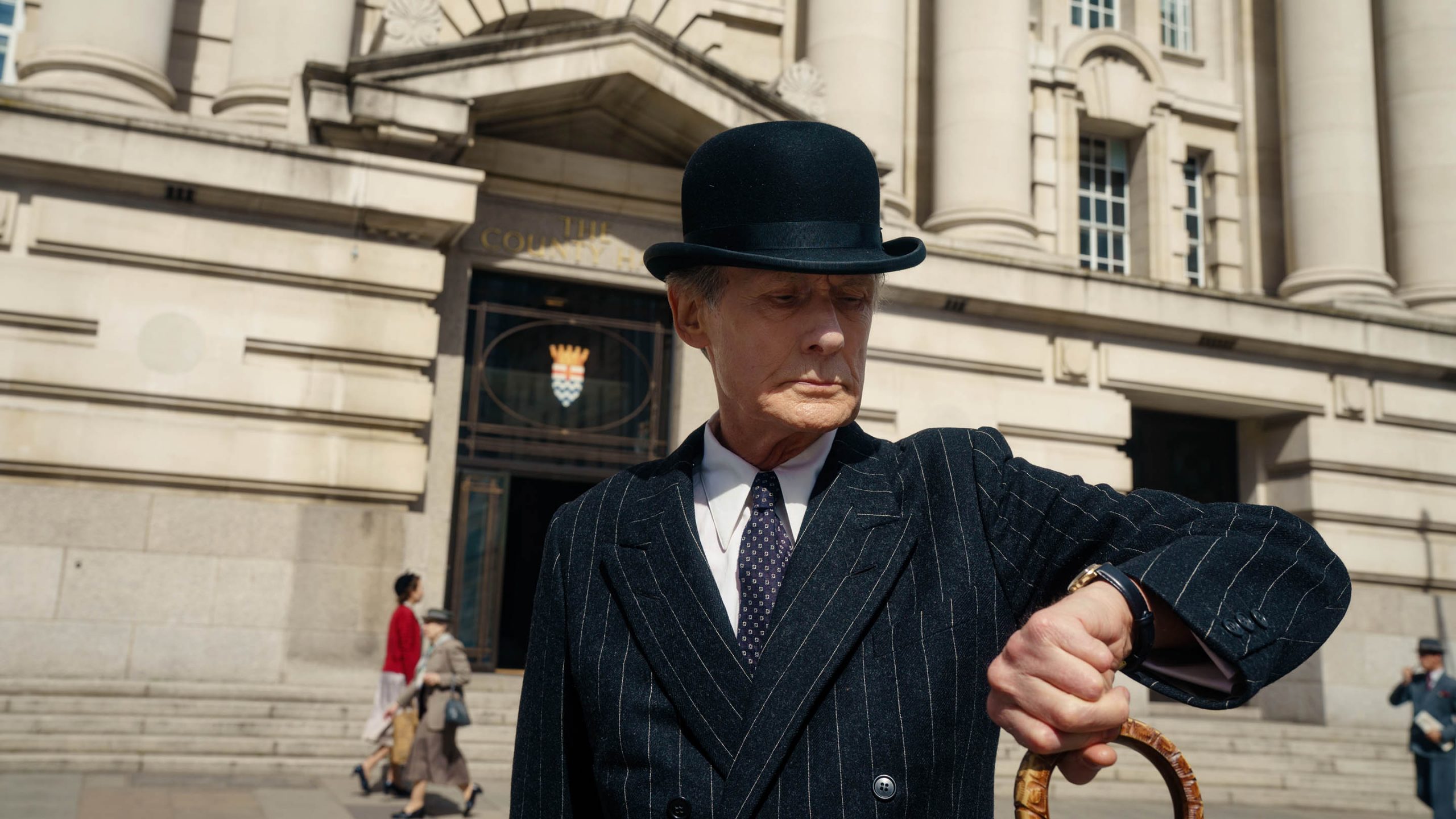
Bill Nighy gives an Oscar-worthy performance as a 1950s bureaucrat facing death, in a brilliant remake of Kurosawa’s classic Ikiru
In the history of cinema, the daringly prolonged close-up shot of the human face has been one of the simplest and yet most powerful techniques available to movie directors with the courage and skill to hand over the whole screen to an individual’s features and to the story they tell.
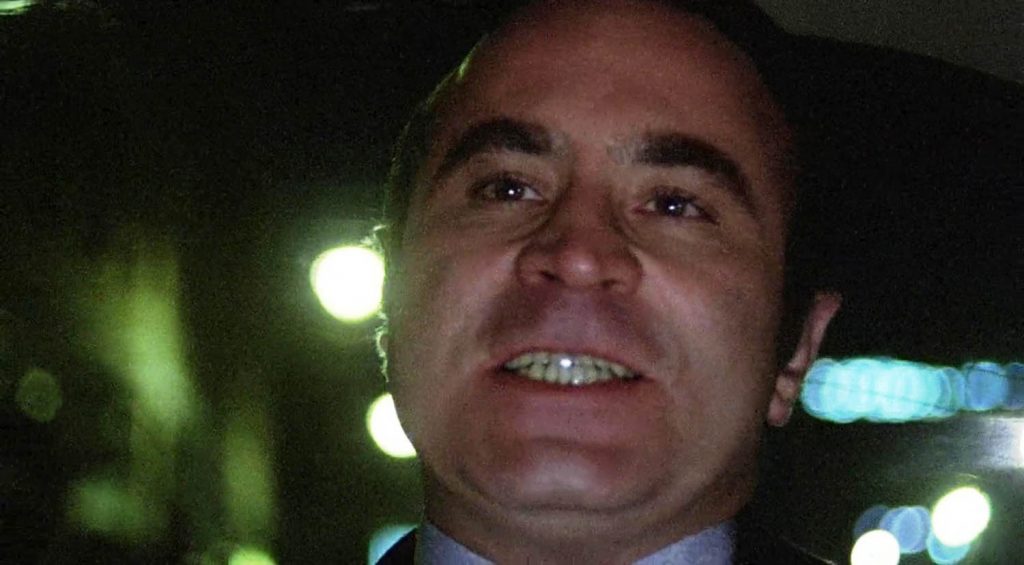
Think, for instance, of the anguish of Maria Falconetti in Dreyer’s The Passion of Joan of Arc (1928); Liv Ullmann as the mute actress in Bergman’s Persona (1966); Clint Eastwood, Lee Van Cleef and Eli Wallach in the final shoot-out in Sergio Leone’s The Good, the Bad and the Ugly; and (one of my favourites) the seething Bob Hoskins as gangland boss Harold Shand, trapped on the back seat of a car in the final minutes of The Long Good Friday (1980).
To this list must now be added Bill Nighy in Living (selected cinemas, 4 November), a remake, directed by Oliver Hermanus and written by Sir Kazuo Ishiguro, of Akira Kurosawa’s classic Ikiru (1952), relocated to London in 1953. As Mr Williams, a staid and almost pathologically conventional County Hall bureaucrat who learns he has terminal cancer, Nighy gives the movie its principal emotional canvas, with a face of subtle yet preternatural expressiveness. (For more on this, check out Noa Steimatsky’s The Face on Film.)
From the moment that we first see Mr Williams through the window of a train carriage – standing grimly on the platform, the “old man” barely deigning to acknowledge his junior colleagues – his countenance is the heart of the story. And precisely because Nighy can communicate so much with the slightest arch of an eyebrow, flare of a nostril or twitch of a lip, the effect of a full-blown smile – of which, in due course, we see plenty – is transformative.
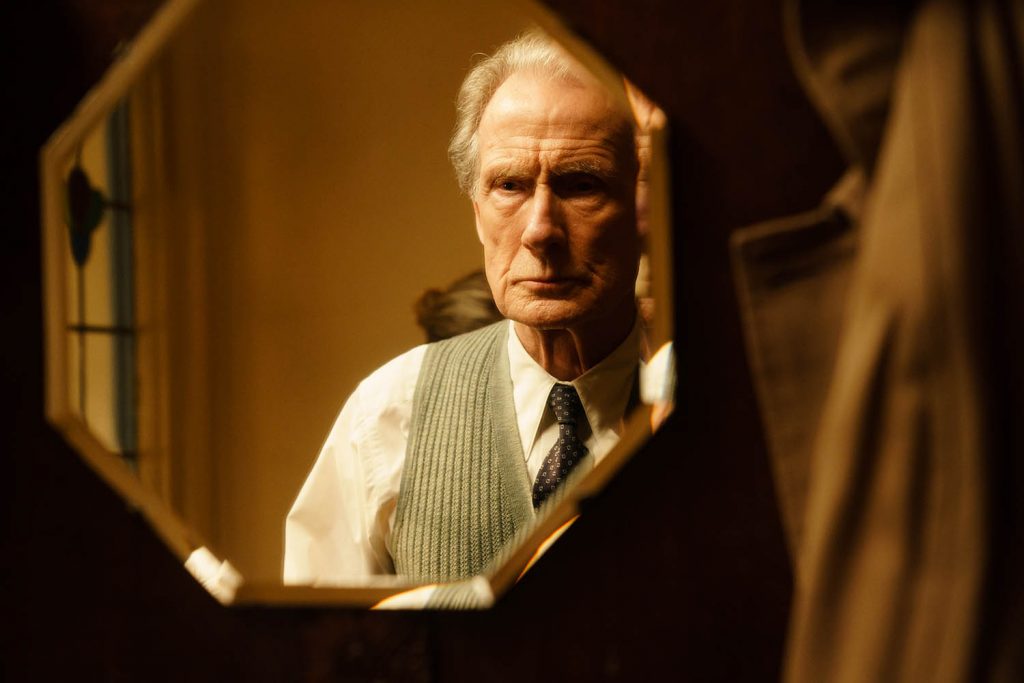
Cohabiting in suburban Esher with his son Michael (Barney Fishwick) and daughter-in-law Fiona (Patsy Ferran), the widower Williams has become emotionally unmoored even from his closest family. After his diagnosis, he sits alone in the dark of his sitting room, immobilised not only by the hammer blow of imminent mortality but also by the paralysis of indecision. With only months left to live, what is he supposed to do?
Heading off to a seaside resort with a briefcase full of sleeping pills, vaguely intending to end it all, he encounters the writer Sutherland (Tom Burke, brilliant as ever) who volunteers to show him the Bohemian side of life. They go on a drinking spree, taking in a series of dives and a burlesque show. Williams stands up and, in a moment of breathtaking (if incomplete) emotional release, sings the Scottish folk song ‘Oh, Rowan Tree’. He swaps his bowler hat for a jaunty trilby; again, in the tightly geared world of social codes and signals in which he operates, this alone is a striking act of mutiny.
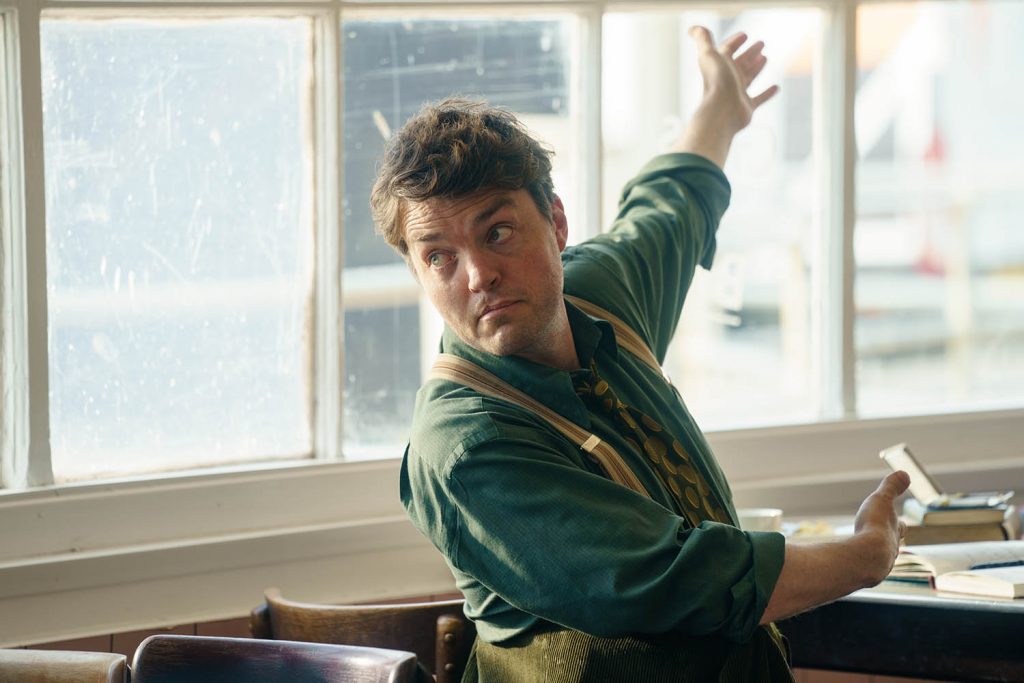
Yet what his carousing with Sutherland tells him is that hedonism is not the same as living. Returning to London, he encounters one of his younger staff, Margaret Harris (Aimee Lou Wood), who needs a reference so she can leave and start a new job.
Hitherto indifferent, he is intrigued and charmed by her natural joie de vivre – “your appetite for life” – and, to her astonishment, takes her for lunch at Fortnum’s. When she admits that her nickname for him is “Mr Zombie”, he is amused rather than angry, acknowledging the truth at the heart of the joke.
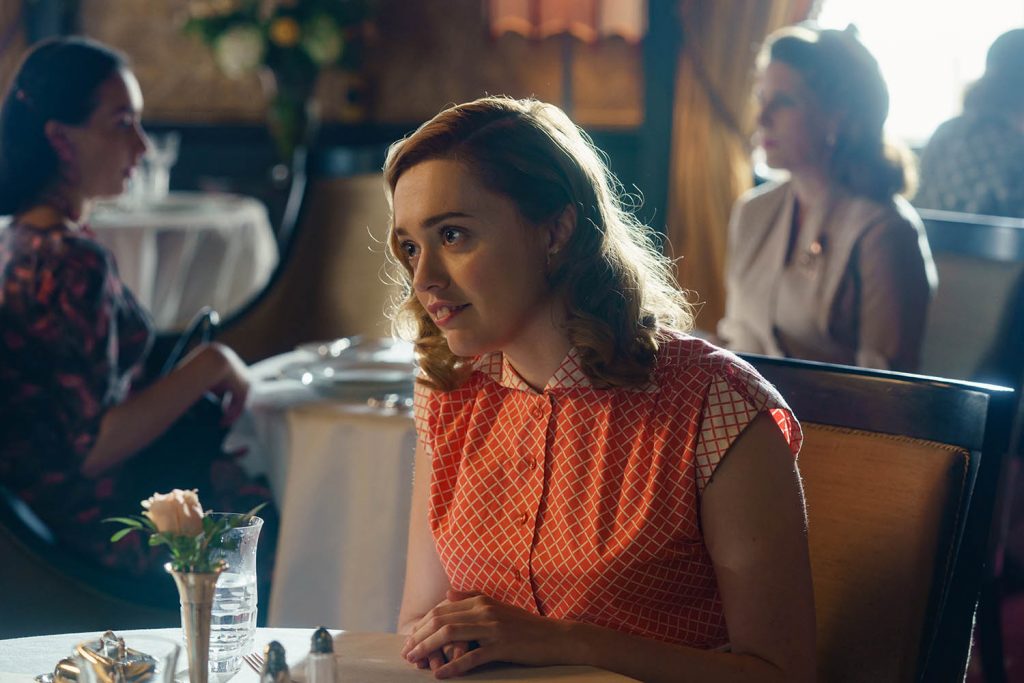
They go to see Cary Grant in I Was a Male War Bride (1949), and another of the many locks that define the self-imposed captivity of his life springs open. He confides in Margaret that he had aspired as a young man to be “a gentleman”, with all that entailed. But where has it got him?
Instead of dwelling on the past, however, Williams chooses to make the most of the time remaining to him, and, with a fanaticism that unnerves his colleagues, champions a group of East End women who want to turn a derelict site into a playground.
Ditching his former inclination towards delay and postponement – “We can keep [the file] here. There’s no harm” – he becomes a force of sharp-elbowed urgency and impassioned focus, refusing to accept the inertia of the many departments in County Hall. In this personal crusade lies some form of redemption and the prospect of a fulfilled life, if only for a few months.

Aged 72, Nighy has not followed the traditional career arc of stardom. Long-admired for his restrained brilliance on stage and screen, he became a national treasure almost overnight as Billy Mack, the unforgettably twitchy washed-up pop star chasing a Christmas number one in Richard Curtis’s Love Actually (2003). But in Living he delivers his best screen performance to date, and one that has certainly put him in the frame for an Oscar nomination.
In this respect, he is assisted by a terrific ensemble cast, by Hermanus’s adroit direction and – especially – by Ishiguro’s superb screenplay. In adapting Ikiru, the 2017 Nobel prize winner for literature was drawing upon one of the greatest movies of all time (a film inspired, in its turn, by Tolstoy’s 1886 novella, The Death of Ivan Ilyich).
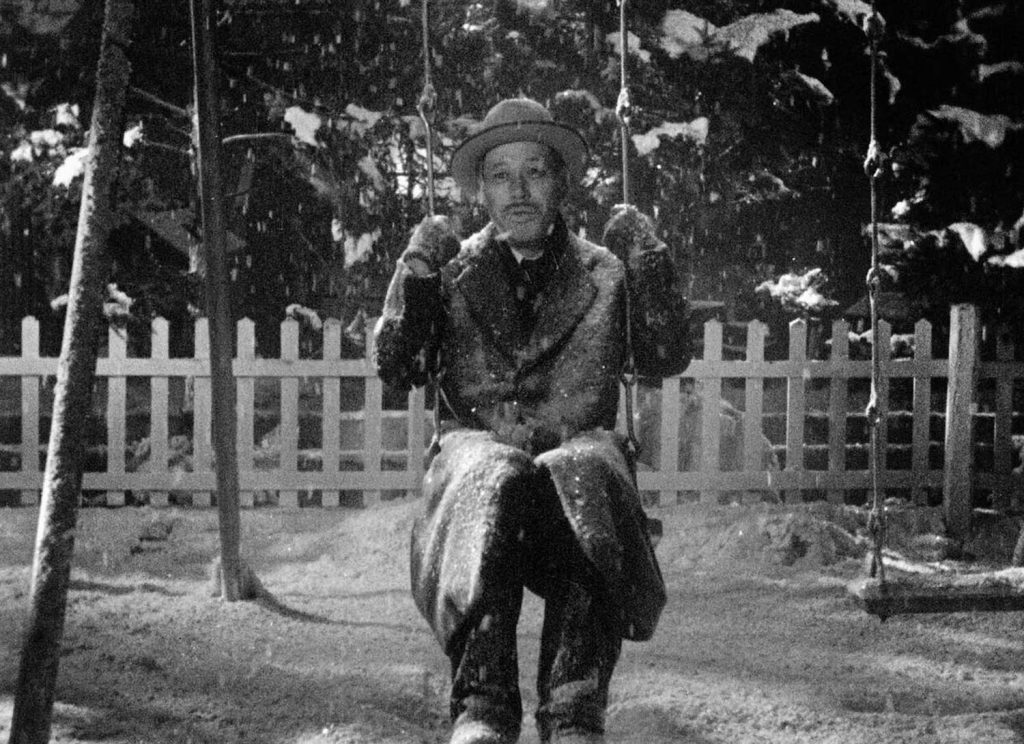
Seventy years after its release, Kurosawa’s film still transfixes the viewer from its opening shot of an X-ray of the stomach of Kanji Watanabe (Takashi Shimura) to its closing scenes as the dying chief of the public liaison section at Tokyo City Hall sings blissfully to himself, sitting on a swing in the playground he has forced into being.
At the start of Ikiru (or “Living”), this desiccated bureaucrat is, as the narrator observes, “just killing time, just drifting through life. He can’t really say he is really alive at all… He is like a corpse.” When Margaret’s counterpart in the original, Miss Odagiri (Miki Odagiri), tells Watanabe that she calls him “The Mummy”, he recognises that she is right about the way in which he has lived and worked. “No matter how hard I think,” he says. “I can’t remember anything I did in those thirty years.”
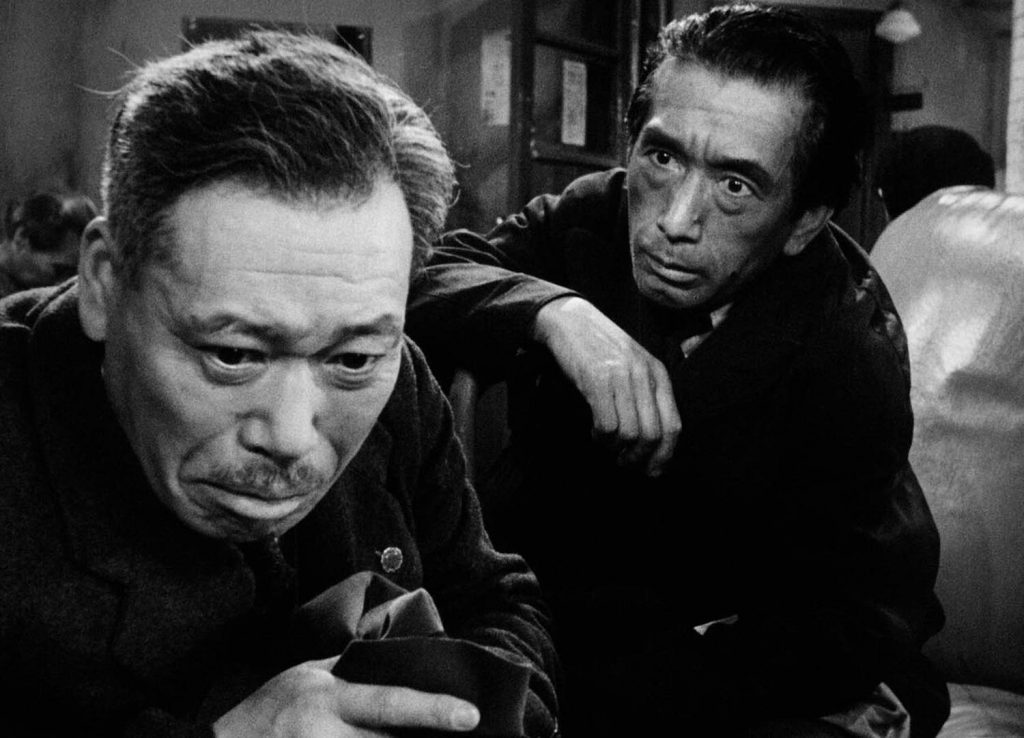
Like Mr WIlliams, Watanabe takes on the cause of a group of women seeking to turn a site full of stagnant water into a playground. His colleagues argue about his late-life change of character; one of them identifying the point of what Watanabe has done, which is to treat wasted time as a form of corruption. Ikiru, wrote the great film critic Roger Ebert, “is one of the few movies that might actually be able to inspire someone to lead his or her life a little differently.”

The connections and affinities between Japanese and English convention have been central to Ishiguro’s fiction; binding, say, An Artist of the Floating World (1986) to The Remains of the Day (1989). But his screenplay for Living is not simply a homage to Kurosawa. It also owes a debt to a strain in English fiction that celebrates the breach of middle-class rules: Orwell’s Coming Up for Air (1939), for instance, or, more recently, John Lanchester’s Mr Phillips (2000).
Its deeper nuance lies in the differences that Ishiguro detects between the Tokyo of 1952 and the London of 1953. The Japanese capital city is still struggling back to its feet after the catastrophe of the war. London, in contrast, is at the beginning of the Second Elizabethan Age: the coronation year bristles with intimations that, as Peter Hennessy puts it in Having It So Good: Britain in the Fifties (2006), the dam is about to burst, approaching “a time when Bagehot’s ‘cake of custom’ was crumbling.”
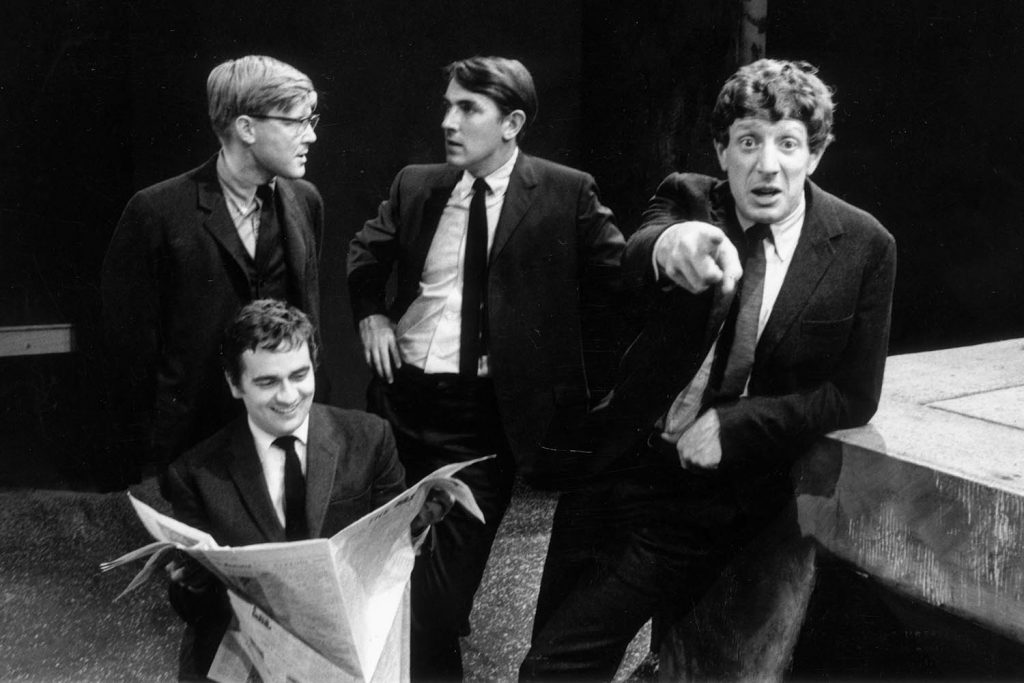
Margaret’s generation would go on to dance to Elvis’s ‘That’s All Right’ (1954), read Kingsley Amis’s Lucky Jim, watch Jimmy Porter rage in John Osborne’s Look Back in Anger (1956), and – a few years later – rejoice at the satirical liberties taken by Beyond the Fringe. As the historian Eric Hobsbawm observed in 2002: “The Fifties are the crucial decade. For the first time you could feel things changing. Suez and the coming of rock-and-roll divide twentieth-century British history.”
In this sense, the rebellion of Mr Williams foreshadows the start of something immense and collective, as well as giving dignity to the end of one person’s life. It is a story that makes sense in time and space. But it is also a myth with universal application: the exquisite rendering of the eternal truth, so well expressed in Bob Dylan’s ‘It’s Alright, Ma (I’m Only Bleeding)’, that “He not busy being born is busy dying.” In Living, in a face that thaws from a mask of living death to a smile of profound contentment, we see a man who somehow manages to do both.