Sensemaker Daily
… ends up in Tortoise. Ian Ridley went on the road with the former footballer and Strictly star – with unexpected and welcome consequences
My wife died almost four years ago now. Yes, I know the theme of all this – the tenth Tortoise Quarterly book of long reads – is comedy, but bear with me. And no, it’s not some variation on a social club comedian’s borderline tasteless gag.
A few months after my treasured, trailblazing Vikki died, the editor of these splendid little tomes, Keith Blackmore, rang me and asked if I’d like to write a piece about her. (She was a tabloid football and athletics writer who touched many lives and attracted big sporting names to her funeral.) I hadn’t been able to write but the piece was well received and it got me going again. A memoir about V, a crime thriller and a literary fiction novel have been the result.
Now we get to the point, and thank you for the indulgence. Looking back, this was the year I began to laugh anew after a time when I thought I might never properly again. And it was thanks to my old friend Tony Adams, the former Arsenal and England football captain and a short theatre tour he asked me to host for him.
It was supposed to be a book tour really before evolving into An Evening with Tony Adams. Tony had gone public with his alcoholism in August 1996 – when I was eight years sober myself – and two years later the book on which we collaborated, Addicted, was published. At 20 years of sobriety, he reckoned he had another book in him, detailing how life had changed in that transition from a remarkable final six years as a player under Arsène Wenger, including two Premier League and FA Cup doubles, through establishing his Sporting Chance charity for sports people in need of treatment for addiction issues to a chequered career in football management, where he mostly found himself in the wrong place at the wrong time.
The follow-up book was, naturally, called Sober, though being just that, it wasn’t going to have quite the impact of the raw and graphic Addicted, which had been No 1 on the Sunday Times bestsellers list, even though Tony reckoned the second was a better, wiser book. The tour, like so much during the pandemic, seemed cursed, being postponed in 2020 and 2021. I did wonder how it might play now the topicality was gone when 2022 came around.
The more so when we went into the first gig, at High Wycombe Town Hall, without any real rehearsal. It was Tony’s way and wish. He wanted it to be fresh, to see what emerged from his mouth. We’d had a little warm-up dinner in Cardiff for the tour sponsors, the building supplies company Jewson, whose emotional wellbeing programme Tony’s new company, Six Mental Health, now handled, and I had hosted a Q&A with him, but this was different. There were 300 people in, all paying good money. Here I was, standing on stage, nervous, Tony having asked me to do the introduction. I’m a journalist, a writer, for goodness’ sake, not some stand-up (as an open mic slot at the Comedy Store in Leicester Square once proved, but that’s a story for another day).
“Good evening,” I said, suddenly thrust into the spotlight by Tony’s announcement from the wings that the show was starting. “My name is Ian Ridley and I was the writer on Tony’s two volumes of autobiography – and there’s no need to look so disappointed,” I said to a few giggles, which was encouraging. “The great man will be with us in just a minute.” We had worked out a format: the first half of the show would be Tony’s story, the second a Q&A hosted by me but consisting of audience questions, which they could pose by tagging me on Twitter or write down on cards provided at half-time.
Now I would not wish to build up my part here. I was Ed McMahon to Tony’s Johnny Carson (one for the teenagers there). For the next 50 or so minutes, Tony told his tale in all its graphic drinking detail while I sat sipping water, checking Twitter to see if we had any good questions for the second half of the show. Occasionally he would turn to me and ask where he’d been before digressing and I would remind him. He paced the stage energetically in one of his trademark colourful suits – tonight’s being light blue velvet, a colour of the Wycombe Wanderers club he had once managed – the audience’s eyes following him from side to side like spectators on Centre Court.
This was TA unfiltered. The glorious football career, yes, but much more about the inglorious alcoholic episodes: crashing a car and going to jail, leaving his kids with near-strangers, prostitutes, wetting beds and soiling trousers, the 44-day bender after Euro ’96. As he related reaching his rock bottom in a pub in Romford, the day he knew he was sick and tired of being sick and tired, it was as hushed as the Emirates when Tottenham have scored.
When we’d first discussed the tour, Tony had talked about me going down into the audience with a roving mic. I wasn’t keen. There might be a few who’d had a drink, I said. It could get messy. He came to agree and so I had a busy half-time of collating the written questions, grouping them into themes, trying to get in as many as possible, asking them in twos and threes. They were wide-ranging, from football matters to life now, asked by seekers of tactical truths and spiritual pilgrims. It was clear there were a lot of recovering addicts attending. And a few kids, brought along to see for themselves the colossus that Dad banged on about, wanting to know how to become professional footballers. Tony’s language was uncensored, the stories adult. They were going to grow up quickly tonight, I mused, putting their questions to him.
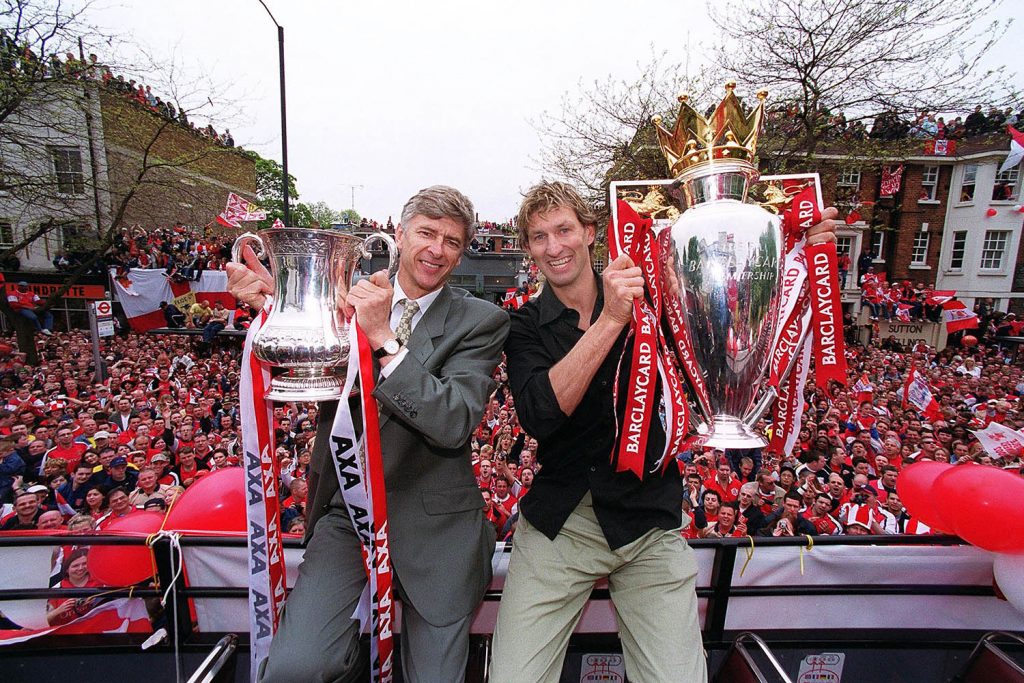
Pretty soon, the most popular one emerged: George Graham or Arsène Wenger? And pretty soon it emerged too that Tony would be giving detailed answers, full of analysis and insight. By the second night, at the magnificent Cheltenham Town Hall, at the end of a long and fascinating answer to the Graham/Wenger question, I ventured: “So, both equally then?” and Tony smiled and the audience laughed. I began to understand why, despite the anxiety before and the exhaustion afterwards, the approval of a crowd was seductive enough for people to seek it nightly. Dorothy Parker was asked if she enjoyed writing. “I enjoy having written,” she replied. Frankie Howerd appropriated it to: “I like having performed.”
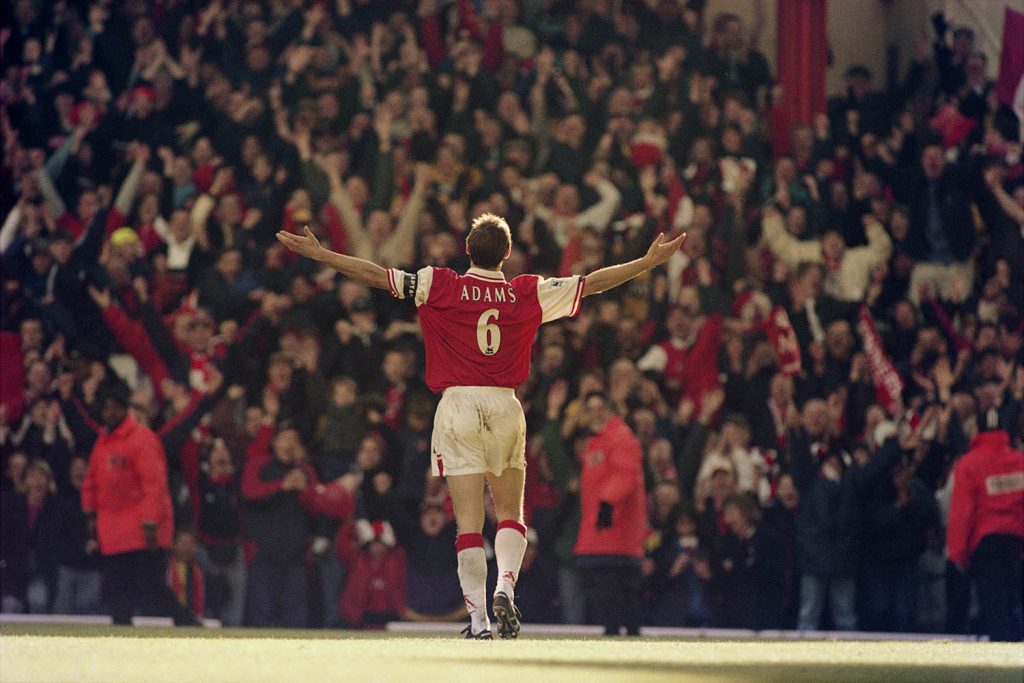
After that came what would become known as “Everton goal”. The audiences were stacked with Arsenal fans who wanted to know all about that moment that sealed the title in 1998 when Tony raced forward, took Steve Bould’s lofted pass and scored emphatically. It would prompt in him a lot about the change he was experiencing in himself at the time now that he was free of the booze and feeling at peace within himself. He would forget what the question was and ask me and I’d just say “Everton goal”. By the time of the final gig, the “homecoming” at the ridiculously beautiful Union Chapel in Islington, whenever he asked me what he was supposed to be talking about, the audience would simply chorus “Everton goal”.
Back in Cardiff, someone at the sponsors’ dinner had asked him about Caprice, the supermodel he had briefly dated after getting sober in his still-single days. “I lift ten fucking trophies and win 66 caps for England and that’s all I get asked,” he replied, before giving a long account of his relationship with her.
At Portsmouth, in the sweet little New Theatre Royal, somebody came up with a neat twist on the favourite question. “Bergkamp or Caprice?” they asked. Tony thought about it for a while and came up with the reply that he used to change next to Freddie Ljungberg and, of all the people he’d ever seen naked, the Swede had the shapeliest arse. It became a staple anecdote of the show.
It was in Portsmouth that the funniest moment of the whole tour arrived for me. Tony’s wife, Poppy, was in the audience, alongside two of their great friends: his old team-mate David Seaman and his wife, Frankie, an ice skater whom he met when on the TV show Dancing on Ice. Tony told his first-half story about his teenage gaucheness with girls, of how he went for a walk with a girl who liked the look of him and dumped him ten minutes later after his feeble attempt at a kiss, recreated on stage with a puckering of the lips.
“He’s still the same now,” I heard Poppy call out from the audience. And I just couldn’t help guffawing.
In hindsight, Portsmouth was also the place, I reckon, where he edged towards agreeing to appear on Strictly Come Dancing. He’d mentioned in Cardiff that he’d been offered it and, excited for him, I urged him to do it, ventured that he could have some fun and also highlight his agenda to help those with mental health and addiction issues.
“But I don’t want to be remembered for screwing up a dance rather than for my football career,” he said.
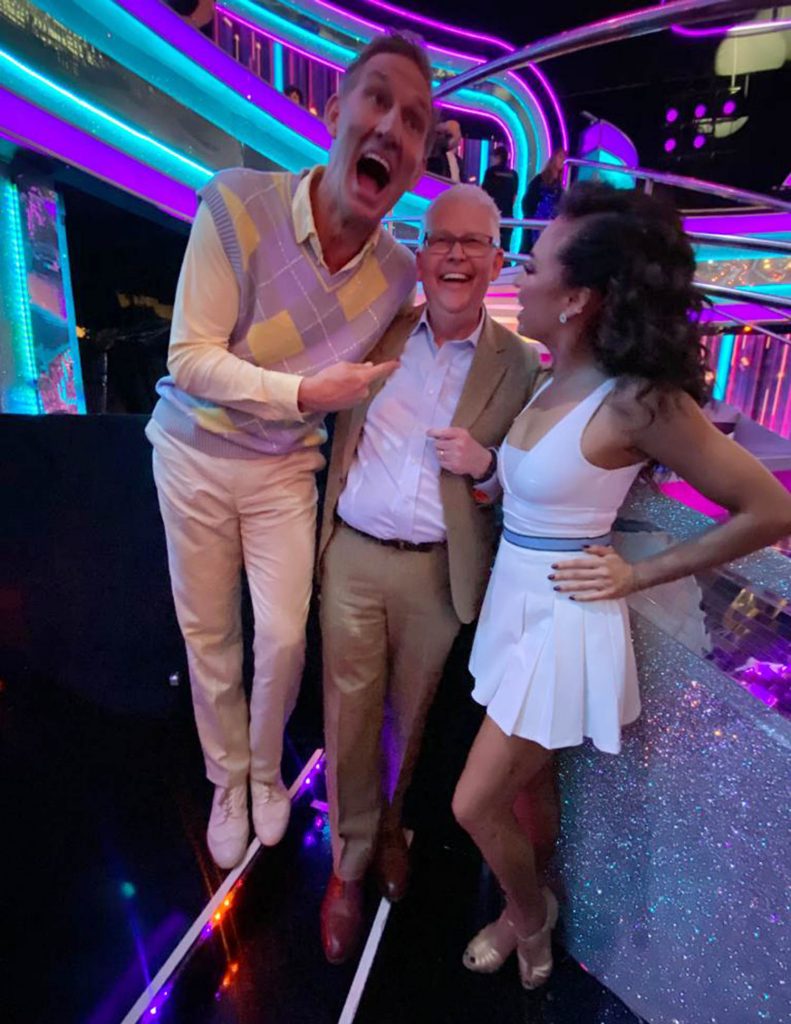
“Nobody who has ever appeared on the show has left with their reputation ruined,” I said. “People admire a trier and are on your side. It’s not like I’m a Celebrity. That can be unforgiving.”
In the green room after the show he, Poppy, David and Frankie debated the pros and cons of going on a celeb show, the latter two offering the benefit of experience. Still, I thought Tony was going to turn it down until I heard the August announcement with the rest of the nation.
Apparently, he had attended an initial test day, Poppy had watched and told him he was not shockingly bad and he had agreed. I texted him to wish him well. He texted back three dancing man emojis.
Back to our – sorry, his – show. ’eckling ’ardly ever ’appened but there was a bizarre moment at Cheltenham when he was going through “Everton goal” and somebody in the balcony shouted: “Craig Short!” Tony turned to me, baffled. I ventured it might have been the defender who failed to cut out Steve Bould’s through ball. Tony shrugged, everybody laughed, and he strode on verbally as well as physically. I was tempted to give him my Fitbit to wear to get my steps up, so much ground did he cover each night. He reckoned he lost half a stone over the six dates.
At St Albans, as the end of the show approached, a drunk stood up to shout that he was in a party of 30 Arsenal lads and they all wanted a selfie. Tony joked that he would give the bloke the number of his treatment centre at the end. I told the guy that perhaps the audience had come to see Tony not him, and immediately regretted shaming him. The drunk, meanwhile, told me to shut up. Of course, they got their selfies. Everybody in the 600-strong audience did, as everybody did every night. It was an amazing sight, the line snaking around the theatre, Tony giving time to everyone at the end of a long day.
He had many fine moments, always reading the room perfectly, offering both light and shade, funny when apt but emphasising how serious an illness addiction is when necessary.
St Albans marked probably my finest moment. I have lived in the area for some 40 years and finally got the chance to go on stage in the city and say “Good evening St Albans!” Tony also told the story, misty-eyed, about how the Arsenal club secretary, Ken Friar, used to ring him on Christmas Day to wish him seasonal greetings, insisting that it was a mark of the club’s classiness.
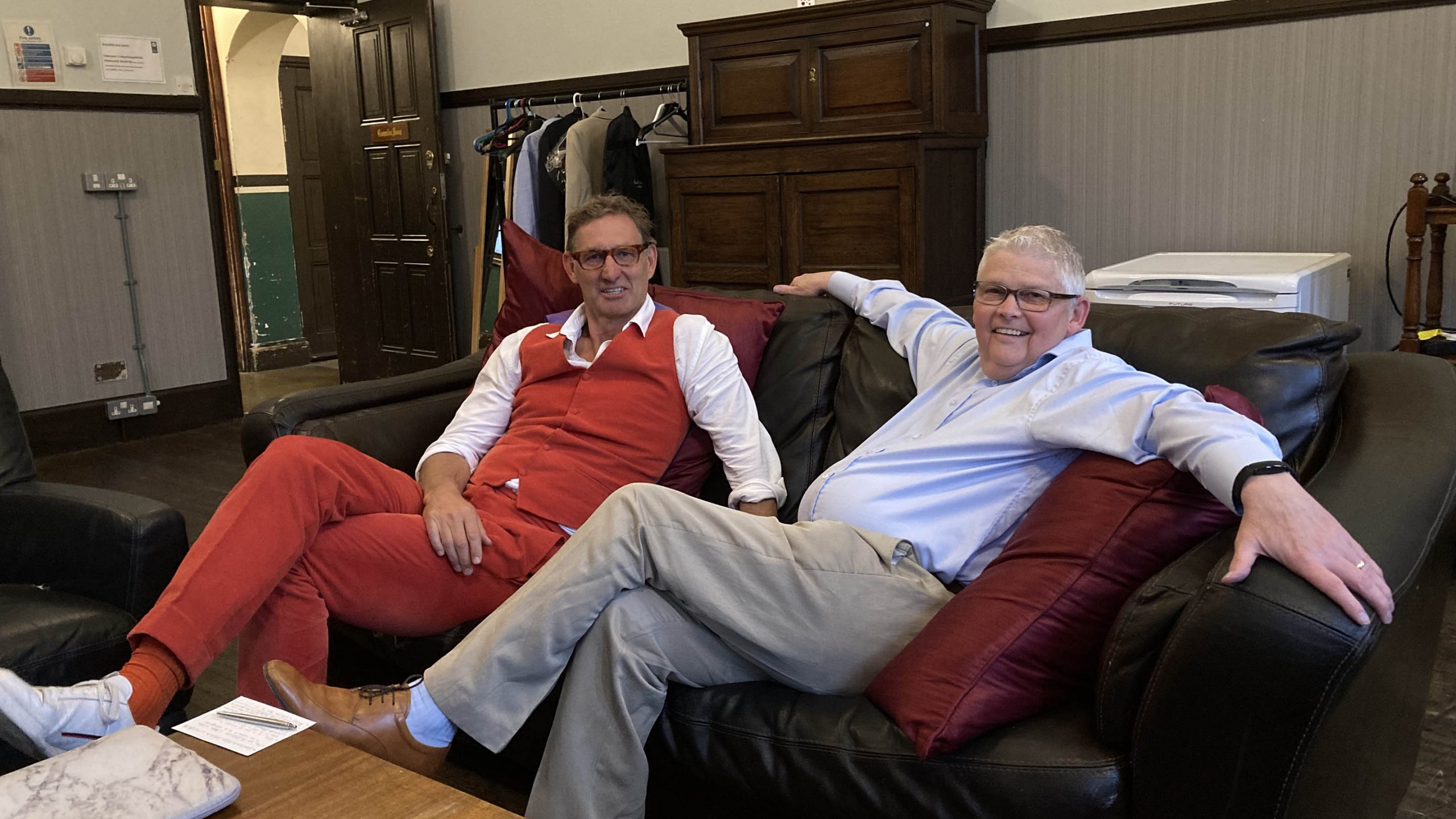
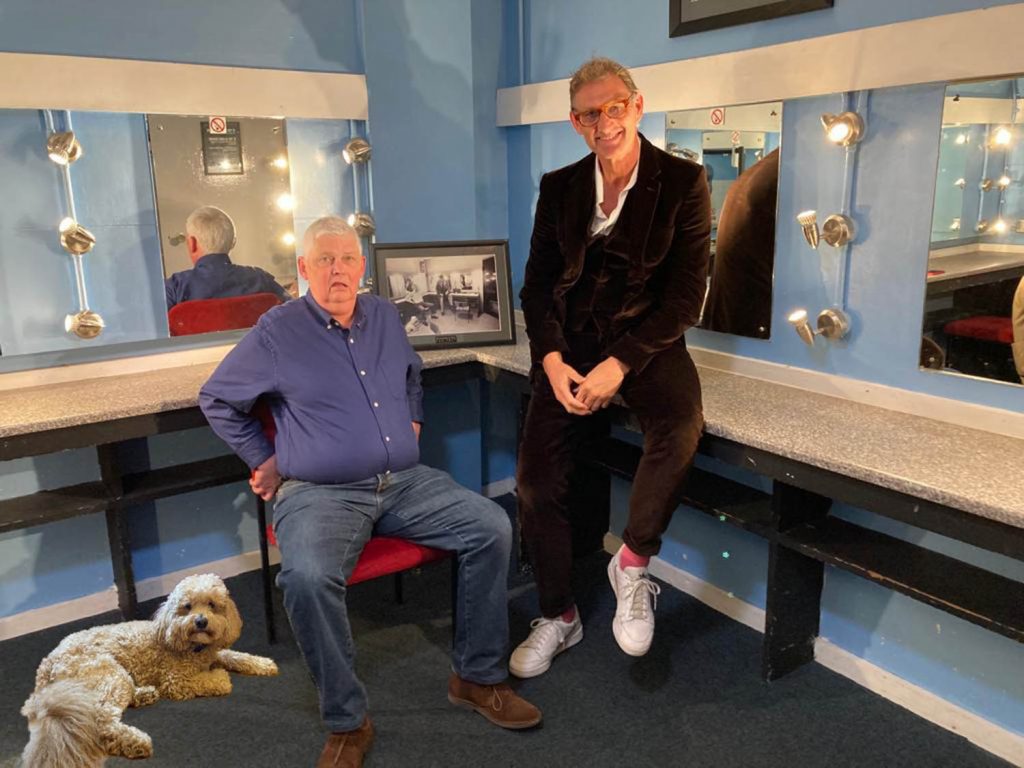
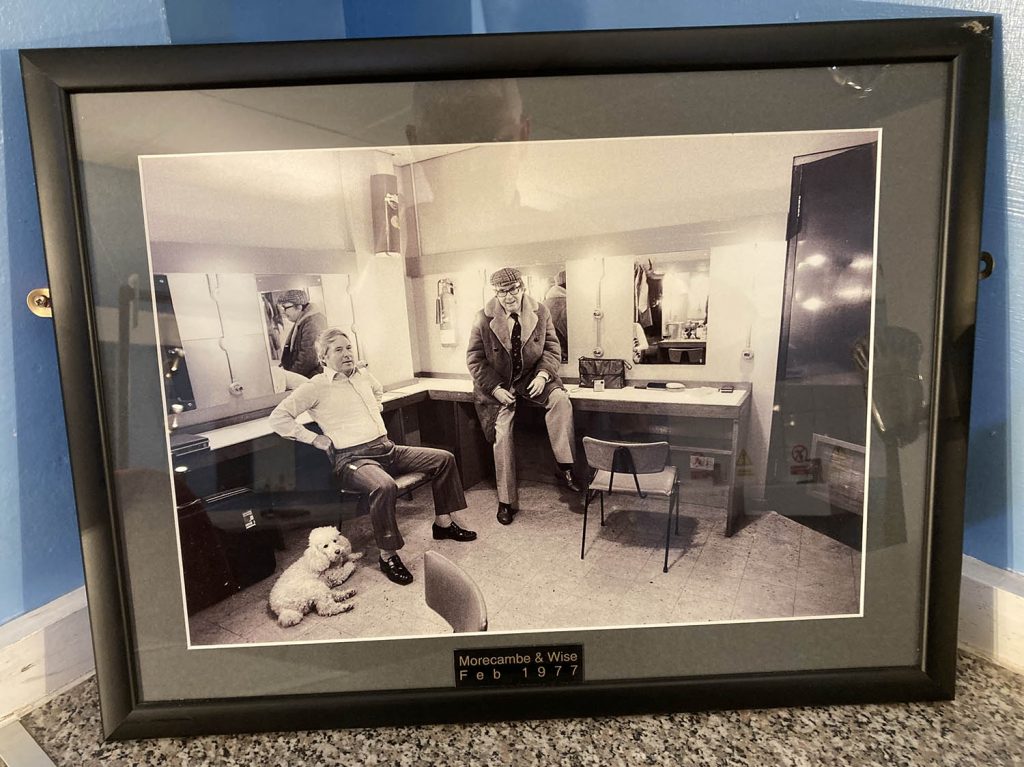
“He was just checking up on you,” I said, which got a laugh. “I’ve told you not to be funny,” said Tony, in mock admonishment. The dressing room at the Alban Arena (formerly the Civic Centre) was also a highlight. It contains a picture of Morecambe and Wise there in 1977, with Ernie’s dog at his feet. We decided to recreate it – with Tony as Eric, naturally, and me the one with the short, fat, hairy legs – and Tony even had his and Poppy’s similarly fluffy pooch Lady Kevin (don’t ask me) Photoshopped into it.
Finally to Islington, Arsenal heartland. The theatre tour had been arranged for venues where Tony had history: he had been manager at Wycombe and Portsmouth, lived near Cheltenham, trained with Arsenal near St Albans (where I first went to an Alcoholics Anonymous meeting with him), and played at Highbury. The crowd was up for it from the very first minute.
As we waited in the wings to go on, the pre-gig music loop was playing Three Lions (Football’s Coming Home). It represented the worst summer of his life and best of mine and I ventured as much. “Because you and Vikki got together?” he asked. I nodded as the music stopped and he smiled at me. I gave them my intro, about being the writer of Tony’s books, and suddenly, to my surprise, got a round of applause. It ruined the “gag” about them not looking so disappointed that it was me on stage, but that was a gratifying way to have it spoiled.
Tony emerged to the chant of “Ooh, ooh Tony Adams” and was on fire – a great player giving his greatest performance in the final – regaling them with anecdotes about team-mate Ray Parlour, who was in the front row. The account of his rock bottom was pin-drop poignant. It was all there: entertainment mixed with enlightenment, Arsenal trophies, colleagues and managers analysed, government policy on addiction and mental health excoriated. “We’ve got to get help for our young people especially after this pandemic,” he said. He’s working on it, with the government.
As we walked out of the stage door down a backstreet in the darkness to our cars, still he was recognised. “Nice suit,” said one of four young girls on the razzle admiring tonight’s red corduroy. Four guys, seeing him passing, dashed out of a pub for a picture. An older woman and her daughter were heading home from a meal out. “Oh my God, it’s you,” she said. “I named my dog after you.” Cue the final selfie of the tour.
At the end of the street, he gave me a hug. “Couldn’t have done it without you mate,” he said. “Mate,” I replied, “I couldn’t have done these last three years without you.”
Photographs Tia Thorne, Getty Images, Poppy Teacher, Ian Ridley and Tony Adams
This piece was commissioned for the next edition of the Tortoise Quarterly, our short book of long stories, to be published in December. In the meantime, you can grab a copy of our most recent edition, News, in our shop at a special member price.