
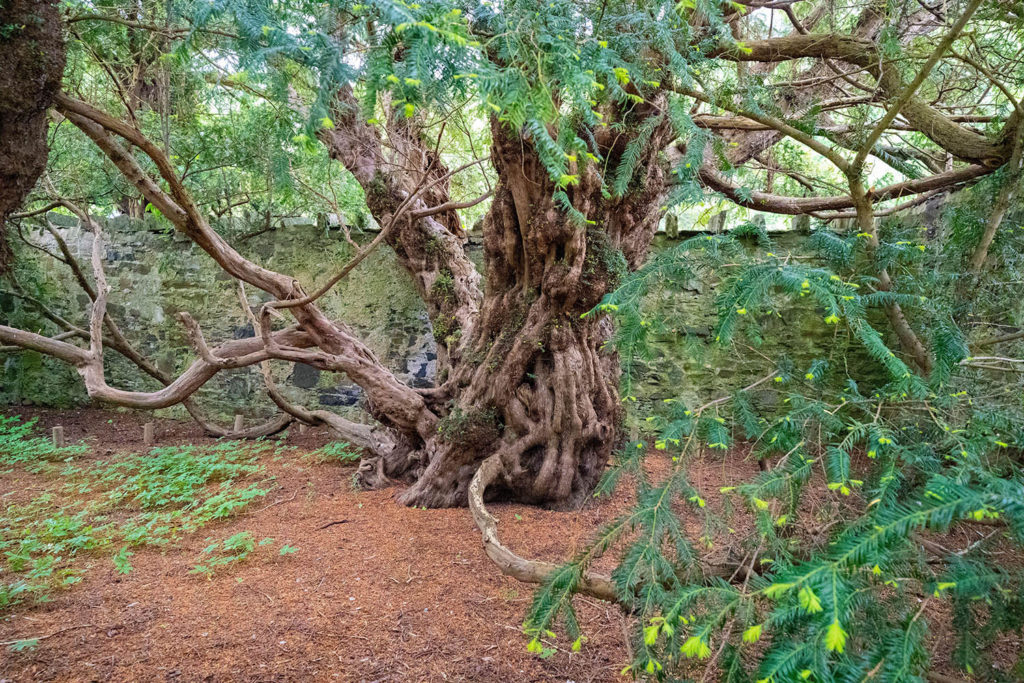
The Fortingall Yew probably first emerged when the Romans ruled the known world. Two thousand years later it faces a new threat
On a July day in 1769, a traveller stumbled upon the oldest living thing in the British isles. In a graveyard at the eastern end of Loch Tay, where the highlands step down into more sheltered pastures, Thomas Pennant took a measurement of the Fortingall Yew, named for the village where it grew. It was 17 metres wide.
Another traveller passed that way the same summer. Daines Barrington, a lawyer, wrote to a friend in astonishment at the vast, if slightly miserable, thing. “Nothing scarcely remains now but the outward bark, which hath been separated by the centre of the tree’s decaying within these twenty years,” he said. “What still appears, however, is thirty-four feet in circumference. This, therefore, is, perhaps, the largest tree we have any account of …”
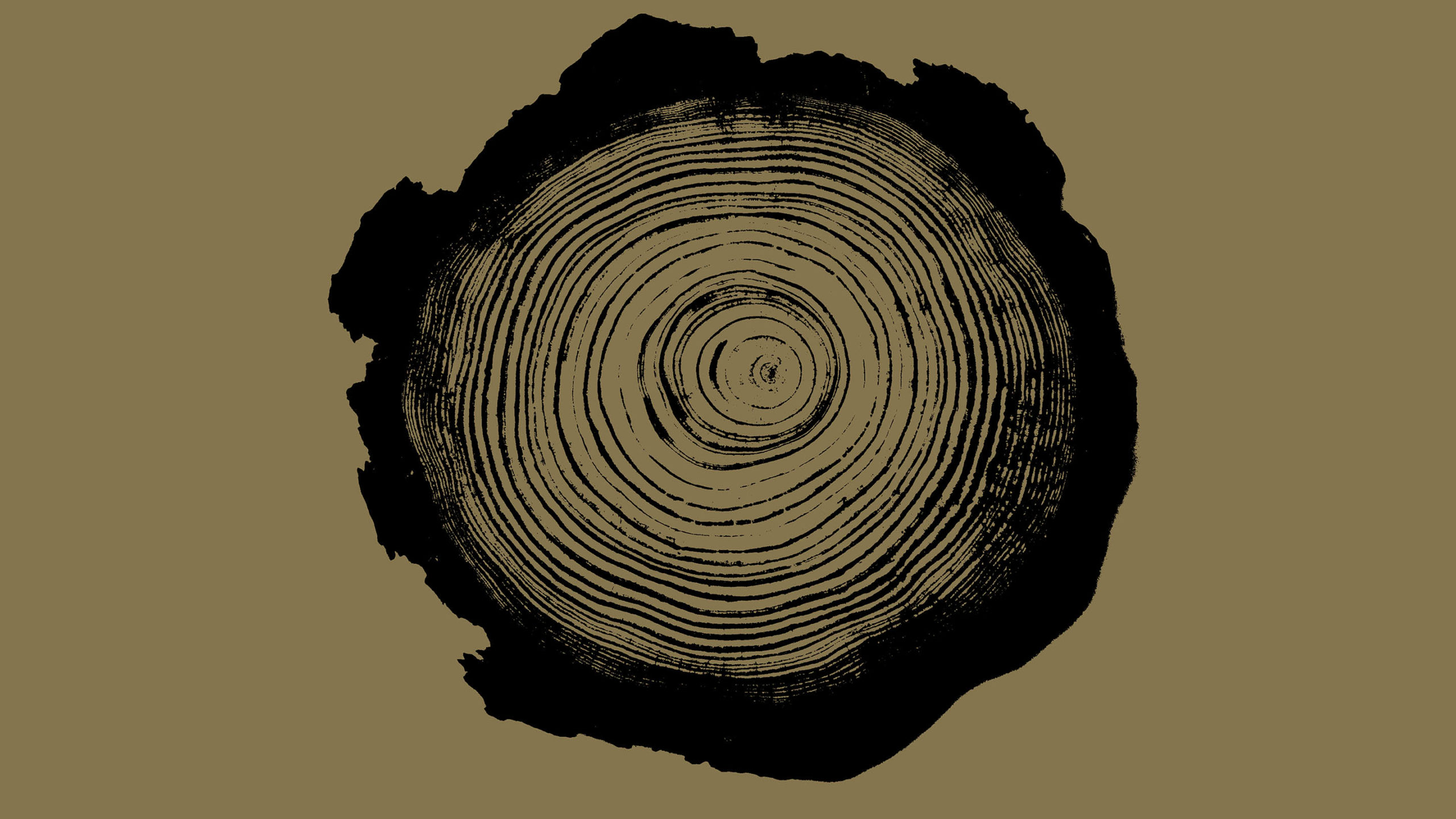
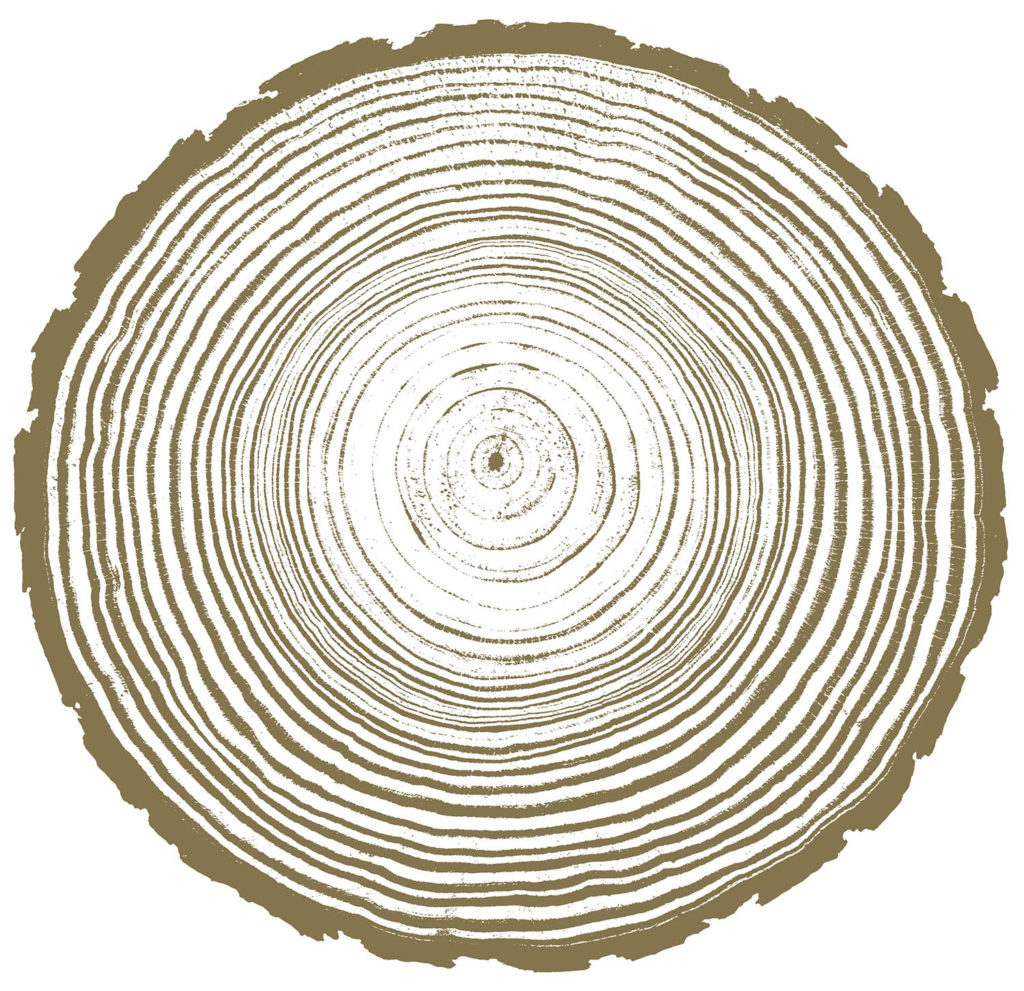
In the tree world, size is a sign of age. As trees grow older, they grow outwards as well as up, forming one band of light and dark growth for every year of life. These rings are a record of the climate, too. In warm, wet weather, they will grow wider. If it is cold and dry, they will be thin. In cases of extreme environmental stress, the tree may hardly grow at all. An old tree allows scientists to look back long into the past.
Yet as a species, the slow-growing yew (which can expand less than one millimetre a year) is a secret-keeper. Scientists know the example in Fortingall is old, but precisely how old remains a mystery. The Guinness Book of World Records once claimed it had seen 9,000 years. David Bellamy, an eccentric botanist and television presenter, thought it might have had 8,000 birthdays. Both estimates are now thought to be wildly wrong. Martin Gardner, a scientist who worked at the Botanic gardens in Edinburgh for more than 25 years, says the tree likely sprouted about 2,000 years ago, as the Romans dominated Europe and monks from Iona walked through Britain preaching the Christian word.
The uncertainty is the result of a sort of deal with the devil, an evolutionary bargain with a fungus that rots its heartwood – the core of its oldest growth, the original rings – so that an ever wider gap emerges within the tree. Eventually, as Daines Barrington saw, it divides into parts which are, above ground, distinct but below, still connected. The process enables the tree to self-divide in slow-motion, regenerate and renew. It also erases the wood-writ memory of the rings.
This mystery may add to the allure of the Fortingall Yew, which creaks on today, and has become an international celebrity in the arboreal world. In a normal year, before the Covid-19 pandemic, visitors would arrive to see it every 10 to 15 minutes from as far away as Mauritius, China and Japan. Since the mid-18th century, the tree has been protected by a high wall but visitors are now able to peer at the tree through iron railings and a gate – which many do, in quiet contemplation. But not all are so well-behaved.
Tree worshippers are common visitors: those who believe the tree has a spiritual energy and want to leave pieces of quartz in crevices in the bark, and hang ribbons and beads on the branches. Fran Gillespie, one of the volunteer tree wardens who helps protect the yew, checks it every four days for signs of human contact, and listens, from her garden next to the churchyard where it grows, for sounds of intruders.
One December solstice, with the sun just rising above a dip in the opposite hill, casting light on Fortingall, Gillespie heard chanting through the cold mid-winter air. She rushed to the tree. There she found a shaman in a trance, surrounded by his pagan congregation and with his hand on the yew’s trunk. The group had climbed over the wall, hung flags on the tree’s branches and were, Gillespie says, “prancing around.” She ordered them out.
On another occasion a group of five Americans and two Australians arrived, claiming their leader had had a vision that Jesus Christ and his disciples prayed under the tree.
“What do you say to people like that?” says Gillespie. “I mean … if that’s what people want to believe, that’s what they want to believe. If this tree is only about 2,000 years-old, it can only have been a little sapling at the time Jesus sat under it. He must have had to crawl,” she says.
It’s a regular stop, too, on a tour themed around Outlander, a hit television show in which an American woman travels back in time to 1743, and the arms of a kilt-clad Jacobite. Participants on these tours have been known to press their own bodies against historic monuments across Scotland in the hope of following in her fantasy. Gillespie, who finds any belief that the tree has some kind of magical or spiritual power eccentric, makes sure visitors get nowhere near touching the tree. But she doesn’t catch them all. Last August, a man legged it over the high boundary wall and was six metres up into the tree’s branches before she spotted him.
Such transgressions could, one day, prove fatal for the Fortingall Yew. The wall protects it from the tramping of countless feet, which compact soil and squash a tree’s roots, depriving it of oxygen, and from a deadly pathogen called Phytophthora, which causes dieback and root rot, and is carried on the wind or on the shoes of travellers. If it ever gets inside the tree’s walled enclosure, the tree may not survive.
But another threat, harder now to protect against, also looms. Yews have withstood wars, revolutions and rebellions, mighty storms and a Little Ice Age. But climate change – and the increase in extreme weather it brings – may present the most serious challenge yet.
The world they can comfortably inhabit is shrinking. Yews have historically thrived across a vast geographical area – from the high altitude Rif mountains in Morocco, all the way north to Scandinavia. They favour damp and cool conditions (the climes of highland Perthshire have been a perfect fit) which in Europe will become rarer, and more unstable as the climate crisis progresses.
The species is not among the 34 per cent of conifer species on the International Union for Conservation of Nature’s Red List of Threatened Species – but yews are starting to feel the pressure. According to Max Coleman of the Royal Botanic Gardens in Edinburgh, scientists in Portugal have raised the alarm that their yews are struggling with rising temperatures caused by climate change.
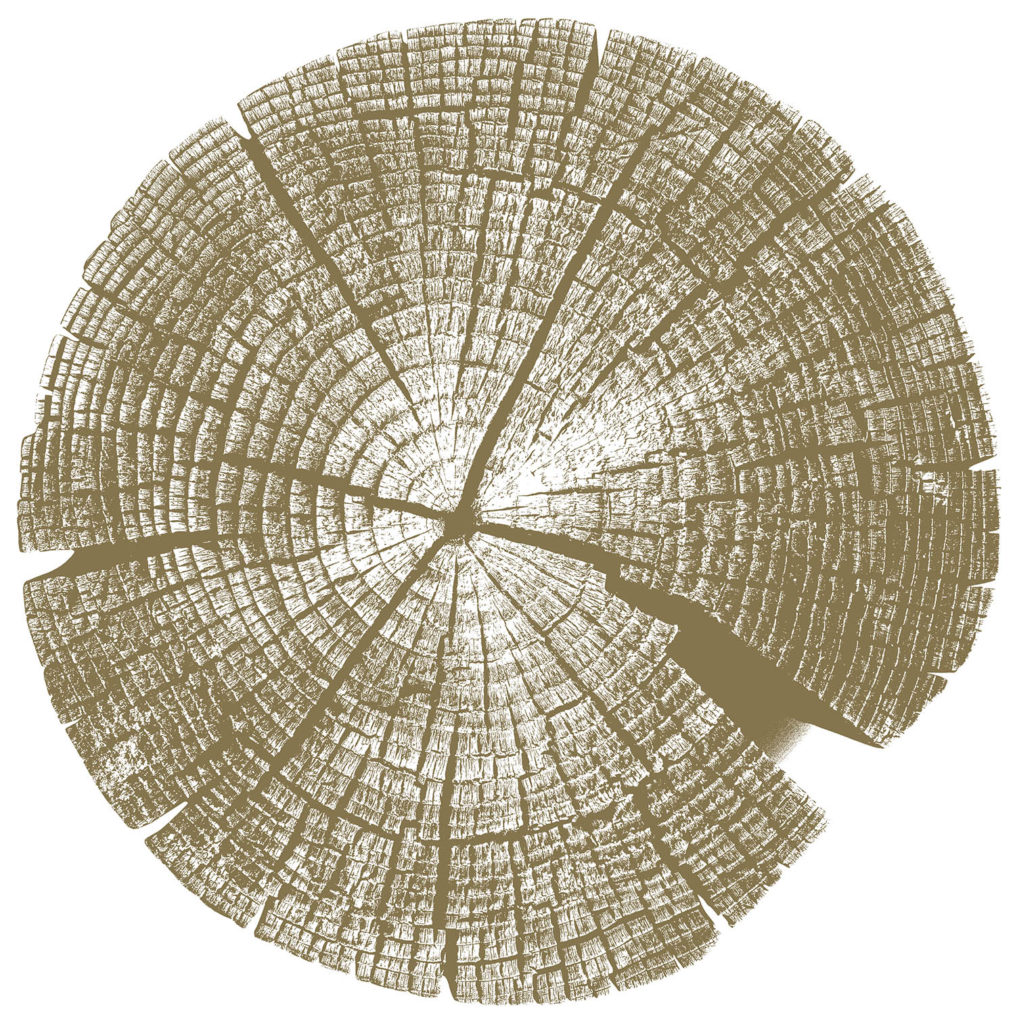
That pressure could throw trees’ delicately balanced relationship with the heartwood-eating fungus out of whack. “Climate change is just having such a devastating effect on everything” says Martin Gardner. When trees have to go through extended droughts, long periods of wet weather, or warm temperatures at weird times of the year – anything they aren’t used to – they are weakened. And then, the relationships they have built with other forms of life – like the fungus which erodes the yew’s core, and is part of its lifelong renewal – break down. “They can’t hold their own,” Gardner says. And suddenly, what had been a harmonious relationship could very quickly threaten a two-thousand-year-old life.
The yew has long been associated with death – they are often found in graveyards and, at Fortingall, the people were said to pass coffins through the growing gap at the tree’s core, before their remains were interred in the earth. Shakespeare even wrote of the yew in Twelfth Night, first performed 420 years ago (“My shroud of white, stuck all with yew, O, prepare it!”) and again when concocting the poisons of Macbeth (“slips of yew, silvered in the moon’s eclipse”).
The Fortingall Yew is so old that it is surely closer to its end than its beginning. “It’s the most miserable tree I’ve ever seen,” says Gardner. “It’s not a grandiose tree. It’s just quite pathetic in some ways.” But the decline of a yew is rarely inexorable. After 2,000 years, it still holds onto life. “These trees ebb and flow. They go through periods of decline, they start looking a bit yellow and [have] a few dead leaves and branches,” says Gardner. But then, often, they regenerate.
Perhaps that’s why, until 1924, on the first of May every year, the boys of Fortingall village collected gorse (or whin) from the hillsides and set it alight close to the boughs of the tree, to celebrate Beltane, the passing of winter and the coming of life-giving summer.
Still – just in case the trees do start to succumb – scientists at the Royal Botanic Gardens in Edinburgh have planted a great yew hedge that is a patchwork of 2,000 individual trees from across Europe. It is, Max Coleman says, a crucial conservation resource, containing the species’ full genetic diversity. It’s a living dataset for scientific enquiry, all in one place. But it’s also a living, growing backup disc. If yews were to be destroyed in a particular country, the scientists could potentially return their descendants from the hedge, so the species can go on and on.
As the spring arrives and the world emerges from its pandemic-induced hibernation, visitors will once again fall on Fortingall to greet its oldest resident. “These other people who come to see the tree, it obviously means a huge amount to them,” Gillespie says. She will be keeping watch.
Ellen Halliday is the deputy editor of Prospect magazine. At the time of writing, she was a reporter at Tortoise and assistant editor of Tortoise Quarterly, our short book of long reads, where this piece first appeared. You can pick up a physical copy in our shop at a special member price.
Photographs Getty Images, Alamy