Sensemaker Daily
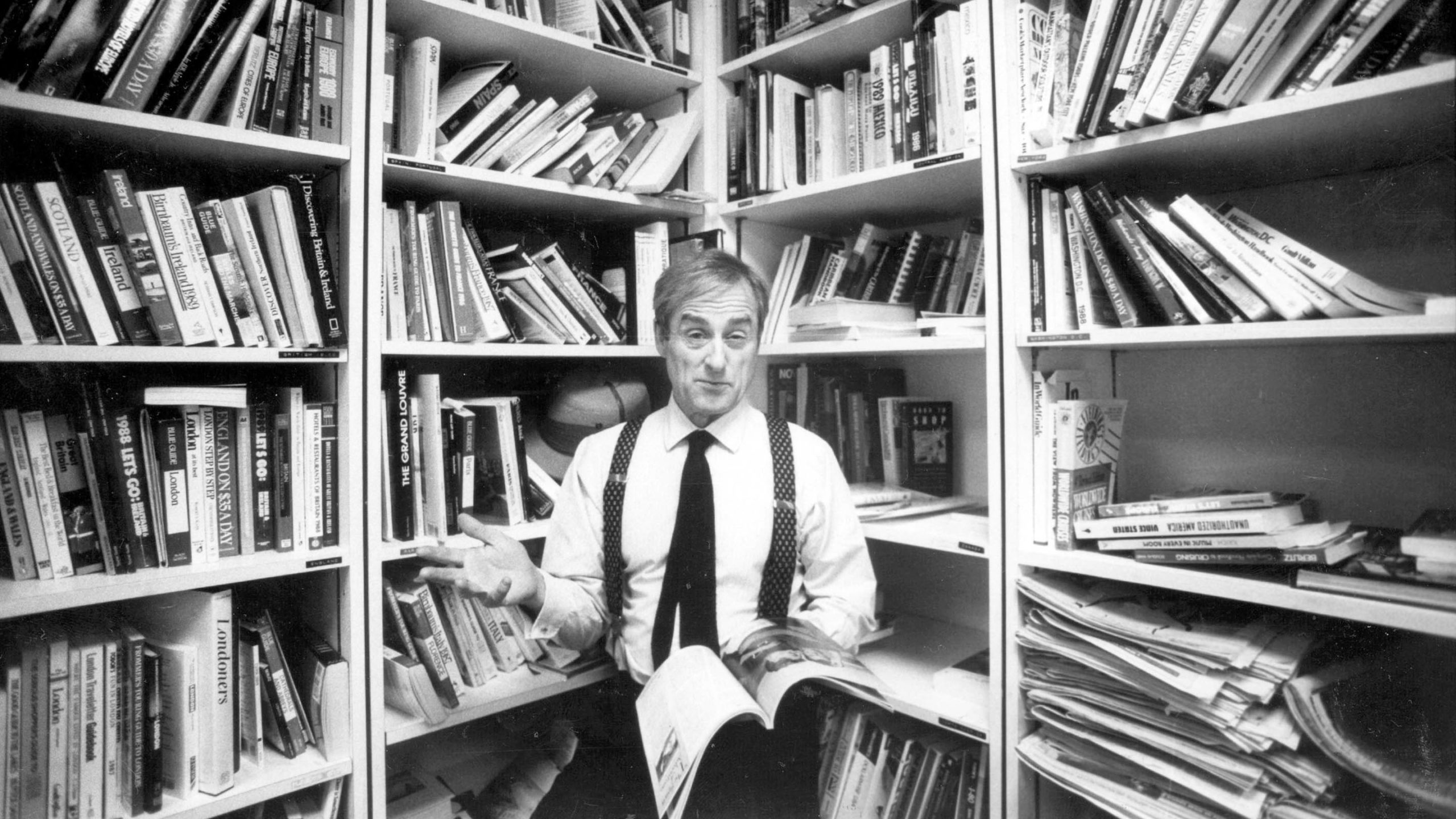
Two years on from the great newspaperman’s death, his friend Simon Schama honours his passion, enthusiasm and journalism
There’s not a day goes by when I don’t miss Harry Evans, that mighty warrior for truth and decency, wrapped up in a compact package of steel trap intelligence, iron integrity and boundless energy. How could I not miss him, grievously, ardently, living, as we do, in scoundrel times; more squalid, reckless and poisonous than any I can remember; when the nobility of journalism which Harry peerlessly embodied, the unvarnished truth, in black and white, has been discoloured by the lurid saturation of falsehood, fantasy and the endlessly oncoming tide of celebrity trivia.
Harry was forever serious but never solemn. And what he gave us, his whole life long, was exactly what democratic freedom now urgently needs to survive: an unswerving, eloquently articulated faith that, in the end, truth will out; that hard evidence has the strength to disarm paranoia; public-spiritedness the moral power to prevail over the politics of the egotrip; that cool reason can be argued to, and adopted by, those in power. And, not least, I miss the righteous fury, the intolerance of intolerance, that was inseparable from the sweet humanity of the man.
Sir Harold Evans was one of nature’s democrats, the rare, real, thing in press and publishing. When I was lucky enough, in 1968, courtesy of a friend who had a job at the Sunday Times, to get a part-time job in the warren of offices at Gray’s Inn Road, everyone working there already looked up to him as a working-class hero; son of a railway cleaner and driver, who’d risen through the ranks the proper, hard way in the world of hot metal print: Ashton-under-Lyne; cub reporting on weddings and funerals; copy editing at the Manchester Evening News; Darlington’s the Northern Echo. The ethical drive, the unapologetic passion for the investigative crusade that posh boys (and it was mostly boys) or pub-soaked veterans rolled their eyes at, was the turbo-charged drive of Harry’s sense of vocation: cervical cancer in towns blighted by pollution; the fobbing off of Thalidomide victims. Taking sides, the side of the powerless, was the point of it and it made him the greatest of all British citizen editors.
His job, as he saw it, was to rattle indifference into concern, but not by some sort of high-minded bloviation but through the inescapable presentation of evidence. His battles were fought with fistfuls of facts. But he never let those facts coagulate into a dense mass of impenetrable micro-detail. It was, as it always was for great editors, accumulated truth shaped into dramatic, conversionary, story. It was (and is) the difference between popular and populist; between writing which shaped deep research into something that could light up public attention or indignation, and what passed for columns: the printed banter of some privileged opinionator, light on homework and always within easy reach of the polished jape.
In the Royal Air Force his nose often stuck in books, not least Thucydides’s History of the Peloponnesian War, that original primer of policy debate and unsparing self-criticism, he was known as “Educated Evans”. And whether as reporter, editor or non-fiction writer Harry never weakened in his conviction that profound knowledge and gripping journalism were not mutually exclusive but mutually sustaining. He himself was always learning, always curious, always excited by some new discovery, exhilarated by the possibilities of how knowledge could change the world even as he was dismayed by the rise of sovereign stupidity or the cynical cultivation of malleable ignorance; the orchestrated chorus of yells amplified to drown out the voices of reasoned argument.
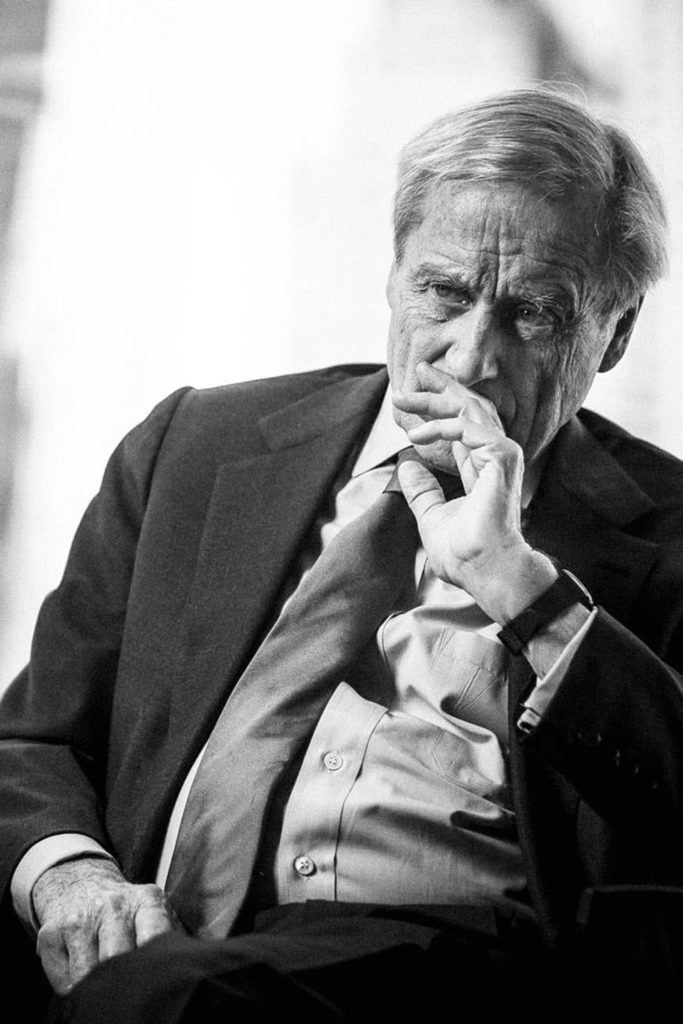
All this made Harry Evans both throwback and prophet; the enemy of both the meretricious headline and the broadsheet six-page deep dive into deep sleep. Harry was above all things perhaps an incorrigible enthusiast; the sender of late night or early morning emails with news of discoveries that had amazed him and which he knew you wanted to hear about. The zeal for spreading that kind of news was infectious, even missionary; a refusal to ever close the doors of possibility for who knew what ingenuity lay just round the corner to save us from our appetite for obtuse self-destruction.
You put all this together and the word that comes to mind is “inimitable”. And that’s right of course; he was indeed, as journalist, editor, publisher, one of a kind. But, if he were here (as of course he is) he would say: “What is the good of being one-off when what we need right now is more, much more, of the right stuff?” Multiply me and what I stood for. And he would be right.
The best thing we can do to honour him is to work at creating a whole regiment of Harrys, or almost-Harrys: uncompromising in their passion for the truth; a thorn in the side of corporate convenience; citizen writers whose moral and intellectual battery charge never dies. We can’t have Harry back but we can make sure that what he gave us, coloured by his bright love of humanity and his inextinguishable hope in the prospects of just democracy, lives on, for all our sakes.
Photographs Jack Manning/The New York Times/ Redux / eyevine, Rankin Film Prods/Kobal/Shutterstock