Sensemaker Daily
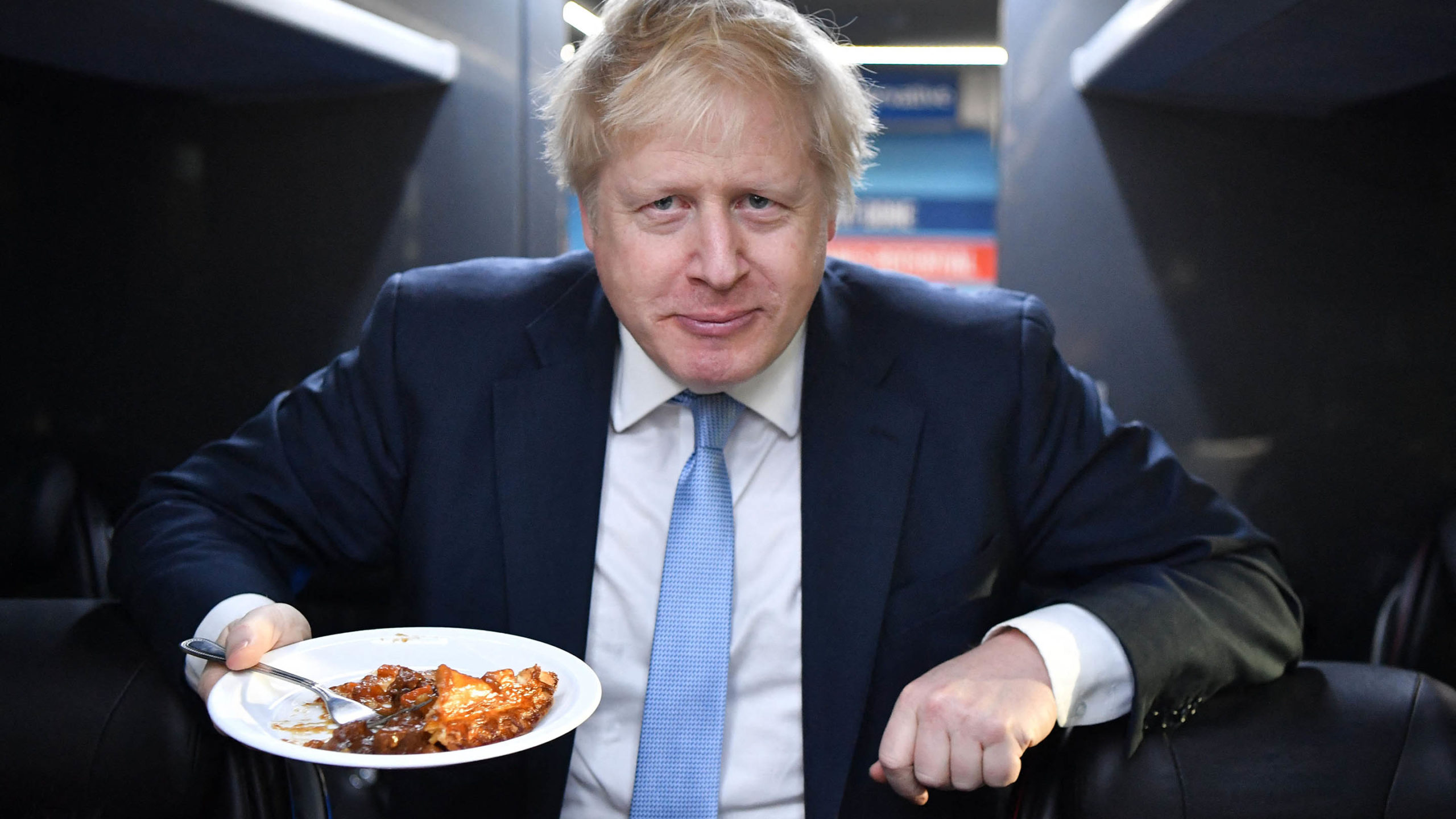
Johnson may be going, but the new PM will take over the government of a deeply scarred nation that he has led into social, moral and cultural crisis
Imagine the scene: over the weekend, Boris Johnson withdraws to his study, and, as is his habit, writes two statements. The first is a standard Downing Street farewell by a departing prime minister.
It is all too easy to write: “And I wish my successor all the luck in the world, assure them of my unambiguous and whole-hearted loyalty as I resume my position in the cheap seats, and am confident that our best days as a nation – sunny as a day by the pool in Malaga, and cheerful as a Labrador hearing the rattle of the Winalot box – lie just around the corner.”
Then, eyes narrowing, he starts to compose the second speech: “Folks, it is no small matter to declare a state of national emergency. But after taking soundings with colleagues, following the science (naturally) and holding lengthy discussions with my old Bullingdon pal, General Fortescue-Hinge – excellent chap, I am sure you can see him with his lads in those tanks, just outside the gate down there – I have come to the patriotic conclusion that, at a time of multiple challenges, this really is no time to desert my post on the bridge. Which is why I must give the British people a very simple instruction… yes, another one…”
No, no; damn, and blast, he thinks. Not even I can get away with a military coup, however amusingly presented. It’ll have to be the first statement on Tuesday, won’t it? Dull, dull, dull.
If that strikes you as far-fetched, bear in mind that, in what is surely an innovation in modern politics, Conservative MPs have already started muttering about sending in letters of no confidence in their new leader – before even knowing his or her identity. This is mutiny of a novel and radical kind: plotting to launch the next contest before the present one is even concluded.
To put it another way: the “Bring Back Boris” campaign is well underway – and he hasn’t even gone yet. On the long hustings trail, the surest way for Liz Truss or Rishi Sunak to get a round of applause from Tory members was to praise the outgoing prime minister.
Whilst maintaining the bare minimum of decorum, Johnson’s allies have done absolutely nothing to dampen the idea that this is only a regrettable intermission, and that their swaggy-topped hero will be back in Number 10 soon enough. As Lord Lister, the PM’s former chief political strategist, told Sky’s Sophy Ridge yesterday: “If something happens in the future, if, as you said, the ball comes loose in the scrum, then anything can happen… I would never write him off.”
Twice in the past fortnight, I have heard supporters of Johnson use the shorthand “1951” to describe his possible comeback – the presumptuous reference being, of course, to Winston Churchill’s return to Number 10 in that year. Also speaking to Ridge, Lord Hammond, from whom Johnson stripped the Conservative whip in September 2019, declared that “he should move on and put aside any idea of hanging like a malevolent shadow over the next government”. The former chancellor did not sound remotely persuaded that Johnson would heed his warning.
For what it’s worth, I find it difficult to envisage a prime minister deposed by a blizzard of ministerial resignations – more than 50 – ever returning to the top job. But then contemporary politics does not operate according to the old rules; volatility and unpredictability are all. So I understand why many political portfolio managers are holding on to their Borises.
What is certain is something that is more structurally important: namely, that the new prime minister will be living in and presiding over a country whose crises, challenges and faultlines have been profoundly affected and shaped by Johnson’s brief but seriously consequential premiership.
So much is unresolved, shambolic, or both. For a start – though you would never have guessed it from the leadership hustings – this contest was made necessary by what I have called an ethical crash: a calamitous collapse in standards in public life, brought to a head by the months-long disgrace of partygate and then the deplorable handling of the allegations of sexual misconduct against the former Deputy Chief Whip, Chris Pincher.
This has nothing to do with moral panic or puritanism, and everything to do with the restoration of public trust. Without such trust, no government can get very much done, or make any assumptions about the viability of the social contract.
One of the most alarming things that Truss has said is that she may not appoint an ethics adviser to replace Lord Geidt, who resigned in June. This suggests a wilful misunderstanding of the circumstances that brought about the contest in the first place and the nature of the challenge facing her as Johnson’s prospective successor.
A related question has been posed by Johnson’s reckless disregard for the law. He has been relaxed about his government threatening to break international treaties. He tried to prorogue parliament unlawfully. He became the first serving prime minister to commit a criminal offence.
This indifference to the rule of law, it should be noted, did not prevent him from spending £130,000 of public money on a legal opinion by Lord Pannick QC on the alleged unfairness of the procedures adopted by the Commons standards and privileges committee in its inquiry into the apparent lies he told to parliament about the Downing Street festivities. Again, there is no sign that his likely successor regards any of this as a problem.
Johnson’s greatest bequest to the new PM, of course, will be a Commons working majority of 71, secured in his electoral destruction of Jeremy Corbyn in December 2019. In the weeks and months ahead, we will read and hear much about the potential implosion of a Conservative government that, since 2010, has undergone more makeovers than the Real Housewives of Beverly Hills, and is now seeking to defy political gravity by winning a fifth successive general election.
And – no doubt about it – the opportunity for Keir Starmer will never be greater. Ruthlessly and persistently, he must operate on the basis that, if he kicks in the rotten door of the Tory house, the whole ruined structure will cave in before his and the nation’s eyes.
But the arithmetic facing Labour is pitiless, too: to secure a majority, it must win 123 more seats than it did in 2019, with a 10 per cent national swing. Even against an opponent of epic rubbishness, this would be a tall order.
Labour’s best hope is that the new prime minister’s theoretical majority turns out to be no such thing. By his astonishing acts of moral dereliction and personal amateurism, Johnson plunged his party into a two-month civil war, in which few prisoners were taken and many friendships ditched. At the podium, Sunak treated Truss like a pesky impediment to his glorious rise; the Truss camp briefed the Times, with curiously worded savagery, that the former Chancellor was acting like a “wounded stoat”.
This means that the new prime minister will preside over a seriously divided parliamentary party, a seething mass of recrimination and factional resentment. In December 2019, Johnson transformed the Conservatives into the Boris Party, united under his unchallenged rule. He leaves behind a shattered, disaggregated mess. Place your bets now for the first serious parliamentary rebellion to confront his successor.
Also etched into that famous election victory was a great conundrum, which Johnson leaves conspicuously unanswered. Like a man with two families – that do not know about each other – he promised one thing to the Blue Wall of the South (no income tax, VAT or National Insurance rises, familiar middle-class Conservatism); and another to the Red Wall in the North (big spending on “levelling up”, investment in deprived areas, grand infrastructure).
One of the consequences of the leadership contest is that the two metaphoric wives have found out about each other, and the era of “cakeism” – having it both ways, smoothing over the differences with charisma – is drawing to a close, its intrinsic illogicality unravelling before our very eyes.
Naturally, Truss pays lip service to the idea of levelling up – but only because political etiquette requires her to do so. In private, her opinions on regional equality and regeneration have long been eye-wateringly Darwinian. She believes unapologetically in the smaller state, the saving power of tax cuts, the awfulness of “handouts” and the seriously antiquated notion that a rising tide lifts all boats (it really doesn’t). Indeed, she could not have been clearer in her interview yesterday with the BBC’s Laura Kuennsberg: “To look at everything through the lens of redistribution I believe is wrong, because what I am about is about growing the economy. And growing the economy benefits everybody.”
So – if she becomes PM – there will be a tax-cutting spree within a month and what amounts to a warm embrace of Reaganomics (not fiscally conservative Thatcherism). But before that emergency Budget or “fiscal event”, brace yourselves for a series of measures to deal with the energy price crisis that one pro-Truss former Cabinet minister described to me as “so big you can see it from space”.
Over the weekend, senior Whitehall officials were at pains to emphasise that the plan is “not yet signed off” – which is code for “lots of it doesn’t add up, or make sense”. What is not disputed is that, if Truss becomes prime minister tomorrow, her plan to address energy bills and avert a winter “Armageddon” will be of comparable scale to Sunak’s £70 billion furlough scheme.
Whatever form the rescue package takes, I very much doubt it will answer the greater question left unanswered by Johnson: namely, does the Conservative Party now understand the concept of social emergency with the clarity with which it has always been attuned to economic trouble? Is it getting its head round the pathologies of the 21st Century, or does it remain moored in the 1980s?
The answer is far from self-evident. The NHS is on its knees, barely capable of fulfilling its minimum duties, let alone of clearing the backlog of treatment built up during the pandemic. Social care remains a national disgrace more than three years after Johnson stood in Downing Street and promised to fix it “once and for all”.
Last week, two former Conservative education secretaries, Lord Baker and Justine Greening, called for urgent financial assistance for schools. Inflation is driving hundreds of thousands of Britons into food poverty; it also lurks behind the gradual coalescence of something that may soon start to look uncomfortably like a national strike. Police are drawing up plans for potential civil unrest over the winter.
To talk about the new PM’s “in-tray” is hopelessly unequal to the moment; a bespoke disaster movie is more like it. I do not think Truss – or Sunak, for that matter – is remotely equipped for this convergence of pressures and the deep dynamics that underpin what is about to strike this country. I have not heard either of them say anything in the past two months that suggests they understand either the enormity or the novelty of what lies ahead: neither has even hinted at fresh thinking or a new concept of the state and its proper role in the 21st Century.
More likely, it seems, that the incoming government will address these tectonic questions by the most superficial of means: doubling down on a version of Johnson’s populism, distracting the public with ever more aggressive crackdowns on migration, and performative attacks on supposed “wokery”. If, as has been widely briefed, Suella Braverman becomes home secretary, Kemi Badenoch goes to education and (possibly) Nadine Dorries stays at DCMS, you can expect a serious escalation of the culture wars that Johnson launched. Soon, we shall be looking back upon Priti Patel as – relatively speaking – a bleeding heart liberal and tearfully compassionate defender of the vulnerable.
During the contest, Truss’s great trick was to posture both as the loyalist candidate – she didn’t resign from Johnson’s Cabinet – and as an “insurgent”, who would ring the changes. And there was a kernel of truth in this ambiguity.
If elected, she will be a more abrasive, more ideological prime minister than Johnson; much less concerned with personal popularity and showbusiness appeal than with the execution of her will. That said, she doesn’t have a single new idea that I can detect. She has honed her politics in the Johnson era and will, if she gets the chance, persist with many of its less appealing methods: Johnsonism without the jollity, if you will.
Off he goes then, for now, into the sunset. To return? He certainly won’t go away: reclusiveness, or even life away from the limelight will not come naturally to the boy who wanted to be World King and who feels, with bitterness, that he was wrongly deposed by the “herd”.
As for the rest of us: we still dwell in Borisland, the dysfunctional kingdom of lies, deceit and bombast, in which things fall apart and are declared a triumph. This week, we shall hear a great deal about “fresh starts”, new beginnings and a great future ahead. But it doesn’t feel like that, does it? Quite the opposite, in fact. So we beat on, boats against the current, borne back ceaselessly into the past.
The UK will soon have a new prime minister. Join us for a ThinkIn on Tuesday 6 September at 6.30pm in the Tortoise newsroom to discuss what we should expect from them.