Sensemaker Daily


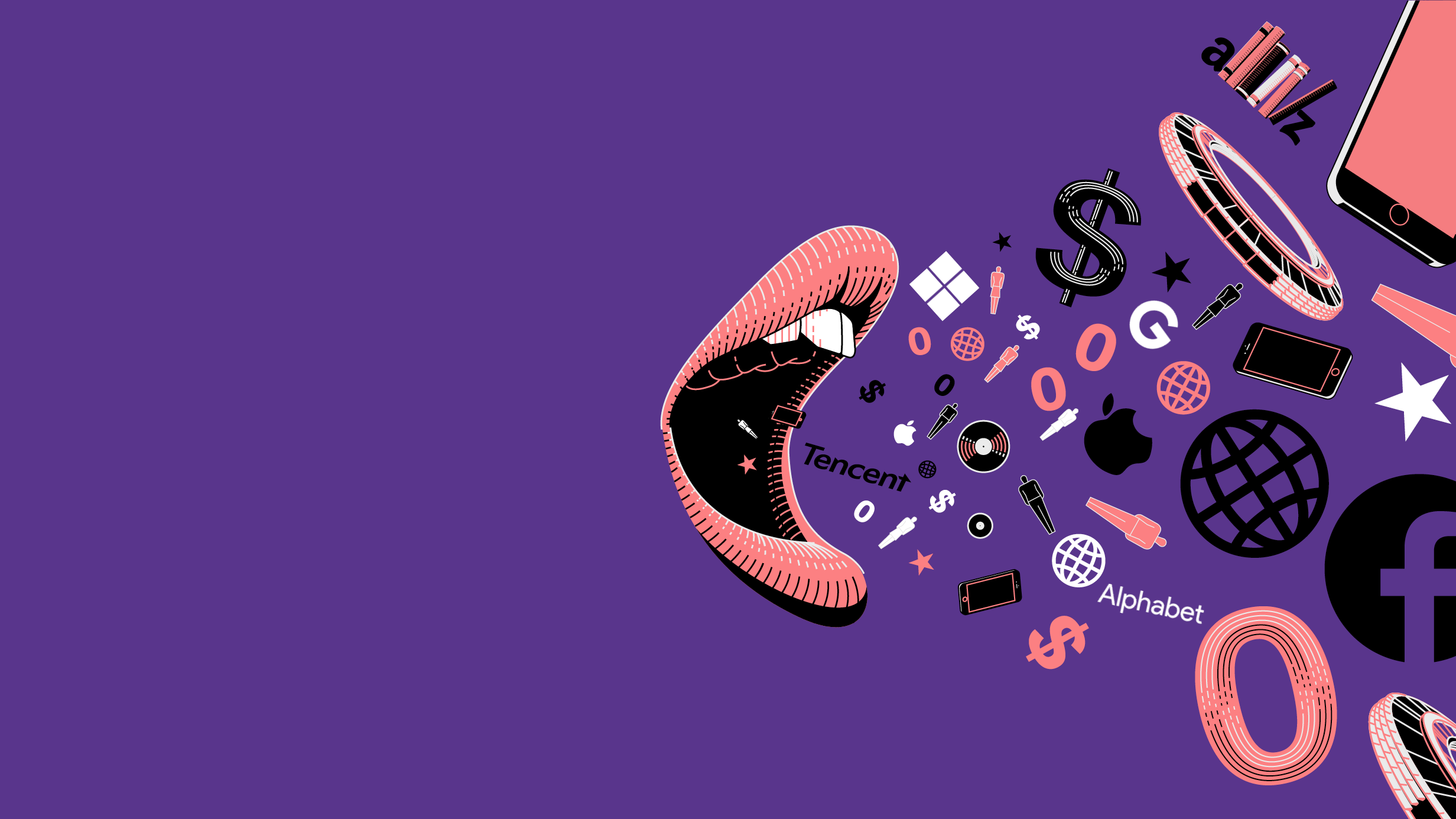
Russia is closing its internet off from the rest of the world. How far will its tech isolationism go?
Here’s what you need to know this week:
- Affairs of state: Russia marches towards a Splinternet
State-by-state:
- Apple faces Covid shutdowns
- Microsoft’s deal raised insider trader allegations
- Amazon can buy Bond
- Google added a privacy feature for dogs
- Tencent was accused of money laundering
Russia’s 80 million Instagram users woke up on Monday to find a blank page where their feeds used to be. Following Moscow’s decision to ban the hugely popular social media platform, some users wrote their followers farewell notes, asking them to switch to alternative platforms. Others downloaded a VPN (virtual private network) to get around the problem.
Russia is hurtling towards digital isolationism. Banning Facebook and Twitter a week ago was the first step. Blocking Instagram is unlikely to be the last.
As Russia closes itself off, the tech states are retreating fast. Meta no longer accepts ads from Russian advertisers targeting Russian users – a decision which could cost it up to 1.5 percent of its global revenues, which totalled $118 billion last year. Google has moved from a position of simply turning off ads on Russia Today to banning the propaganda outlet altogether. Apple no longer sells iPhones in Russia. Microsoft and Amazon are taking similar measures, as are companies not usually mentioned in this newsletter such as Netflix, Cisco, Oracle, Samsung and Airbnb.
How deep can Russia’s tech isolationism get? How much was already in the pipeline and what, ultimately, will the consequences be?
In the short term, even more tech shutdowns are likely. Ukraine has accelerated Russia’s transition to a so-called splinternet. “Every day something new is being shut down,” Anastasia Ermolaeva, a teacher in Moscow, tells Bloomberg. “I’m worried a lot about being completely cut off from the rest of the global internet.”
But whether Russia can set up a totally walled-off digital state is an open question.
China is an obvious model, with its advanced ability to control the local internet and regulate information flows. And Russia has already taken some similar steps: in 2019 it started developing RuNet, a national internet network. And in 2021 it launched the Russian National Domain Name System, allowing Russian IP addresses to continue operating even if they were cut off from the global internet.
“The Russian authorities claimed Runet was being done to protect Russia from cyberattacks and external influences,” Daniel Markuson, digital privacy expert at NordVPN, told us. “While the network failed its testing in 2021, we can predict that by now it should be ready and there would be no need to rely on Chinese infrastructure.”
However, there are caveats. The Internet Corporation for Assigned Names and Numbers (ICANN) has refused Ukrainian pleas to cut Russia off from the global internet altogether, calling the request “neither technically feasible nor within its mission”.
Secondly, VPN use within Russia is high and getting higher. There’s some evidence that Russia is struggling to block VPN traffic (mainly thanks to VPNs having spent years in China obfuscating their data flows).
“Russia seems to lack the resources and perhaps the will to crack down effectively on VPN use,” says Frank Bajak, tech editor at the Associated Press. “Researchers don’t have decent metrics because the black boxes are controlled by Roskomnadzor [Russia’s censorship agency]”
Most importantly, unlike China, where domestic internet companies have had years to blossom, Russia does not have a similarly vibrant domestic tech industry: its economy is based on the global internet.
If Putin does cut the country off permanently, the ramifications for ordinary people will be significant. Basic equipment necessary to maintain mobile networks and other internet-related infrastructure will no longer be maintained. Information flows will cease. Businesses reliant on software downloaded from a central server will be unable to function.
Far from emulating China, Russia’s splinternet might end up looking more like Iran’s or North Korea’s.
Two years into the Covid-19 pandemic, the virus is still shutting factories in China – with important knock-on effects on Apple. This month lockdowns have closed Foxconn factories in Shenzhen until 20 March. The immediate impact on Apple should be limited, as Shenzhen accounts for “only” about 20 per cent of iPhones. But if the lockdowns last for longer than a week, the impact will grow. Apple’s new iPhone SE went on sale last week, and supplies may well be affected.
Microsoft’s acquisition of Activision Blizzard was already controversial, not least because Playstation owners worried they might no longer have access to Call of Duty. Now some serious power players are under investigation for potential insider trading relating to the deal. The US Department of Justice and the Securities and Exchange Commission are looking into whether Barry Diller, the US media tycoon, David Geffen, the music mogul and Alexander von Furstenberg, son of fashion designer Diane von Furstenberg, had advance knowledge of the deal. The three acquired Activision options for $40 per share on 14 January. Four days later, Microsoft announced it would acquire the company in a deal valuing it at $95 per share. All three deny wrongdoing.
Jeff Bezos won’t be CEO when he gets to dust off his dinner jacket and fire up the Aston Martin. But European Union officials have given a green light to Amazon’s $6.5-billion acquisition of MGM, the movie studio behind James Bond. The European Commission said the deal wouldn’t significantly reduce competition as the companies don’t overlap much in content production. Under Andy Jassey’s leadership, the deal will give Amazon a boost when competing with rivals like Netflix.
We’ve heard a lot of hard news about Ukraine recently. But sometimes there’s a lighter story we just can’t ignore. Reddit users have been noticing that Google’s Maps product is automatically masking the faces not just of people and number plates – but dogs. “I’m happy they support dog privacy” one Redditor said. Another called it a “Pooch protection programme.” Others have commented that it’s Google’s algorithm working indiscriminately to blur anything that looks like a face. A mini-investigation by 9Honey did find many unblurred dog faces; whilst unblurred human faces are rarely found on Google Street View.
Tencent is having no luck this year. Like Apple, it’s getting hit by lockdowns in Shenzhen (where Tencent is headquartered). But it’s also facing a potential record fine for allegedly flouting anti-money laundering rules. Financial regulators in China claim WeChat Pay failed to comply with “know your business” regulations, the WSJ reports. Tencent’s mobile payments network was found to have facilitated the laundering of funds from gambling. On Tuesday Tencent’s stock was down 10.2 per cent. The final penalty could run into billions of yuan.
Thanks for reading,
Alexi Mostrous
@AlexiMostrous
Luke Gbedemah
@LukeGbedemah
Correction: When we first published this article, we stated that Meta’s decision to no longer accept ads from Russian advertisers targeting Russian users would likely cost the company $118 billion in yearly revenue. In fact, Meta’s global revenues totalled $118 billion last year.