— London, Uk
— From: Matt d’Ancona
Long stories short
- Alexei Navalny, de facto leader of Russia’s opposition, is in intensive care after being rushed to hospital in Siberia with suspected poisoning.
- Apple became the first public company to be publicly valued at $2tn after exceeding expectations with its iPhone sales.
- A Sudanese teenager has been found dead on a French beach, drowned while trying to cross the English Channel, in an inflatable sold as a toy.
- Kamala Harris formally accepted the Democratic vice-presidential nomination, urging voters to reject the leadership of a president who “turns our tragedies into political weapons”.
Britain remains consumed with the disaster it has created trying to grade students in the year of Covid:
Having ditched the now-notorious grade-moderating algorithm, ministers hoped that today’s GCSE results – based on teacher assessments, rather than computer code – would offer some respite from the scandal that has engulfed the government since last week’s A-level grades.
No such luck: 450,000 young people have now been told that their BTec (vocational qualification) results are on hold. The awarding body, Pearson, announced last night that it was conducting a snap review. Since (as it transpires) the results that were about to be published included some BTec modules that had been moderated by algorithm, this is only fair. But it prolongs the uncertainty for hundreds of thousands of teenagers and adds a fresh twist to an already horrendous government fiasco.
Gavin Williamson is one of Westminster’s great survivors, but the Times piles on the political pressure today with a report that he was warned in early July by Sir Jon Coles, a former director-general at the Department for Education, that the algorithm used by the exam regulator, Ofqual, was likely to yield inaccurate results.
This puts the education secretary in a difficult position since he claimed on Monday that he was only made aware of the algorithm’s consequences “over the weekend”. He bowed to political pressure yesterday to give his backing to Ofqual.
Other developments:
- Ofqual was also reportedly warned at least a month ago of fundamental flaws in its algorithm by external advisers.
- Senior government figures including the schools minister Nick Gibb, are alleged to have been more concerned by the risk of grade inflation than fairness to individual candidates.
- Kate Green, the shadow education secretary, and Lord Falconer, the Shadow Attorney General for England and Wales, have written to Williamson and Ofqual claiming the algorithm was unlawful, breaching equalities legislation and the 2009 act under which the regulator was established.
Well done to all those GCSE candidates who achieved the grades they wanted, and commiserations to those who were unlucky. No cohort of examinees in modern times has had to put up with such a wretchedly public shambles: to have done so is its own badge of honour.
(Worth noting that no other European country has made such a mess of assessments. As Sky reports, most have calmly made alternative arrangements and moved on.)
Today in the app… our Slow Reviews series continues: Nikesh Shukla looks at Reni Eddo-Lodge’s ground-breaking Why I’m No Longer Talking to White People About Race; John Tiffany reflects on Kate Bush’s Hounds of Love; Pam Hutchison explains the significance of Kid Auto Races at Venice (1914); and I’ve written about Picasso’s Guernica. And do join us at this evening’s ThinkIn, to hear Emma Donoghue (author of Room) talking about her latest novel, The Pull of the Stars – set in Dublin during the 1918 Spanish flu pandemic, and bristling with (often uncanny) contemporary resonance. You can sign up here.
wealth investment, fairness, prosperity
Rent buoy
Airbnb has filed paperwork with the Securities and Exchange Commission for an initial public offering – an apparent bounce-back after months of sluggish performance. In the early stages of the pandemic the company was forced to raise $2bn in emergency debt funding and postpone its plans to go public. But cost-cutting (including a 25 per cent reduction in staff numbers) and a recent renewal in custom have improved its prospects: on July 8 guests booked more than a million nights of accommodation, the first time Airbnb crossed that benchmark since March 3. The WeWork IPO fiasco of 2019 still bothers investors – and that was before the nightmare of Covid-19 – but Airbnb’s fresh confidence may embolden companies itching to go public and investors trying to game a world of structural volatility.
Belonging Identity, Society, Beliefs, Countries
Conspiracist-in-Chief
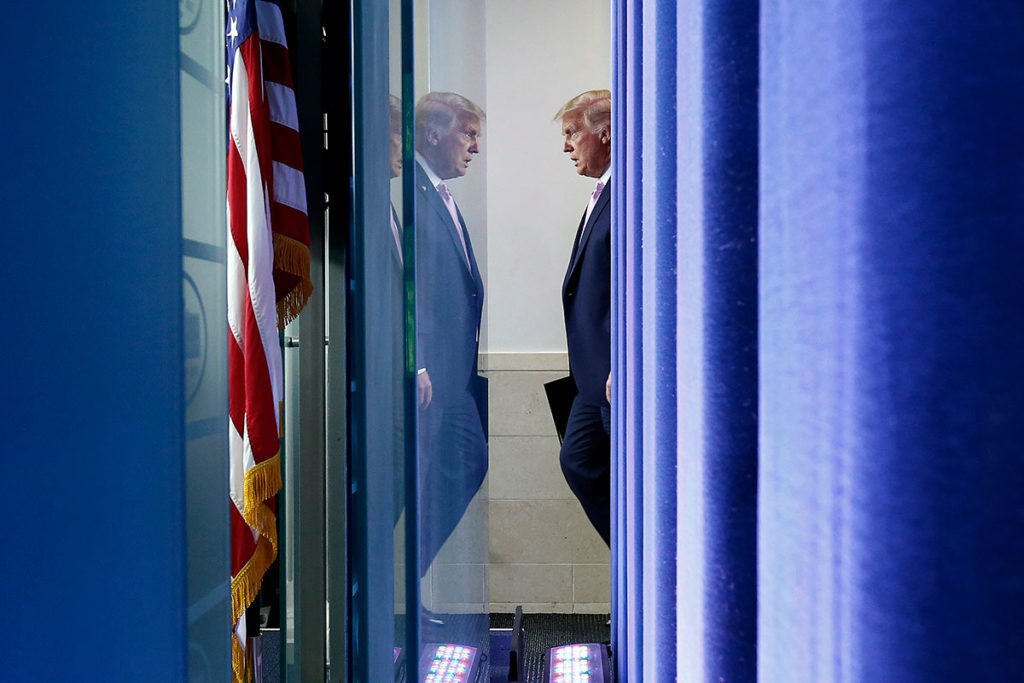
While Joe Biden and Kamala Harris have been calling on Americans to save the republic, Donald Trump has been reaching out to conspiracy theorists who believe he’s protecting them from a global cabal of cannibals and paedophiles. Asked at a White House press conference about those who believe the claims of the QAnon movement, Trump replied that he understood that “it is gaining in popularity. . . I’ve heard these are people who love our country”. A classic Trump dog-whistle, akin to his declaration three years ago that there were “very fine people” on both sides of the Charlottesville riots. And classic timing, too: even as Trump was making new friends in the tinfoil hat-wearing community, Facebook removed 790 QAnon-related groups from its platform. (Do take a look at our Thinkin last month on QAnon.)
new things technology, science, engineering
Wheel of fortune
In California, Uber and Lyft are waiting as expectantly as one of their passengers. Unless an appeals court stays the ruling by tomorrow, they will be forced by a new state law to reclassify their drivers as “employees” rather than “workers”. In a high stakes game of techno-chicken (Uber faces a similar challenge in the UK courts), Uber’s CEO Dara Khosrowshahi and Lyft president John Zimmer have said they’d rather suspend operations in the state than comply. Californians will have a chance to vote on their November ballots on whether or not the companies should be granted exemption. Why does this matter? Because what Uber and Lyft propose – that they are neutral technology platforms rather than traditional companies – has huge consequences for the new world of work, and the extent of its respect for employers’ traditional responsibilities. These court battles are test cases for much more than the future of ride-hailing.
Our planet Environment, Natural resources, Geopolitics
The poison of delay
Michigan is set to announce a settlement of $600 million to be paid to the residents of Flint as compensation for the lead-poisoning of the city’s water, and not a moment too soon. Since 2014, when city officials switched Flint’s supply from Lake Huron to the Flint River to cut costs, the health of its citizens (especially its children and African-American community) has suffered grievously. Tens of thousands will now receive funds in recompense, not least to help them settle medical bills. But nothing can atone for the political inaction that delayed what should have been a straightforward process (Barack Obama himself played an inglorious role in the saga, as is well recounted in Anthony Baxter’s excellent documentary on the crisis).
The 100-year life Health, Education, Living, Public policy
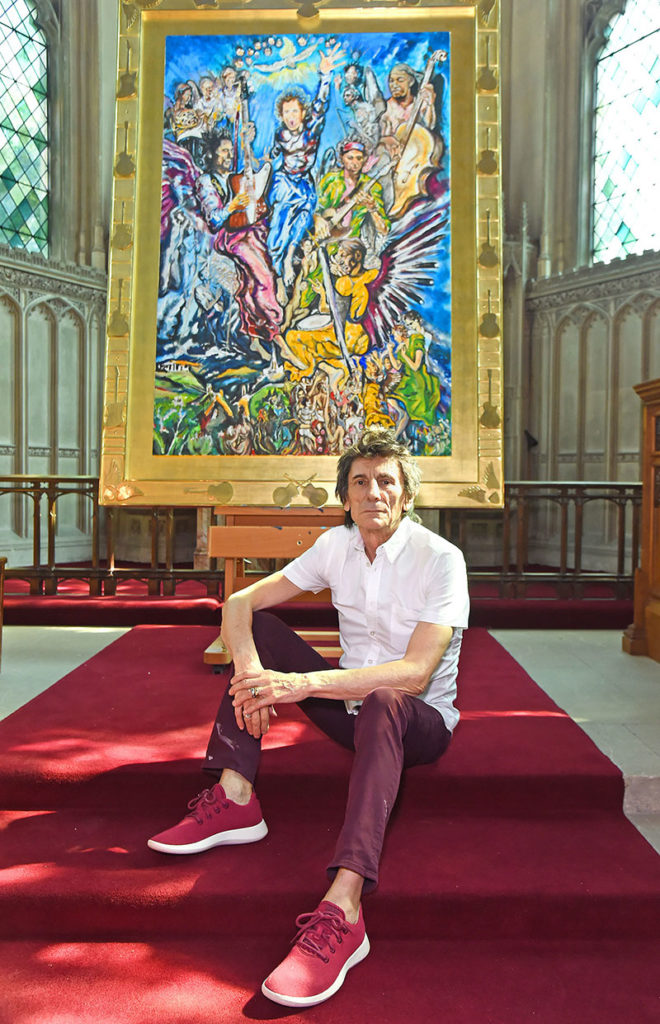
The Two Ronnies
Increased life-expectancy has encouraged much unsolicited and often sanctimonious advice to older people to take up new hobbies. So spare a thought for 73-year-old Ronnie Wood who in addition to his day job as rhythm guitarist in the Rolling Stones (combined age: 306 years) is an enthusiastic painter who regularly shows his work. Proceeds from his latest exhibition at Ashridge House in Hertfordshire are to be donated to the NHS. None of which has stopped the critics tearing the show to pieces. Well, you might say: that’s the price of putting on an art show. Fair enough: but, then again, how good do you think David Hockney or Jasper Johns would be at playing the slide guitar riff on ‘You Got the Silver’? A bit of respect, please.
Stay safe and enjoy the summer.
Matt d’Ancona
Editor and Partner
@MatthewdAncona
All photographs Getty Images