Sensemaker Daily

What to watch during the festive break
Well, that was quite a year, wasn’t it?
Kenneth Branagh playing Boris Johnson and directing Belfast; Stormzy’s best album yet; the movie version of She Said, dramatising the New York Times investigation into Harvey Weinstein; the return to the West End of Mark Rylance in Jez Butterworth’s Jerusalem; Joanna Hogg’s masterly sequel to The Souvenir; Lizzo’s Special; Emma Corrin in Neil Bartlett’s adaptation of Virginia Woolf’s Orlando; Colin Farrell and Brendan Gleeson reunited in The Banshees of Inisherin; Bill Nighy delivering an Oscar-worthy performance in the Kurosawa-inspired Living; stunning fiction from Ian McEwan, Hanya Yanagihara, Ali Smith, Jonathan Coe, and William Boyd; Daniels’ multiverse masterpiece Everything Everywhere All At Once; Arctic Monkeys’ The Car; William Gibson at last getting a screen adaptation worthy of his work in The Peripheral; Francis Bacon at the Royal Academy; Robert Pattinson as Batman; Ana de Armas as Marilyn Monroe; Austin Butler as Elvis; Aaron Sorkin’s stage adaptation of To Kill a Mockingbird; rival prequels to The Lord of the Rings and Game of Thrones; the low-rent spies of Slow Horses; and so much else.
And now, ‘tis the season to sit back, relax and enjoy some quality viewing. Here, as a guide to the season of tinsel, twinkling trees and streaming, are twelve picks – one each for the twelve days of Christmas:
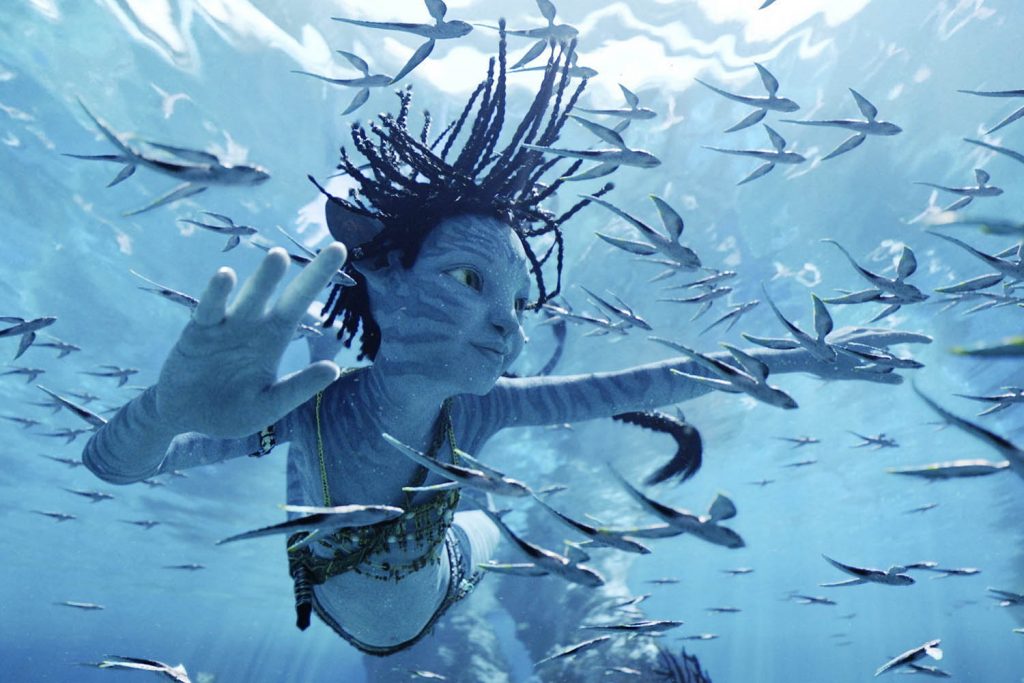
When the original Avatar was released in the UK on 10 December, 2009, Gordon Brown was still in Downing Street; Barack Obama had not yet completed the first year of his presidency; Donald Trump was best known for hosting The Apprentice; the rebooting of the Star Wars franchise by Disney was still six years away; and Instagram, TikTok and the word “Brexit” did not yet exist.
All of which is to say: James Cameron has kept the world waiting a mighty long time for his sequel to the highest-grossing movie of all time, and a great deal has happened in the intervening 13 years. Not least of which is the heightening of the expectation that audiences bring with them when they go to see a film of this kind. Thanks in large part to the systematic colonisation of mainstream cinema by the Marvel Cinematic Universe, the CGI techniques that Cameron pioneered are now standard popcorn fare.
So the journey back to Pandora, and the world of the tall, blue Na’vi, was always going to be trickier than the first trip. Back for the sequel are Jake Sully (Sam Worthington), who ditched his human body for good in the original; Neytiri (Zoe Saldana), who has raised a family with Jake since the first events of the first movie; Sigourney Weaver, the nature of whose reappearance I shall not spoil (her character in Avatar, Dr Grace Augustine, died when she sided with the Na’vi in their conflict with the human “sky people”); and Colonel Miles Quaritch (Stephen Lang), also risen from the dead – pleasingly so, as his cigar-chomping villainy was one of the highlights of the original.
Amongst the newcomers is Kate Winslet, reunited with Cameron more than a quarter century after Titanic, as Ronal, warrior-leader with her husband Tonowari (Cliff Curtis) of the water-based Metkayina clan. In preparation for the part, she learned to hold her breath underwater for no less than seven minutes and 14 seconds.
Led this time by Edie Falco as General Frances Ardmore, the invading earthlings are back to wreck the Pandora ecosystem with all the pantomime evil of the military-industrial complex at its very worst.
The only way to experience Avatar: The Way of Water satisfactorily is on its own terms. Beyond its cogitations on family life and environmentalism, it is exactly what it promises to be: a dazzling technological spectacle, full of stunning aquatic mega-creatures and landscapes that owe as much to the world of gaming as to the language of cinema. It is the best fairground ride available to sky people all over the planet this Christmas, and – approached on that realistic basis, rather than as if it were, say, a Bergman, Tarkovsky or Wong Kar-wai movie – thoroughly enjoyable. Three further sequels are in the pipeline… although at the current rate of production, Avatar 5 won’t be released until 2061.
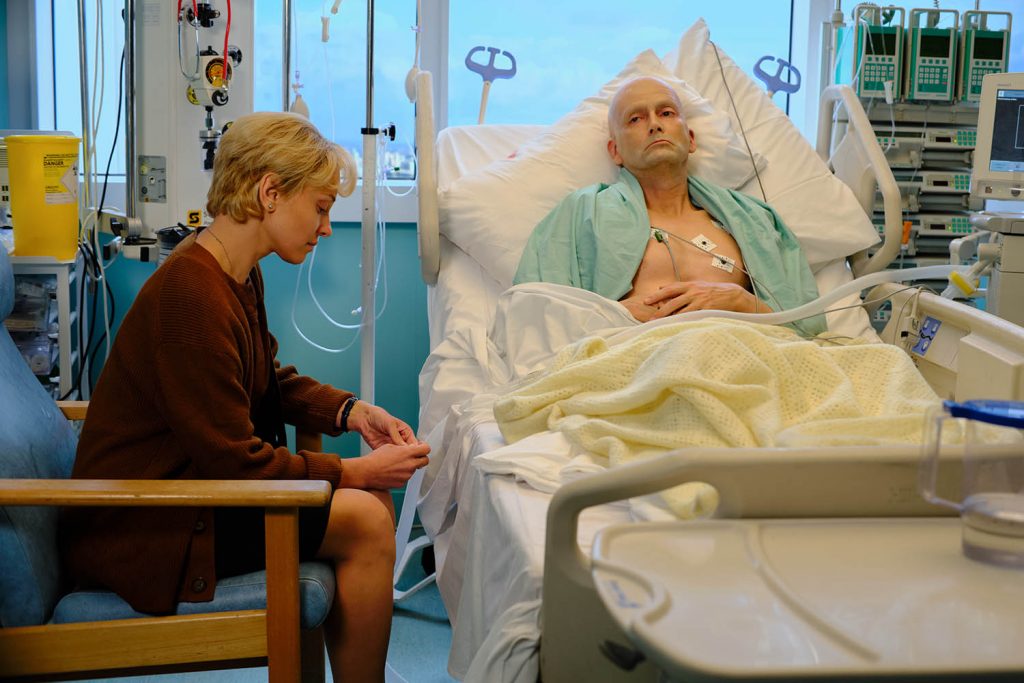
David Tennant has had a good televisual year, co-starring, alongside Stanley Tucci, in Steven Moffat’s excellent Inside Man as a warm-hearted vicar drawn into a criminal nightmare (see Creative Sensemaker, 22 September).
Now, he returns in a much less whimsical role as Alexander “Sasha” Litvinenko, a former KGB officer turned dissident, who successfully sought asylum in the UK in 2000, but was assassinated in November 2006 – poisoned by tea laced with the deadly isotope polonium-210.
As he feels his health fast declining, Litvinenko calls the police to his hospital room; knowing full well what must have happened, and how little time he has left (though he believed that he had been dosed with thallium, a toxin traditionally used by the KGB).
Tennant is terrific as the former spy who knows he is doomed, and, even as he lies bald and cadaverous in his bed, is determined that the detectives pursuing his case know as much as possible before he dies. The strong ensemble cast also includes Mark Bonnar as DS Clive Timmons, Neil Maskell as DI Brent Hyatt; and Margarita Levieva as Litvinenko’s widow, Marina.
The episode in which Hyatt and his colleagues travel to Moscow to interview suspects Andrei Lugovoy and Dmitri Kovtun is especially strong – conveying the menace, contempt and surrealism of the Russian government’s negligible efforts to cooperate. Almost ten months since the invasion of Ukraine, it is salutary to be reminded of this early warning that Putin intended to pursue dissidents wherever they were in the word; and that, by implication, he did not believe that the West would respond meaningfully. Levieva, who is Russian-American, has said that when she accepted her part in Litvinenko, she was “scared” of possible reprisal by the Russian autocrat. All credit to her, and everyone else involved in this fine dramatisation, for their courage in persisting with the truth.
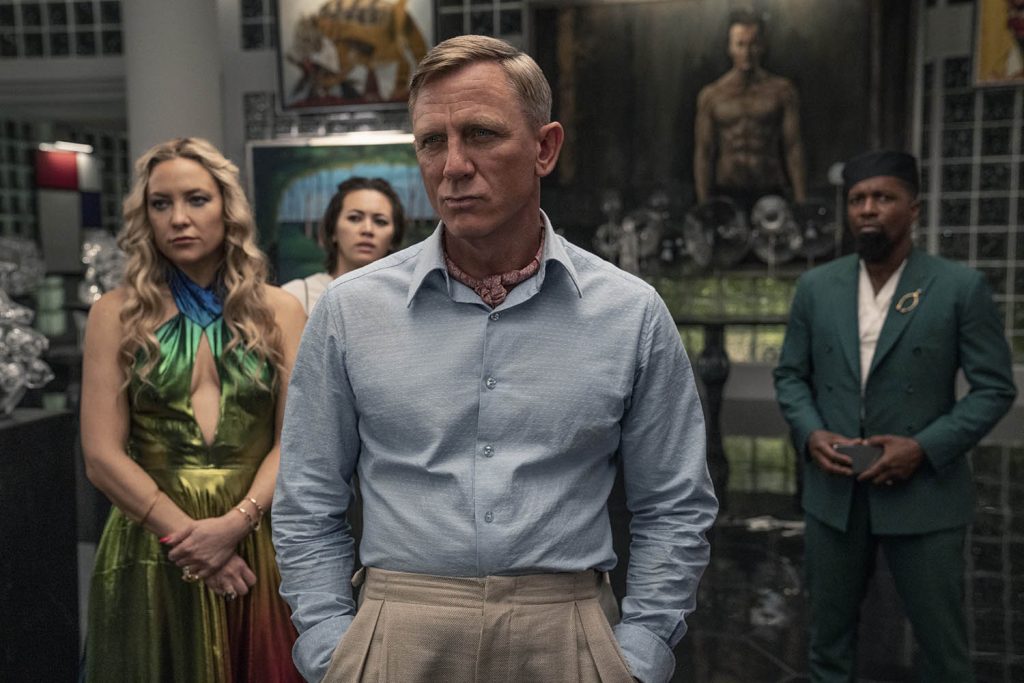
Taking its title from a track on the Beatles’ White Album – which, we later learn, was also the name of a dive bar – Rian Joinson’s sequel to Knives Out (2019) is a joy from start to finish; firmly establishing Daniel Craig’s Southern detective Benoit Blanc as a digital-era Poirot with a dandy’s wardrobe to match (for starters: he wears a fez in the bath).
This time, Blanc is invited to the private Greek island of tech billionaire, Miles Bron (Edward Norton, as good as ever) for the annual gathering of his self-styled “disruptor” friends: Connecticut governor Claire Debella (Kathryn Hahn); former supermodel Birdie Jay (Kate Hudson), who thinks that a “sweat shop” is where sweat pants are manufactured; YouTuber and steroid-fuelled men’s rights activist Duke Cody (Dave Bautista) and his influencer girlfriend Whiskey (Madelyn Cline); scientist Lionel Toussaint (Leslie Odom Jr); and – awkwardly – Andi Brand (Janelle Monáe), cheated out of a fortune by her former business partner Bron.
Their host’s wheeze this year is a murder mystery game, with his guests each taking a role in a narcissistic drama. Needless to say, the game is quickly eclipsed by real-life foul play and Blanc has a proper case to solve – though one, as you might hope, with many twists along the way. Johnson’s panache as a director is matched by the fun that his leading man is having (Craig gives the impression that he enjoys playing Blanc much more than Bond). There is also a formidable roster of cameo appearances: Serena Williams; Yo-Yo Ma; Ethan Hawke; Hugh Grant; and – in their final screen performances, Angela Lansbury and Stephen Sondheim (whose The Last of Sheila is a clear inspiration for Glass Onion). The movie’s Golden Globe nomination for Best Film (Musical or Comedy), announced on Monday, is richly deserved.
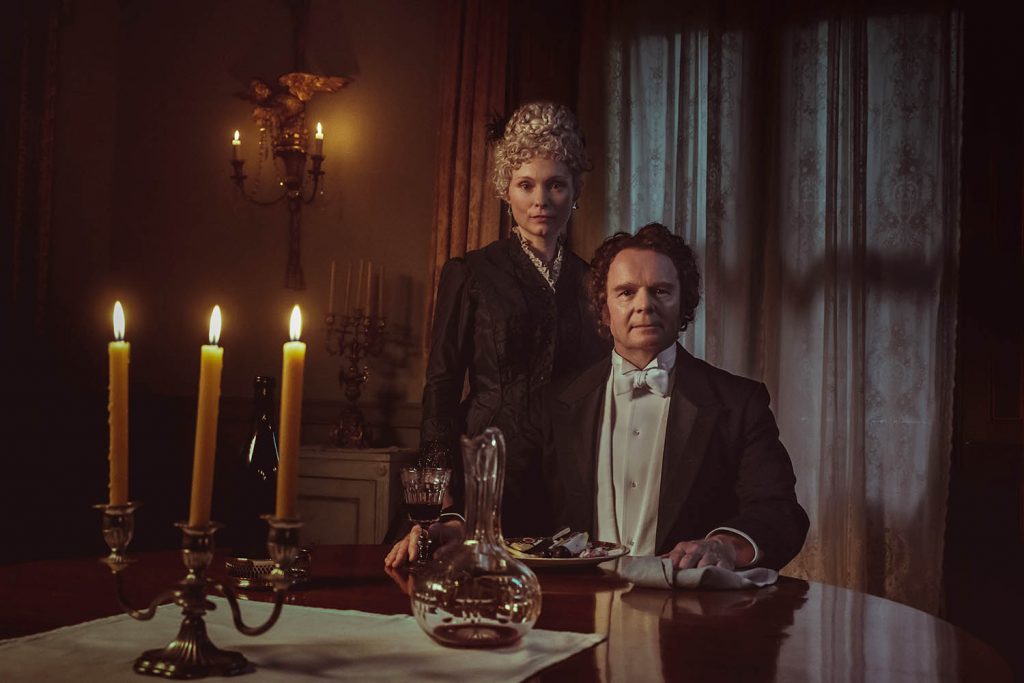
Christmas would not be Christmas without an adaptation by Mark Gatiss of one of the classic ghost stories of M.R. James (1862-1936). Last year, Rory Kinnear starred in The Mezzotint; to round off 2022, we have Jason Watkins as Mr Wraxall, a writer of travelogues and lover of foreign archives, who makes a trip in 1863 to a manor-house called Råbäck in the Swedish province of Vestergothland (the original story can be read here, though no home should be without its own well-thumbed collection of James’s inimitable tales).
Over dinner, he asks the owner of the house, Froken de la Gardie (MyAnna Buring) about her ancient aristocratic dynasty, and – especially – Count Magnus who in the early 17th Century ordered the construction of a special mausoleum. Wraxall’s inquiries reveal that Magnus was drawn to the dark arts and, according to legend, made the so-called “Black Pilgrimage” – recorded in a Liber Negri Peregrinationis – to the unrepentant city of Chrorazin, cursed by Jesus and said to be the birthplace of the Antichrist.
Magnus is supposed to have brought something or someone back from his journey into darkness. But what? And what price will Wraxall pay for his curiosity?
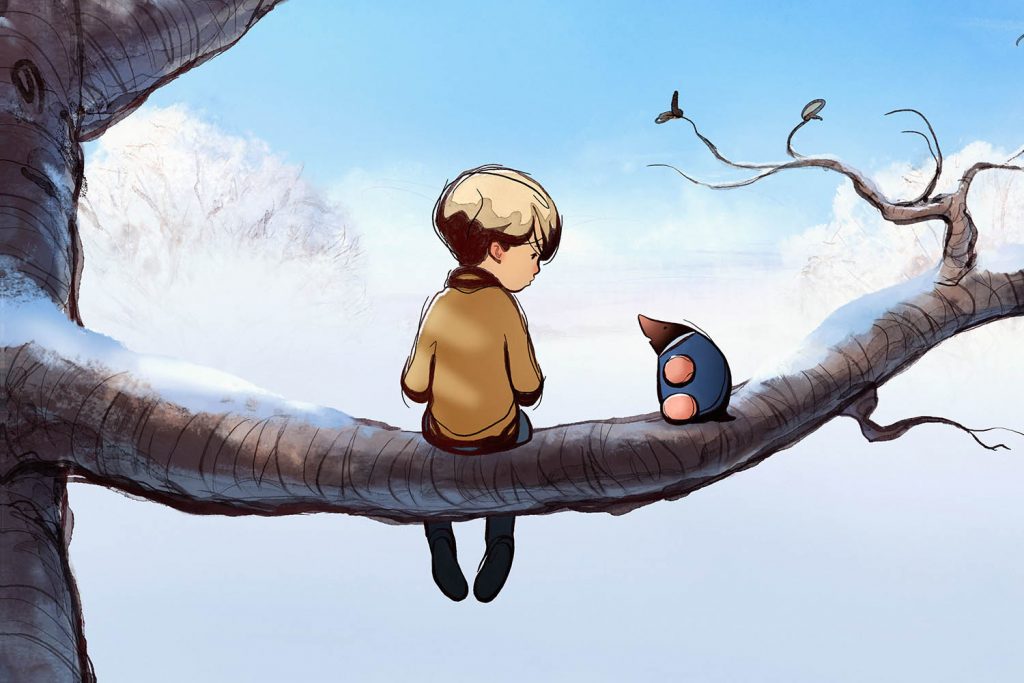
Charlie Mackesy’s enchanting story of a boy who meets and is consoled by three animals is one of the publishing sensations of recent years – a book that was spawned by enthusiasm on Instagram for his line drawings, became a source of comfort to many during the pandemic and has sold more than two million copies.
As Mackesy writes in his original foreword, pictures “are like islands, places to get to in a sea of words”. His drawings powerfully evoke E.H. Shepard’s illustrations of A.A, Milne’s Winnie the Pooh stories, while the text – full of gentle aphorism – reads like The Wind in the Willows rendered by a Zen philosopher of profound emotional intelligence.
How to turn this into an animated film? Working with 130 artists in 15 countries, co-directors Mackesy and Peter Baynton have done a magnificent job of putting the story on screen, giving it a narrative arc without overshadowing the core simplicity of the book.
Jude Coward Nicoll voices the Boy, with Tom Hollander as the Mole, Idris Elba as the Fox, and Gabriel Byrne as the Horse. “What is the bravest thing you’ve ever said?” asks the Boy. “Help.” replies his new friend (who, it transpires, can fly).There’s a very good documentary on Mackesy, the book and the background to the animated version on BBC Two at 3:55pm on Christmas Eve – after which you can turn over to BBC One to see the film itself. Destined to become a seasonal classic on a par with Raymond Briggs’ The Snowman.
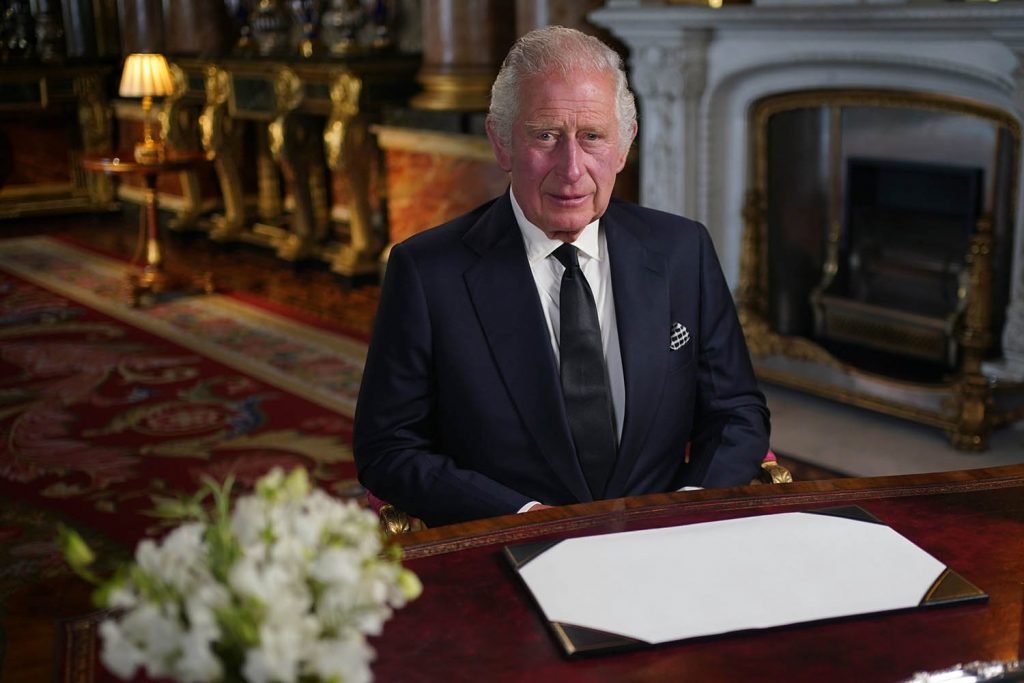
This year’s royal message – broadcast by tradition at 3pm – is not only the first to be delivered by the new monarch. It will also be the first televised Christmas broadcast by a King – all such messages having been confined to radio until Her Late Majesty the Queen made the move to the new medium in 1957 (you can see the broadcast here).
The first Christmas radio message was delivered, at John Reith’s invitation, by the King’s great-grandfather, George V live at Sandringham in 1932: the text written by none other than Rudyard Kipling (listen to it here). So it will be fascinating to see what, if any, changes Charles III makes to this festive tradition on its 90th anniversary.
In her final such message, his mother spoke of the loss of Prince Philip, his pioneering enthusiasm for environmentalism, the forthcoming Commonwealth Games and her own Platinum Jubilee. The King will, one can be sure, pay fulsome tribute to the Queen as she did to his father, and reflect upon the period of national mourning that followed her death on 8 September.
But what else? Royal semioticians and Kremlinologists will scour the recording for meaning – which photos are prominent, which absent? Which lines, if any, may be interpreted as a reproach (or an olive branch) to Harry and Meghan? And what hints might he drop about the form, content and tone of his coronation on 6 May? Whether you’re an ardent monarchist or a committed republican, this will be another historic moment in a year that has been positively stuffed with them.


